
Middle East | News
Iran Threatens Neighbouring Airports as US Sanctions Cripple Iranian Flights — What Happens Next?
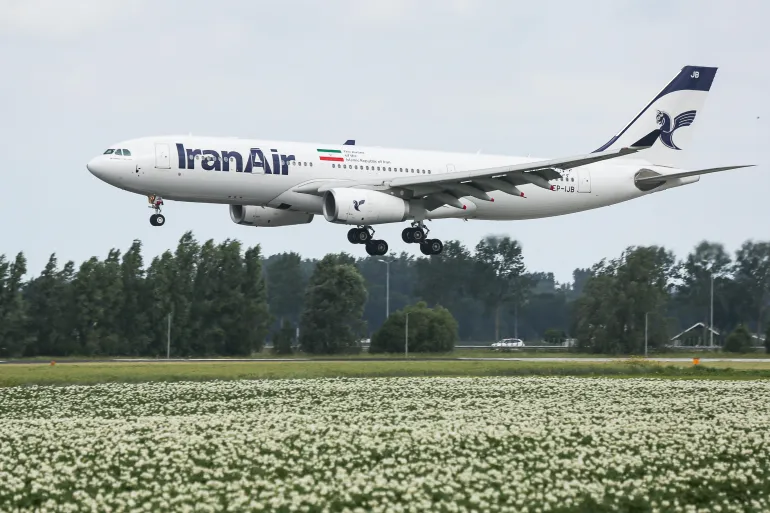
Iran has issued a warning to neighbouring countries that cooperate with new United States restrictions on Iranian airlines, raising fresh concerns about aviation and regional security as the nearly seven-month US-Israel war with Iran continues.
Mohsen Rezaei, secretary of Iran's Supreme National Security Council, said countries that prevent Iranian airlines from using their airports could face retaliation from Tehran.
“If a country cooperates with or embarks on adventures with the United States, its airports will no longer be able to operate flights to Iran, Rezaei said on Iranian state television, according to Reuters and Al Jazeera.
The warning came as new US sanctions targeting Iran's aviation sector began affecting international flights. Several neighbouring countries have already suspended or restricted services involving Iranian carriers.
What exactly has Iran threatened?
Iran's warning has generated concern because of the wording used by Rezaei.
He said Iran would ensure airports in countries cooperating with Washington “cannot function.” However, Iranian authorities have not publicly explained what specific action they would take to achieve that objective.
That leaves several possibilities, ranging from diplomatic and economic retaliation to other measures. There is currently no publicly announced Iranian plan specifying that airports in neighbouring countries will be attacked.
This distinction is important because a threat to disrupt aviation is not the same as a confirmed decision to launch military attacks against airports.
Al Jazeera reported that security analyst Wolfgang Pusztai, a former Austrian defence attaché, considered an Iranian attack on regional airports extremely unlikely.
Why is Iran making the threat now?
The immediate background is a new US campaign aimed at restricting Iran's international aviation network.
The US Treasury announced sanctions earlier in September against Iran's remaining airlines and foreign companies and intermediaries accused of supporting their operations.
The measures expanded restrictions to 27 Iranian airlines, while also warning foreign aviation service providers that they could face secondary US sanctions if they continue servicing Iranian aircraft.
US Treasury Secretary Scott Bessent warned that companies providing Iranian aircraft with services such as fuel, landing facilities or ticketing could risk losing access to the US financial system.
Washington says the restrictions are intended, among other things, to prevent Iranian commercial aviation from being used for weapons procurement and transportation linked to Iran's Islamic Revolutionary Guard Corps.
Iran regards the measures as part of Washington's broader economic pressure campaign.
Which countries have already restricted Iranian flights?
The effects are already visible.
Azerbaijan and Georgia confirmed suspensions of Iranian flights, while Iranian flights to Baghdad and Muscat have also been cancelled or halted.
On Thursday, Iranian flights to and from the United Arab Emirates were also reported to have been cancelled.
Flights involving Turkiye and China have continued in part, although some services have also been cancelled.
Iranian authorities had earlier announced that flights to Baghdad and Muscat would be cancelled after the airports stopped accepting Iranian flights. Iranian officials said some Baghdad-bound flights could instead be redirected to Najaf.
The result is a rapidly shrinking network of international air connections for Iranian travellers.
How badly has Iran's aviation network been affected?
Iran's international aviation network was already under pressure before the latest sanctions.
According to aviation analytics company Cirium, international flight capacity from Iran in August 2026 was 49 per cent lower than in August 2025.
The latest restrictions have reduced the number of available routes even further, with thousands of passengers turning to land crossings through countries such as Turkiye and Armenia to reach onward international flights.
Some border crossings have reportedly experienced heavy congestion as passengers look for alternatives to cancelled flights.
For many Iranians, however, international travel is increasingly difficult not only because of limited flights but also because of deteriorating economic conditions.
Could Iran actually shut down neighbouring airports?
Iran does not have legal authority to determine whether an airport in another sovereign country remains operational.
Likewise, US sanctions cannot legally order another country to close its airport.
However, the situation becomes more complicated when military and economic pressure are considered.
Iran has demonstrated during the current conflict that it possesses the ability to threaten aviation infrastructure indirectly through missile and drone attacks.
During the opening phase of the war, Iranian missiles and drones targeted locations across the Gulf region, and airports in Dubai, Abu Dhabi, Kuwait and Bahrain were affected by projectiles either directly or after interception.
Several Gulf countries temporarily closed or restricted their airspace, causing major disruptions to commercial aviation.
According to Al Jazeera, Gulf airlines have taken months to restore schedules, while the International Air Transport Association estimates Middle Eastern airlines are on track for a collective $4.3 billion loss in 2026.
The earlier disruptions demonstrate why even the possibility of another escalation is significant for airlines and travellers.
Why would airports become a target?
The immediate dispute is not fundamentally about airports themselves.
It is about access to aviation services.
Iranian airlines depend on foreign airports for landing rights, fuel, maintenance, passenger transfers and other services.
If neighbouring countries stop providing those services because of US sanctions, Iran's international aviation network becomes increasingly isolated.
The threat from Tehran can therefore be understood partly as an attempt to discourage neighbouring governments from implementing Washington's restrictions.
Security analyst Pusztai told Al Jazeera that the restrictions could have a significant psychological impact inside Iran because the consequences are immediately visible to ordinary people.
Passengers can see flights disappearing from departure boards, routes being cancelled and travel becoming more complicated.
Could the sanctions affect ordinary Iranians?
Yes.
The most immediate impact is likely to be on passengers who need to travel internationally.
With fewer direct flights available, travellers may have to use longer and more expensive routes through countries where Iranian airlines can still operate.
Thousands have reportedly been pushed toward land crossings with Turkiye and Armenia.
There are also potential consequences for people who depend on international aviation for business, education, medical treatment, tourism and family travel.
Al Jazeera reported that the restrictions could also place tens of thousands of jobs at risk across aviation and related sectors such as tourism and hospitality.
What about the wider Middle East travel industry?
The consequences could extend beyond Iran.
The Middle East has already experienced substantial aviation disruption since the conflict began.
Major regional hubs, including Dubai, were affected during the initial fighting.
Al Jazeera reported that passenger traffic at Dubai International Airport fell by 31 per cent during the first half of 2026 compared with the same period in 2025.
Further escalation could therefore affect airlines, airports, hotels, tourism companies and businesses dependent on international visitors.
The World Travel & Tourism Council previously estimated that the conflict was costing the region hundreds of millions of dollars a day in international visitor spending, while Tourism Economics forecast a significant decline in international travel to Gulf countries during 2026.
Could the situation affect global air travel?
The direct effect on global aviation would depend heavily on whether the dispute remains limited to sanctions and flight cancellations or develops into another round of military escalation.
The Gulf is one of the world's most important aviation corridors.
Airlines based in countries such as the UAE and Qatar connect Europe, Asia, Africa and the Americas, making regional airspace disruptions capable of affecting routes far beyond the Middle East.
The experience earlier in 2026 showed how quickly commercial aviation can be disrupted when airspace becomes unsafe.
Airlines may have to reroute aircraft, cancel services or increase flight times if parts of the region become unavailable.
Why the threat is being taken seriously
The threat comes against the backdrop of an already active military confrontation.
Iran has previously demonstrated that it can launch missiles and drones over significant distances, while the United States, Israel and their regional partners maintain extensive military capabilities in the region.
That does not mean an attack on a neighbouring airport is inevitable.
In fact, the security analyst cited by Al Jazeera assessed such an attack as extremely unlikely.
But the possibility of escalation matters because airports are highly sensitive infrastructure. Even a limited security incident can trigger airspace closures, flight cancellations and insurance or operational restrictions.
What happens next?
Several developments will be important to watch:
1. Whether neighbouring countries continue suspending Iranian flights.
A broader suspension would further isolate Iranian commercial aviation.
2. Whether Iran specifies what retaliation means.
So far, Tehran has issued a broad warning without publicly detailing the precise measures it would take.
3. Whether Washington expands its sanctions.
The United States could impose further restrictions on companies providing aviation services to Iranian carriers.
4. Whether other countries continue serving Iran.
Turkiye, China and other countries could become increasingly important to Iran's remaining international aviation network.
5. Whether the aviation dispute triggers wider military escalation.
This would have consequences far beyond Iran's airline industry.
The Bigger Picture
The dispute over Iranian flights is part of a much broader confrontation between Iran and the United States.
Washington is using financial and aviation restrictions to increase pressure on Tehran, while Iran is warning neighbouring governments against cooperating with those measures.
For travellers, the consequences are already visible through cancelled flights and fewer international connections.
For neighbouring countries, the dilemma is more complicated: continuing to serve Iranian airlines could expose companies and aviation providers to US sanctions, while complying with Washington could provoke retaliation from Tehran.
For the international aviation industry, the central concern is whether the dispute remains an economic and diplomatic confrontation or becomes another source of military disruption across one of the world's busiest air corridors.
Factful24 Verification Note
Iranian threat: Iranian security official Mohsen Rezaei warned that airports in neighbouring countries cooperating with US restrictions could be prevented from operating flights to Iran.
US sanctions: Washington has targeted 27 Iranian airlines and warned foreign aviation service providers about potential secondary sanctions.
Flight disruption: Azerbaijan, Georgia, Iraq, Oman and the UAE have been involved in recent suspensions or cancellations affecting Iranian flights, while some services through Turkiye and China remain.
Iran's international capacity: Cirium data cited by Al Jazeera showed international capacity from Iran was 49% lower in August 2026 than a year earlier.
Airport attacks: There is no verified public evidence in the reporting reviewed that Iran has announced a specific plan to attack neighbouring airports. The threat's precise form remains unclear.
Regional aviation: The Middle East's aviation sector has already suffered major disruption during the current conflict.
Factful24 Takeaway
Iran's warning comes at a time when US sanctions are rapidly shrinking the country's international aviation options. The immediate effect is greater difficulty and cost for Iranian travellers, while the broader risk is that further confrontation could once again disrupt airspace and commercial aviation across the Gulf.
The most important question is therefore not simply whether Iran has threatened neighbouring airports, but what form any retaliation would take and whether the aviation dispute remains contained or contributes to another escalation in the region.
Source: https://www.aljazeera.com/news/2026/9/24/why-is-iran-threatening-regional-airports-and-what-could-be-the-impact