
United States | News
Trump Praises US-China Friendship at State Dinner With Xi Jinping
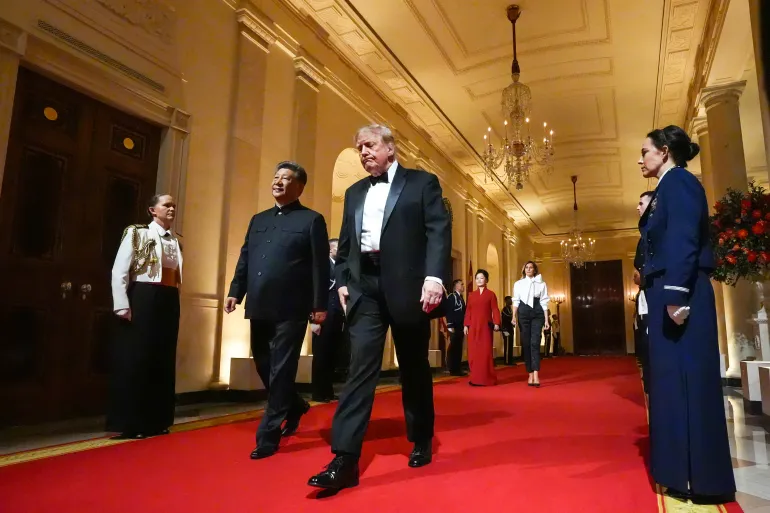
Washington, D.C. — September 25, 2026
US President Donald Trump used a lavish White House state dinner for Chinese President Xi Jinping to emphasise what he described as improving personal ties between the two leaders, while acknowledging that the United States and China continue to operate under different political systems and have significant disagreements.
The dinner on Thursday, September 24, followed a full day of talks between Trump and Xi during the Chinese president's state visit to Washington. Xi's visit is his first to the US capital in more than a decade and marks the second meeting between the two leaders this year.
Trump: 'We've Never Gotten Along Better'
During his toast at the dinner, Trump said he and Xi understood that the two countries represented different systems but argued that ties between their populations remained important.
Trump said the relationship between the two leaders had reached a particularly positive point and expressed the hope that Washington and Beijing could continue building relations around economic prosperity and security.
His remarks represented a notably warm public tone following years of intense US-China competition over trade, technology, Taiwan and strategic influence.
However, the warmer rhetoric does not mean that the major disagreements between Washington and Beijing have disappeared.
Trade, Taiwan, AI and Iran Remain Major Issues
Earlier in the day, Trump and Xi held talks on several issues affecting the bilateral relationship and wider international affairs.
Among the subjects surrounding the summit were trade, Taiwan, artificial intelligence and the conflict involving Iran.
The two governments remain competitors in several strategic areas, particularly advanced technology and artificial intelligence, while trade and access to critical resources such as rare earth elements remain important economic issues.
The summit therefore combined efforts to improve dialogue with continuing disagreements over major geopolitical and economic questions.
Xi Also Strikes a Cooperative Tone
Xi used his own toast to connect the ambitions of the two governments.
He referred to Trump's goal of making America great again and China's objective of national rejuvenation, arguing that the two ambitions could be mutually reinforcing.
The remarks reflected Beijing's public emphasis on cooperation and managing differences while maintaining China's broader national objectives.
China's government had previously said Xi's September 23–25 visit was intended to promote dialogue, cooperation and the management of differences between the two countries.
Tech Leaders and Billionaires Among Dinner Guests
The state dinner brought together senior government figures, business leaders and some of the world's most prominent technology executives.
Those reported to have attended included OpenAI CEO Sam Altman, Amazon founder Jeff Bezos, Tesla and SpaceX CEO Elon Musk, Nvidia CEO Jensen Huang and LVMH CEO Bernard Arnault.
The technology-heavy guest list reflected the importance of technology and artificial intelligence to the modern US-China relationship.
A Highly Symbolic White House Event
The White House had planned an elaborate programme for Xi's state visit.
The visit included a formal arrival ceremony, military honours and a state dinner hosted by Trump and First Lady Melania Trump. The White House said the dinner was attended by official delegations, business leaders and government officials.
The dinner's menu and decorations were also designed to incorporate elements associated with both countries. The White House said the opening toast featured Schramsberg Blanc de Noir, recalling the wine served during the 1972 "Toast to Peace" involving US President Richard Nixon and Chinese Premier Zhou Enlai.
Trump Shows Xi White House Construction Project
Trump also used the occasion to showcase his ongoing White House construction project.
According to reports, Trump invited dinner guests to view the site of the new White House ballroom after the dinner. The president has promoted the project as a major addition to the White House complex.
The episode added a personal and ceremonial dimension to a summit otherwise dominated by serious questions involving global security, trade and technology.
Why the Meeting Matters
The Trump-Xi meeting comes at a time when decisions made by Washington and Beijing can have consequences well beyond their borders.
The United States and China are the world's two largest economies, and disagreements between them can affect global trade, technology supply chains, investment, energy markets and international security.
At the same time, cooperation between the two governments could reduce the risk of further escalation in areas where their interests overlap.
The public tone of the state dinner therefore stood in contrast to the strategic competition that continues underneath the diplomatic ceremony.
Verified Note
| ClaimStatus | |
| Trump hosted Xi Jinping for a White House state dinner on September 24, 2026 | Confirmed |
| Trump praised the relationship between himself and Xi | Confirmed from his dinner remarks |
| Trump and Xi discussed major differences involving trade, Taiwan and AI | Reported/confirmed by multiple accounts |
| Xi's Washington visit is his first in more than a decade | Confirmed in reporting and White House material |
| The dinner included major technology and business figures | Confirmed |
| US-China strategic disagreements have ended | Not established |
| The warm dinner means the two countries have resolved their major disputes | Not established |
The Trump-Xi state dinner was a highly symbolic display of diplomatic warmth, but the broader US-China relationship remains complex.
Trump publicly emphasised his relationship with Xi and the importance of US-China ties, while Xi similarly presented cooperation between the two countries as compatible with their respective national ambitions.
The more significant test will be whether the diplomatic engagement produces concrete progress on the issues that continue to divide Washington and Beijing — particularly trade, Taiwan, artificial intelligence, technology and broader geopolitical tensions.
Sources: Al Jazeera, The White House, Associated Press/Reuters reporting and other corroborating reports.