
Middle East | News
Saudi Arabia Rallies Allies as Houthi Attacks Intensify; France Moves to Protect Key Oil Terminal
September 25, 2026 | Middle East
Saudi Arabia is seeking increased support from regional and international partners as attacks by Yemen's Houthi movement intensify, raising concerns over the security of the kingdom's cities, energy infrastructure and the strategically important Red Sea shipping route.
France has announced plans to send soldiers, radar equipment and defensive systems to protect the major Saudi oil terminal at Yanbu, while Saudi Arabia, Türkiye and Pakistan are preparing an urgent meeting of their military chiefs under a newly established defence agreement.
The developments mark a significant escalation in the regional security situation and are unfolding against the backdrop of the wider Middle East conflict involving Iran.
France to Protect Key Yanbu Oil Facility
French President Emmanuel Macron said France would send military assets to Yanbu, one of Saudi Arabia's most important Red Sea ports.
Macron said the deployment would include soldiers, radar systems and defence equipment intended to protect the facility.
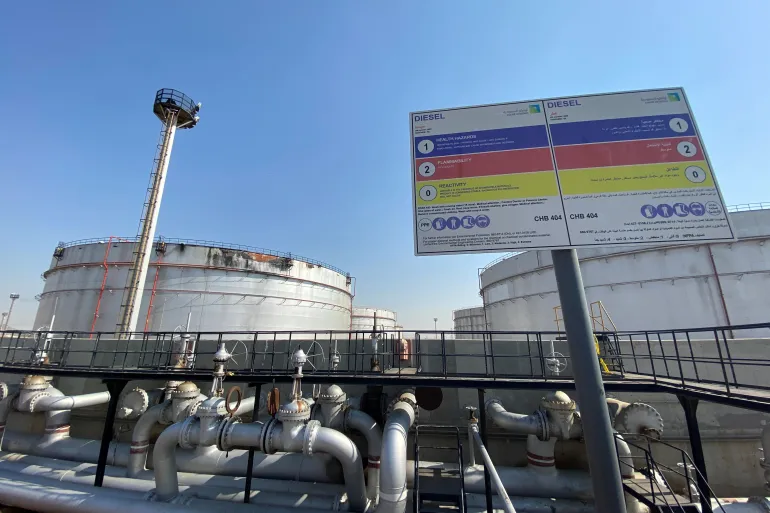
Yanbu is strategically important because it hosts major Saudi energy infrastructure and serves as an alternative export route for Saudi oil when shipping through other regional waterways is disrupted.
The decision comes after Saudi authorities reported that Houthi forces had targeted infrastructure in and around Yanbu.
Saudi Arabia, Türkiye and Pakistan Plan Urgent Military Talks
Saudi Arabia, Türkiye and Pakistan are also moving to deepen military coordination.
Their foreign ministers met in New York and agreed to arrange an urgent meeting involving the three countries' military chiefs.
The discussions are being conducted under the Mecca Joint Defence Agreement, signed by Saudi Arabia, Türkiye and Pakistan in August.
The agreement states that an armed attack against one member is considered an attack against all three.
However, officials have not publicly specified what form any military assistance to Saudi Arabia would take.
That distinction is important: the planned military meeting does not by itself mean that Türkiye or Pakistan have announced direct combat operations against the Houthis.
Six Ballistic Missiles Reportedly Intercepted
Saudi authorities said their air defences intercepted six ballistic missiles launched by Houthi fighters on Thursday.
The Saudi military also reported attacks directed toward areas including Taif and Yanbu.
Saudi Civil Defence authorities issued alerts in several areas before later announcing that the immediate danger had passed.
The Houthis, meanwhile, claimed they had launched dozens of missiles and drones against Saudi targets, including what they described as sensitive sites in Riyadh and facilities belonging to Saudi Aramco in Yanbu.
Some of those Houthi claims have not been independently verified.
Riyadh Has Also Come Under Attack
The latest escalation follows an earlier Houthi attempt to strike Riyadh with a ballistic missile.
Saudi Arabia said the missile was intercepted on September 19. Residents reported hearing an explosion and seeing smoke near the capital's airport, but authorities reported no casualties or significant damage from that particular incident.
The Houthis also claimed attacks against Saudi energy infrastructure and other strategic sites.
The attacks have increased pressure on Saudi Arabia's air-defence capabilities and prompted Riyadh to seek assistance from partners.
Türkiye Has Already Offered Military Assistance
Türkiye had already signalled its willingness to assist Saudi Arabia.
Turkish Foreign Minister Hakan Fidan said earlier in September that Riyadh could have military requirements arising from the Houthi attacks and that Türkiye would consider meeting technical defence needs under the trilateral agreement.
Fidan also said Türkiye did not want Saudi Arabia to be drawn further into the wider US-Iran conflict.
The latest planned meeting with Saudi and Pakistani military chiefs could therefore provide a mechanism for determining what assistance, if any, the partners will provide.
Pakistan's Position
Pakistan is also part of the Mecca Joint Defence Agreement, but Islamabad has previously indicated that there had been no decision for an immediate military response to the Houthi attacks.
Pakistan has nevertheless reaffirmed its commitment to the agreement and indicated that it would act if circumstances required it.
The upcoming military discussions will therefore be closely watched for indications of whether the agreement remains primarily a framework for deterrence and coordination or develops into a more active military arrangement.
What About Iran?
The Houthi movement is widely described by governments and international media as being aligned with Iran.
However, Iranian President Masoud Pezeshkian sought to distance Tehran from the group's latest attacks during an interview with Fox News.
Pezeshkian said the Houthis were responsible for their own actions.
The statement came shortly before Saudi, Turkish and Pakistani officials announced their plans for deeper defence coordination.
Reuters reported that the Houthi offensive is taking place within a wider Middle East war that began with US and Israeli strikes on Iran in February.
Why Yanbu Matters
Yanbu is strategically important to Saudi Arabia because of its location on the Red Sea and its extensive oil and petrochemical infrastructure.
Any sustained disruption to the facility could have consequences beyond Saudi Arabia because the kingdom is one of the world's largest oil exporters.
The Red Sea is also an important international trade route connecting the Mediterranean and Indian Ocean through the Suez Canal and Bab el-Mandeb Strait.
The Houthi advance along Yemen's western coastline has therefore generated concerns about the security of commercial shipping and energy exports. Reuters reported that the group's recent military gains have increased its leverage around the Bab el-Mandeb waterway.
A Wider Regional Security Test
The situation is also testing Saudi Arabia's evolving network of defence partnerships.
The Mecca Joint Defence Agreement was created only recently, meaning the current crisis represents one of its earliest major tests.
At the same time, Riyadh is receiving support signals from France while seeking coordination with Türkiye and Pakistan.
The United States has taken a different position. Earlier reporting indicated that Washington had declined to provide direct military support to Saudi Arabia against the Houthis while maintaining communications with the group.
That approach reflects the broader complexity of the current Middle East conflict, in which several governments are attempting to protect their own security interests without becoming directly involved in every theatre of the war.
Verified Note
| ClaimStatus | |
| France plans to send military assets to protect Yanbu | Confirmed by Macron's statement |
| Saudi Arabia, Türkiye and Pakistan plan an urgent chiefs-of-staff meeting | Confirmed |
| The three countries signed the Mecca Joint Defence Agreement | Confirmed |
| Saudi Arabia reported intercepting six ballistic missiles | Confirmed as a Saudi military claim |
| Houthis claimed dozens of missile/drone attacks | Confirmed as a Houthi claim |
| All Houthi claims of damage to Saudi facilities have been independently verified | No |
| Türkiye has offered to help meet Saudi military needs | Confirmed |
| Pakistan has announced immediate combat operations against the Houthis | Not established |
| Iran has acknowledged directing the latest Houthi attacks | No; Iran's president has publicly distanced Tehran from the group's actions |
Saudi Arabia is facing an expanding security challenge as Houthi attacks increasingly target areas around its cities and energy infrastructure.
The response is becoming increasingly international: France is preparing defensive assistance for Yanbu, while Saudi Arabia, Türkiye and Pakistan are preparing military consultations under their new defence pact.
However, the latest developments should not be interpreted as confirmation that Türkiye, Pakistan or France have entered direct combat against the Houthis.
The immediate question is whether the new defence arrangements will remain focused on air defence, intelligence, technical assistance and deterrence, or whether the escalating attacks will eventually lead to broader military involvement.
The consequences could extend beyond Yemen and Saudi Arabia, particularly because the conflict is unfolding near major oil infrastructure and the Bab el-Mandeb shipping corridor.
Sources: Al Jazeera, Reuters, Associated Press and official statements cited in the reports.