
News
Tinubu Impeachment: Senate Arithmetic That Could Save the President
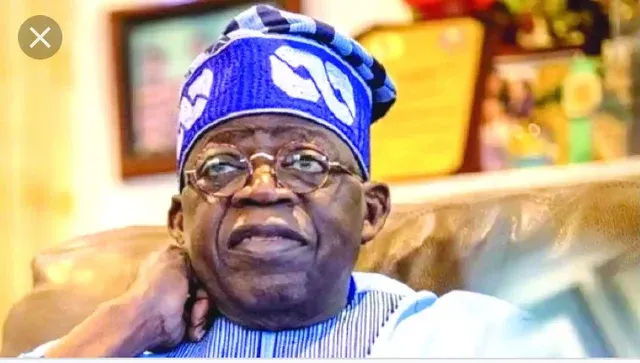
The renewed calls for the impeachment of President Bola Ahmed Tinubu have reopened debate over presidential accountability, constitutional procedure and the political arithmetic of Nigeria’s National Assembly.
The controversy intensified following questions surrounding the President’s prolonged absence from Nigeria and whether the constitutional procedure under Section 145 of the 1999 Constitution was properly followed.
Some opposition figures and civil society voices have called for the National Assembly to take action, with some demanding that Vice-President Kashim Shettima be allowed to formally assume presidential responsibilities.
But while the Constitution provides a mechanism for removing a sitting president, the numerical requirements make impeachment a considerably more complicated process than a political declaration, press conference or legislative protest.
What the Constitution Requires
Nigeria's Constitution does not allow the Senate alone to remove a president.
Under Section 143, presidential impeachment requires the participation of both chambers of the National Assembly—the Senate and the House of Representatives.
The process begins with a written notice alleging gross misconduct. The notice must be signed by at least one-third of all members of the National Assembly.
The allegation must also contain detailed particulars of the alleged misconduct.
After the notice is presented, both chambers must decide whether the allegations should be investigated. That vote requires a two-thirds majority in both the Senate and House of Representatives.
If that threshold is reached, the Senate President requests the Chief Justice of Nigeria to constitute a seven-member investigative panel.
The panel is then expected to investigate the allegations and give the President an opportunity to defend himself.
Even if the panel finds the allegations established, removal is still not automatic.
The report must return to the National Assembly, where each chamber must again approve the report by a two-thirds majority of all its members.
This makes presidential impeachment one of the most demanding constitutional procedures in Nigeria's political system.
The Numbers Matter. The Senate has 109 members. A two-thirds majority therefore requires 73 senators.
The House of Representatives has 360 members, meaning a two-thirds majority requires 240 representatives.
Those figures are central to the current debate. Following the June 2026 bye-elections, BusinessDay reported that the APC controlled 88 of the 109 Senate seats, while the ADC had nine, PDP five, NDC four, and APGA, Labour Party and Accord one seat each.
Consequently, the ruling APC alone holds considerably more than the 37 senators needed to prevent a two-thirds majority of 73 from being reached. That does not mean APC senators are constitutionally incapable of voting against the President.
It means that opponents of Tinubu would need substantial support from members of the President's own party to reach the constitutional threshold.
And even if such a coalition emerged in the Senate, the House of Representatives would present another major hurdle.
Impeachment Is Different From an Impeachment Threat. Nigeria's political history contains several examples of presidential impeachment threats that never developed into completed removal proceedings.
In 2002, President Olusegun Obasanjo faced an impeachment campaign in the House of Representatives amid allegations including constitutional violations, corruption and other complaints. The political confrontation generated considerable attention, but the process did not result in Obasanjo's removal.
The country witnessed another major confrontation during the administration of President Muhammadu Buhari.
In 2018, lawmakers warned that the National Assembly could invoke its constitutional powers over concerns including insecurity and alleged political interference.
Buhari nevertheless remained in office until the end of his second term in 2023.
In 2022, opposition senators again threatened impeachment proceedings against Buhari over worsening insecurity.
The lawmakers announced a six-week ultimatum and publicly demanded action from the government.
However, the threatened impeachment did not materialise into the constitutional removal process. The distinction is important. A political statement is not an impeachment notice. A press conference is not an impeachment proceeding.
A legislative walkout is not an impeachment. And even a formally initiated impeachment process still has several constitutional stages to cross before a president can actually be removed.
Why Tinubu's Numbers Are Significant
The present Senate composition makes the arithmetic particularly important.
With the APC holding 88 of 109 Senate seats, opposition parties would require substantial support from ruling-party lawmakers to obtain the 73 votes required for a two-thirds majority.
The same principle applies to the House.
The 240-vote threshold means that an impeachment effort would require a broad coalition rather than. opposition-party support alone. In practical terms, those seeking Tinubu's removal would have to persuade significant numbers of legislators who won their seats under the governing party's platform to support the process.
That is substantially different from mobilising opposition lawmakers or generating public pressure.
The Section 145 Controversy
The immediate dispute surrounding Tinubu's absence is also different from earlier impeachment controversies.
At the centre of the present argument is Section 145 of the Constitution.
The provision addresses situations where the President proceeds on vacation or is otherwise unable to discharge the functions of his office. It provides for the President to transmit a written declaration to the President of the Senate and the Speaker of the House stating that the Vice-President should perform presidential functions as Acting President.
Critics of the administration have questioned whether the constitutional requirements were properly satisfied during Tinubu's prolonged absence.
However, the interpretation of the circumstances surrounding the President's absence has become politically contested.
Tinubu's camp has rejected the suggestion that there is a constitutional vacuum. Senate President Godswill Akpabio has maintained that Tinubu remains in charge, while Senate spokesman Yemi Adaramodu has also rejected calls for the National Assembly to be reconvened solely because of political demands surrounding the President's absence.
The issue therefore involves both constitutional interpretation and political judgment by the institutions involved.
What Would Have to Happen for Impeachment to Succeed?
For an impeachment effort to reach its conclusion, several stages would have to be successfully completed.
First, at least one-third of National Assembly members would have to sign a written notice containing detailed allegations of gross misconduct.
Second, both chambers would have to approve an investigation by a two-thirds majority.
Third, a seven-member investigative panel would have to be constituted by the Chief Justice of Nigeria.
Fourth, the panel would investigate the allegations and allow the President an opportunity to defend himself.
Fifth, if the panel establishes the allegations, its report would return to the National Assembly.
Finally, both the Senate and House would have to approve the report by two-thirds majorities.
For the Senate, that means 73 votes.
For the House, it means 240 votes.
Failure to reach the required threshold at the relevant stage would prevent the process from advancing.
The President Does not need Two-Thirds Support. One of the most important features of the constitutional arithmetic is that the President does not need two-thirds of lawmakers to support him.
He needs enough lawmakers to prevent opponents from reaching the two-thirds threshold. That distinction significantly changes the political calculation.
If opponents obtain 60 Senate votes, for example, that would represent a substantial political challenge but would still fall short of the 73 votes constitutionally required for the relevant two-thirds threshold.
The same principle applies in the House.
This is why the distribution of seats matters so much in an impeachment dispute. Could APC Lawmakers Turn Against Tinubu? Constitutionally, lawmakers are not required to vote according to party affiliation. Therefore, APC senators and representatives could theoretically support impeachment proceedings
But such a development would fundamentally change the political arithmetic. Opposition parties alone would have to build a much broader coalition involving lawmakers from the governing party.
The situation would become particularly significant if large numbers of APC legislators publicly supported an impeachment process.
At present, however, the reported composition of the Senate means that opposition lawmakers do not possess enough seats by themselves to reach the two-thirds threshold. Public Pressure and Constitutional Action Are Different
The renewed impeachment debate nevertheless has political significance.
Calls for removal can increase public scrutiny of presidential conduct and place pressure on lawmakers to explain their position. The National Assembly also possesses other oversight mechanisms short of impeachment.
Lawmakers can debate government actions, conduct investigations, summon officials and demand explanations on matters of public concern.
Therefore, political pressure surrounding Tinubu does not automatically mean that impeachment is the only constitutional response available to lawmakers.
The distinction between oversight, investigation and removal is important in understanding the current situation.
Nigeria's Impeachment History
Nigeria's Fourth Republic has repeatedly demonstrated how difficult presidential impeachment can be.
The Obasanjo episode of 2002 did not result in removal.
The threats against Buhari in 2018 did not result in removal.
The 2022 impeachment threat against Buhari also failed to develop into a successful removal process.
These episodes demonstrate that the political declaration of an impeachment threat and the completion of the constitutional procedure are two very different events.
The current Tinubu controversy will therefore have to be judged not merely by the volume of political statements but by whether lawmakers actually initiate the constitutional process and whether the required numerical thresholds can be reached.
The Bigger Question
The present controversy raises a broader question about the balance between executive power and legislative oversight in Nigeria's presidential system.
Section 143 creates a mechanism for removing a president accused of gross misconduct.
Section 145 addresses presidential inability and the transfer of functions to the Vice-President in specified circumstances.
The controversy surrounding Tinubu has brought both provisions into renewed public attention.
But constitutional mechanisms ultimately depend on institutions acting according to the procedures established by law.
For now, the Senate arithmetic is significant.
With the APC holding 88 of 109 Senate seats, opponents of the President would need considerable support from lawmakers outside their existing opposition base to reach the 73 votes required for a two-thirds Senate majority.
They would then face the additional challenge of securing 240 votes in the 360-member House of Representatives.
Consequently, any serious impeachment effort would have to evolve from political rhetoric into a broad legislative coalition capable of surviving multiple constitutional hurdles.
The debate over Tinubu's impeachment is therefore not simply about whether lawmakers can raise the issue.
It is about whether those calling for his removal can assemble the numbers required by the Constitution—and sustain that support through every stage of the process.
Source: BusinessDay; constitutional provisions referenced from Nigeria's 1999 Constitution as reported and discussed in the source article.