
News
Tinubu’s 2026 Independence Day Speech: From Economic Reform to the Promise of Prosperity — What the President’s Claims Mean for Nigerians
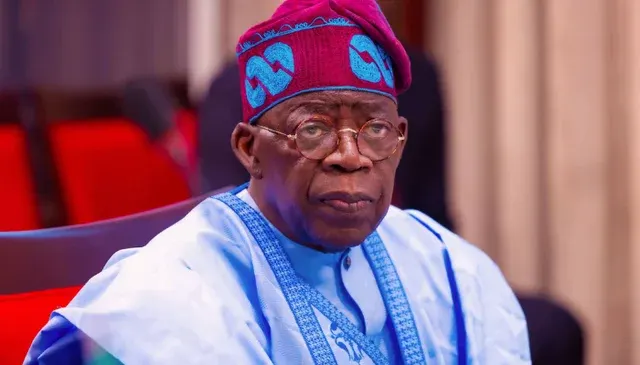
President Bola Ahmed Tinubu used Nigeria’s 66th Independence Day address to make a major argument about the direction of his administration: the period of painful economic restructuring, he said, has largely run its course, and the country must now move from reform to prosperity.
In a speech titled “From Reform to Prosperity,” delivered on October 1, 2026, Tinubu defended the economic choices made since he assumed office in May 2023, acknowledged that the reforms had imposed real hardship on Nigerians, and argued that the economy is now better positioned for growth.
His central message was encapsulated in one sentence:
“The age of reform has done its work. Now begins the age of prosperity.”
But behind that optimistic declaration lies a more complicated economic picture.
Nigeria's headline economic indicators have improved in several areas. Growth has strengthened, inflation is considerably lower than its earlier peak, the external position has improved, and foreign reserves have risen. The National Bureau of Statistics reported real GDP growth of 3.89 per cent year-on-year in the first quarter of 2026, compared with 3.13 per cent in the corresponding quarter of 2025.
At the same time, economic stabilization has not automatically translated into a comparable improvement in household living standards.
The World Bank says poverty remains widespread and that the number of people entering Nigeria's labour force continues to substantially exceed the number of quality jobs being created. It also says food inflation continues to affect poor households disproportionately.
That tension — between improving macroeconomic indicators and the everyday experience of millions of Nigerians — is the key to understanding Tinubu's Independence Day speech.
The President's central argument: Nigeria had to endure the pain. Tinubu's speech presented his administration's economic programme as a necessary intervention in an economy that, in his description, had accumulated serious structural weaknesses over decades.
He used the analogy of a patient diagnosed with cancer. According to the President, Nigeria's previous governments had often chosen to suppress the symptoms of economic problems rather than address their underlying causes. He compared subsidies and other interventions that he considers inefficient to morphine administered to a seriously ill patient.
His argument was that removing fuel subsidies, changing foreign-exchange policies and pursuing fiscal and monetary reforms were painful but necessary measures.
Tinubu therefore rejected the argument that the hardship experienced by Nigerians over the past three years should primarily be attributed to his reforms.
Instead, he argued that the reforms exposed and confronted weaknesses that already existed.
This is an important distinction because the economic debate surrounding his administration has largely revolved around two competing interpretations.
The first is that Nigeria needed major structural reforms and that the short-term pain was unavoidable if the country was to achieve long-term stability.
The second is that, even if reforms were necessary, the pace and implementation of those reforms created severe costs for households and businesses, and that government support did not always adequately cushion vulnerable Nigerians.
The World Bank's assessment provides evidence for elements of both positions. It says recent reforms have helped restore macroeconomic stability, but it also notes that household incomes have not fully recovered and poverty remains high. The numbers behind Tinubu's economic optimism.
One of the strongest parts of Tinubu's argument is the improvement in several macroeconomic indicators.
The National Bureau of Statistics currently reports headline inflation at 15.39 per cent under the rebased Consumer Price Index. Food inflation remains substantially higher, at 19.57 percent.
That distinction is critical.
A decline in the inflation rate does not mean that prices have returned to their previous levels.
Inflation measures the rate at which prices are increasing. Therefore, if inflation falls from a very high level to 15 per cent, prices can still be considerably higher than they were several years earlier.
This is one reason why a government can report falling inflation while households continue to complain about the cost of food, transport, rent, healthcare and education.
Tinubu's promise to reduce the cost of living therefore faces a different test from simply reducing the inflation rate.
The question for households is not only whether prices are rising more slowly, but whether wages and incomes are rising sufficiently to make those prices affordable.
That is where the next phase of the administration's economic programme becomes particularly important.
GDP growth is improving, but growth alone is not enough
Tinubu said Nigeria's economy has grown by more than 4 per cent in 2026.
The available official data show that real GDP grew by 3.89 per cent in the first quarter of 2026. The World Bank subsequently reported that real GDP growth reached 4.2 per cent in the first half of 2026, driven mainly by services and stronger agricultural activity.
This supports the President's broader argument that economic growth has strengthened.
However, GDP growth does not automatically translate into improved living standards.
A country can experience economic expansion while many citizens remain unemployed, underemployed or unable to afford basic goods. This is particularly important in Nigeria because of the country's rapidly growing working-age population.
The World Bank estimates that approximately 3.5 million people enter Nigeria's labour force every year. It warns that weak job creation and limited entrepreneurial opportunities remain major challenges.
Therefore, one of the most important tests of Tinubu's promised “age of prosperity” will be whether economic growth produces sufficient productive employment.
For millions of young Nigerians, GDP statistics matter less than whether they can find a job, establish a viable business, earn a predictable income or acquire the skills needed to participate in the modern economy.
Inflation: progress, but food remains a major pressure point
Tinubu highlighted the decline in inflation as evidence that the reforms are working.
There is evidence supporting that claim.
The World Bank reported that inflation declined substantially from its earlier peak, although food inflation remained elevated.
The NBS's current data show headline inflation at 15.39 per cent, while food inflation is 19.57 per cent.
For ordinary households, the food number may be more significant than the headline figure.
Food is not an optional expenditure. Poorer households devote a large share of their income to feeding their families, meaning food-price increases can have a greater impact on their welfare than changes in many other categories.
The World Bank notes that poor households can spend up to 70 per cent of their income on food.
This helps explain why the President's emphasis on agricultural productivity, irrigation, mechanisation, storage and transport is strategically important.
If those measures succeed, the potential effect could extend beyond agriculture.
Higher agricultural productivity could reduce food supply shortages, improve farmer incomes, reduce post-harvest losses and strengthen domestic supply chains.
But the results will depend on implementation.
Agriculture becomes central to Tinubu's next phase
One of the clearest priorities in Tinubu's speech was agriculture.
The President said his administration would expand mechanised irrigation and dry-season farming, improve access to seeds and fertiliser, increase mechanisation, and invest in storage and transportation. He also linked agriculture to infrastructure. The logic is straightforward: farmers need roads and transport systems to move their products to markets. Manufacturers need access to reliable energy and logistics. Consumers ultimately pay the cost when transportation, storage, electricity and production are inefficient.
Tinubu therefore presented infrastructure and agricultural productivity as tools for reducing the cost of living.
This approach also reflects a broader economic principle: sustainable reductions in consumer prices are more likely to come from increased productivity and improved supply than from temporary price controls.
But there are significant obstacles.
Farmers need security, access to land, affordable finance, irrigation, machinery and reliable markets. Agricultural expansion can also be undermined by insecurity, climate shocks and inadequate rural infrastructure.
The President's agricultural programme will therefore be judged not simply by how much money is announced for agriculture but by how effectively those resources translate into increased production and lower costs.
The security question cannot be separated from prosperity
Tinubu's speech also connected economic development with national security.
The President said oil theft has declined and praised members of the Armed Forces and security agencies for their service.
Security remains particularly relevant to agriculture.
Farmers who cannot safely access their farms cannot produce efficiently. Businesses operating in insecure environments face higher costs for insurance, logistics and private security.
The World Bank continues to identify insecurity, including banditry, kidnapping and insurgency, as one of Nigeria's major structural challenges.
This means that Tinubu's economic agenda cannot be separated from security policy.
A prosperous Nigeria requires not only investment and infrastructure but also an environment in which citizens can farm, trade, travel and operate businesses without excessive security risks.
Jobs are perhaps the biggest test of the “prosperity” promise Tinubu repeatedly emphasized jobs and enterprise.
He described Nigeria's youthful population as a potential economic advantage rather than a problem.
The President said his government would use gas to power industries, support factories, expand digital connectivity and invest in skills.
He also expressed an ambition for young Nigerians to build globally competitive technology companies.
That is significant because Nigeria's demographic structure can produce either a major economic dividend or a major social challenge.
If millions of young people enter productive employment, they become consumers, taxpayers, entrepreneurs and investors.
If sufficient jobs are unavailable, the same demographic growth can increase unemployment, underemployment, migration pressures and social vulnerability.
The World Bank's assessment is clear on this point: Nigeria's recent economic growth is positive, but it remains insufficient to create enough productive jobs and materially reduce poverty at the required pace.
Consequently, the success of the next phase of Tinubu's programme will depend heavily on the quality rather than simply the quantity of economic growth.
The President's social protection argument. Tinubu also acknowledged a reality that is difficult to avoid: millions of Nigerians cannot wait for long-term reforms to produce results.
He referred to families struggling to pay for food, education, healthcare and transportation.
His response includes strengthening social protection programmes and improving the National Social Register.
He also highlighted the Nigerian Education Loan Fund and the Consumer Credit Corporation, known as CREDICORP.
The President presented these programmes as bridges that can help Nigerians survive and build capacity while the wider economy expands.
That distinction matters.
Social protection does not replace economic growth. But economic growth alone does not guarantee that the poorest citizens will immediately benefit from it.
The World Bank has similarly argued that Nigeria needs both macroeconomic stabilization and better-targeted support for vulnerable households.
The challenge is therefore one of delivery.
A social programme may exist on paper but fail to achieve its purpose if beneficiaries are excluded, databases are inaccurate, funds do not arrive on time or monitoring is weak.
The credibility of the government's poverty-reduction agenda will ultimately depend on measurable outcomes.
Education and human capital
Tinubu's reference to education loans also reflects a broader challenge facing Nigeria.
The country needs a workforce capable of supporting industrialization, technology, healthcare, manufacturing, agriculture and other productive sectors.
Providing access to higher education is therefore potentially important, but education policy must also connect graduates to employment.
A university graduate who receives funding but cannot find productive work still faces a major economic challenge.
This is why the President's speech placed education alongside skills development, digital connectivity, enterprise and industrialization.
Nigeria's prosperity agenda will require these areas to operate together rather than as isolated programmes.
Foreign reserves and exchange-rate stability
Tinubu also pointed to the rebuilding of Nigeria's foreign reserves and improved stability in the foreign-exchange market.
The World Bank reported that Nigeria's gross reserves reached approximately $51.9 billion at the end of July 2026, while the external position improved partly because of stronger oil exports and portfolio inflows.
This is significant because foreign reserves provide a buffer against external shocks and can strengthen confidence in the country's ability to meet international obligations.
However, the World Bank also identified a vulnerability: reliance on short-term portfolio flows.
That means reserve accumulation is important, but its sustainability depends on the underlying strength of the economy.
Nigeria needs strong non-oil exports, productive foreign direct investment and increased domestic production rather than relying excessively on volatile capital flows.
Tinubu's emphasis on non-oil exports therefore fits into a broader diversification strategy.
The non-oil economy
The President said Nigeria recorded more than $6 billion in non-oil export revenue in 2025, describing it as a historic achievement.
If sustained, stronger non-oil exports could help Nigeria diversify its foreign-exchange earnings and reduce dependence on crude oil.
That would be particularly important because oil remains vulnerable to international price fluctuations and production disruptions.
The NBS data also show the growing importance of the non-oil sector. In the first quarter of 2026, the non-oil sector accounted for 96.08 per cent of real GDP, according to the Bureau. But a large non-oil share of GDP does not automatically mean Nigeria has escaped its dependence on oil for foreign exchange and government revenue.
The country still needs to expand manufacturing, agriculture, services and export-oriented businesses capable of generating sustainable foreign exchange.
The monetary policy challenge
Another issue largely outside the President's direct control is monetary policy.
The Central Bank of Nigeria's Monetary Policy Committee reduced the Monetary Policy Rate to 23 per cent at its September 21–22, 2026 meeting, while maintaining a 45 per cent cash reserve requirement for deposit money banks.
The relatively high interest-rate environment reflects the challenge of controlling inflation while supporting economic activity. Businesses need affordable credit to expand.
But if monetary policy becomes too loose before inflation is firmly under control, price pressures could return.
The government therefore faces a delicate balancing act: stimulate investment and production without undermining the stabilization gains that Tinubu highlighted in his speech.
The biggest gap: macroeconomic improvement versus household experience.
Perhaps the most important issue raised by the Independence Day speech is the distance between macroeconomic statistics and household experience.
The President sees the current moment as a turning point. The World Bank also acknowledges significant macroeconomic improvements. But the same World Bank assessment warns that poverty remains high and that household incomes have not fully recovered. This creates a central policy challenge for the government.
Stabilization is necessary. But stabilization is not the same as prosperity.
A stable currency, declining inflation and higher reserves create conditions in which prosperity can potentially emerge. They do not guarantee that prosperity will actually reach every household.
The next stage therefore requires converting macroeconomic gains into higher real incomes, productive employment, affordable food, reliable electricity, better transport and improved public services.
What “No looking back” means economically Tinubu ended his address with the phrase: “No looking back.”
In political terms, it was a call to Nigerians to support the direction of travel.
In economic terms, it means the President does not intend to reverse the core architecture of his reform programme.
That includes the move away from fuel subsidies and the shift toward a more market-oriented foreign-exchange system. Whether those reforms ultimately produce the prosperity Tinubu describes will depend on what happens next.
The first phase was largely about correcting macroeconomic distortions.
The second phase must demonstrate that those corrections can generate broad-based improvements in living standards.
That is a much harder task.
The road from reform to prosperity
Tinubu's Independence Day speech was therefore more than a celebration of Nigeria's 66 years of independence.
It was an attempt to redefine the narrative surrounding his presidency.
For three years, his administration has largely defended itself on the grounds that difficult reforms were necessary.
Now the President is effectively asking Nigerians to judge the government by a different standard.
The question is no longer simply whether the government has stabilized the economy.
The question is whether stabilization will become prosperity. That distinction will matter enormously.
The NBS data show that the economy is growing and that inflation has fallen from earlier highs.
The World Bank similarly recognizes improvements in macroeconomic stability, reserves and growth while warning that poverty, weak job creation and low household incomes remain major challenges.
Those facts suggest that Nigeria has entered a different economic phase, but they do not establish that the promised prosperity has already arrived.
Instead, the country appears to be at a point where the benefits of stabilization must now be converted into tangible improvements in people's lives.
The real scorecard ahead
The most meaningful scorecard for the coming years will therefore extend beyond GDP.
Nigerians will ultimately measure the new phase through questions such as:
Can families afford food more easily?
Are wages growing faster than the cost of living?
Are young people finding productive jobs?
Can farmers produce more cheaply and safely?
Are manufacturers getting reliable power and affordable finance?
Are roads, railways and ports reducing logistics costs?
Are schools and hospitals improving?
Are social-protection programmes reaching the people who need them?
Is Nigeria attracting productive long-term investment rather than merely short-term capital?
Can the country maintain lower inflation without sacrificing economic growth?
These are the questions that will determine whether Tinubu's declaration of an “age of prosperity” becomes a measurable economic transformation or remains primarily a political promise.
Conclusion
President Bola Tinubu's 2026 Independence Day address marked a clear change in the language of his administration.
The emphasis has shifted from defending difficult reforms to promising the benefits those reforms were intended to produce.
There is evidence that Nigeria's macroeconomic position has improved. GDP growth has strengthened, inflation has fallen substantially from its earlier peak, foreign reserves have increased and the external position has improved.
But the evidence also shows why the next phase will be more demanding.
Poverty remains widespread. Food inflation remains high relative to headline inflation. Millions of Nigerians enter the labour force every year, while the creation of productive jobs remains inadequate. Household incomes have not fully recovered, according to the World Bank.
The central challenge, therefore, is not simply whether Nigeria's economy is growing.
It is whether that growth becomes inclusive, productive and visible in the daily lives of ordinary Nigerians.
Tinubu has declared that the era of reform has given way to an era of prosperity.
The coming years will provide the evidence needed to determine how successfully Nigeria can make that transition.
For now, the most accurate description is neither that the economic crisis has disappeared nor that the reforms have failed.
The evidence points to a country experiencing meaningful macroeconomic stabilization alongside continuing household-level hardship and structural challenges.
The next test is whether the government can bridge that gap.
Because for the Nigerian worker, farmer, trader, student, entrepreneur and pensioner, prosperity will not be measured by a speech or a GDP chart.
It will be measured by what their income can buy, what opportunities are available to their children, how safely they can work, and whether the promise of Nigeria finally becomes something they can experience in their everyday lives.
Editorial note: I deliberately separated Tinubu's claims from independently reported economic indicators rather than presenting presidential assertions as established facts. The current NBS, CBN and World Bank data support several of the macroeconomic trends discussed above, while also documenting continuing poverty, food-price and employment challenges.
National Bureau of Statistics