
News
Tinubu’s Return: Okonkwo Raises Yar’Adua Comparisons Over Presidential Absence
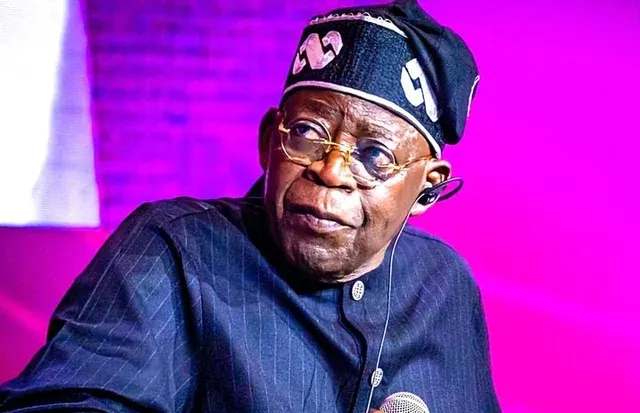
Kenneth Okonkwo, spokesperson for former Vice-President Atiku Abubakar’s presidential campaign and a chieftain of the African Democratic Congress (ADC), has questioned the circumstances surrounding President Bola Tinubu’s prolonged absence from Nigeria, saying the situation reminds him of the controversy surrounding the late President Umaru Musa Yar’Adua.
Okonkwo’s comments came amid public and political debate over Tinubu’s extended stay in Europe, which the Presidency described as a working vacation. Tinubu left Nigeria on August 30, 2026, initially for a three-week annual vacation, travelling first to London and later to Paris. His return was subsequently delayed before he eventually arrived in Lagos on September 29.
According to reports, Okonkwo argued that Nigerians deserved clearer information about the President’s status and how presidential responsibilities were being handled during his absence.
He particularly raised questions about Section 145 of Nigeria’s 1999 Constitution, which provides for the President to transmit a written declaration to the National Assembly when proceeding on vacation or otherwise unable to discharge the functions of his office.
Okonkwo had previously asked whether such a letter was transmitted to the National Assembly, arguing that the constitutional provision does not expressly establish a 21-day threshold before the requirement becomes relevant.
Why Yar’Adua Is Being Mentioned
The comparison is rooted in Nigeria’s experience during the final period of Umaru Musa Yar’Adua’s presidency.
Yar’Adua travelled to Saudi Arabia for medical treatment in November 2009 but did not formally transfer presidential authority to then-Vice-President Goodluck Jonathan. The resulting uncertainty eventually led the National Assembly, in February 2010, to invoke the Doctrine of Necessity, allowing Jonathan to become Acting President while Yar’Adua remained away.
Yar’Adua died in May 2010.
The circumstances were substantially different from the current situation: the Yar’Adua episode involved prolonged medical treatment and questions about presidential capacity, whereas the Tinubu administration has consistently described the President's 2026 absence as an annual working vacation and maintained that he remained engaged with government affairs.
Presidency Rejects Concerns
The Presidency repeatedly maintained that Tinubu remained capable of carrying out his responsibilities while abroad.
Special Adviser to the President on Information and Strategy, Bayo Onanuga, said the President remained engaged in official matters and did not need to be physically present in Abuja to govern in an era of digital communication. The Presidency also said Tinubu was in good health.
Tinubu's decision not to attend the 81st United Nations General Assembly also generated political criticism, with Vice-President Kashim Shettima representing Nigeria at the gathering.
The extended absence became particularly contentious after an initially announced return date was changed. Opposition figures and some lawyers subsequently questioned whether the constitutional procedure concerning presidential absence had been properly followed.
Tinubu Eventually Returns
The controversy changed significantly on September 29, when Tinubu returned to Lagos after roughly four weeks in Europe.
Speaking to journalists after his arrival, the President dismissed concerns about his health, saying he was “healthy, sound, and ready to go.” He described his European stay positively and said he was ready to resume activities.
His return also comes as Nigeria marks its 66th Independence Anniversary on October 1, 2026. The President is expected to participate in Independence Day activities and other engagements in Lagos before returning to Abuja.
The Bigger Constitutional Question
The central issue raised by Okonkwo is therefore not simply whether Tinubu was physically absent from Nigeria, but how presidential authority should be formally exercised when a sitting President spends an extended period outside the country.
Section 145 has become the focal point of the debate because it addresses situations in which the President is proceeding on vacation or is otherwise unable to discharge the functions of office. Critics have questioned whether a formal written declaration was made, while the Presidency has maintained that Tinubu continued performing his duties remotely.
The Yar’Adua experience gives the debate particular historical significance in Nigeria because that episode demonstrated the political and constitutional uncertainty that can arise when there is ambiguity about who is formally exercising presidential authority.
At the same time, the circumstances surrounding Tinubu's 2026 absence should not be treated as identical to Yar’Adua's. Available reporting indicates that the Tinubu administration characterized the trip as a working vacation, said the President remained engaged in official matters, and ultimately confirmed his return to Nigeria.
The continuing question for constitutional lawyers, lawmakers and the public is therefore whether the procedures surrounding presidential absence were fully complied with and whether existing constitutional language provides sufficient clarity for extended presidential travel.
Okonkwo's remarks have consequently reopened a familiar Nigerian debate: when a President is away for an extended period, what level of information should be provided to citizens, and what formal constitutional steps should govern the transfer or continuation of presidential functions?
Those questions remain relevant beyond Tinubu's return because the Yar’Adua episode demonstrated the institutional consequences that can emerge when uncertainty develops around presidential authority.
Source:https://phoenix-browser.com/IkveJ8K1i85