
Entertainment | Africa | Asia | United States | Europe
Philip Ojealo Warns Against ‘Over-Spirituality,’ Says Prayer Must Be Matched With Action
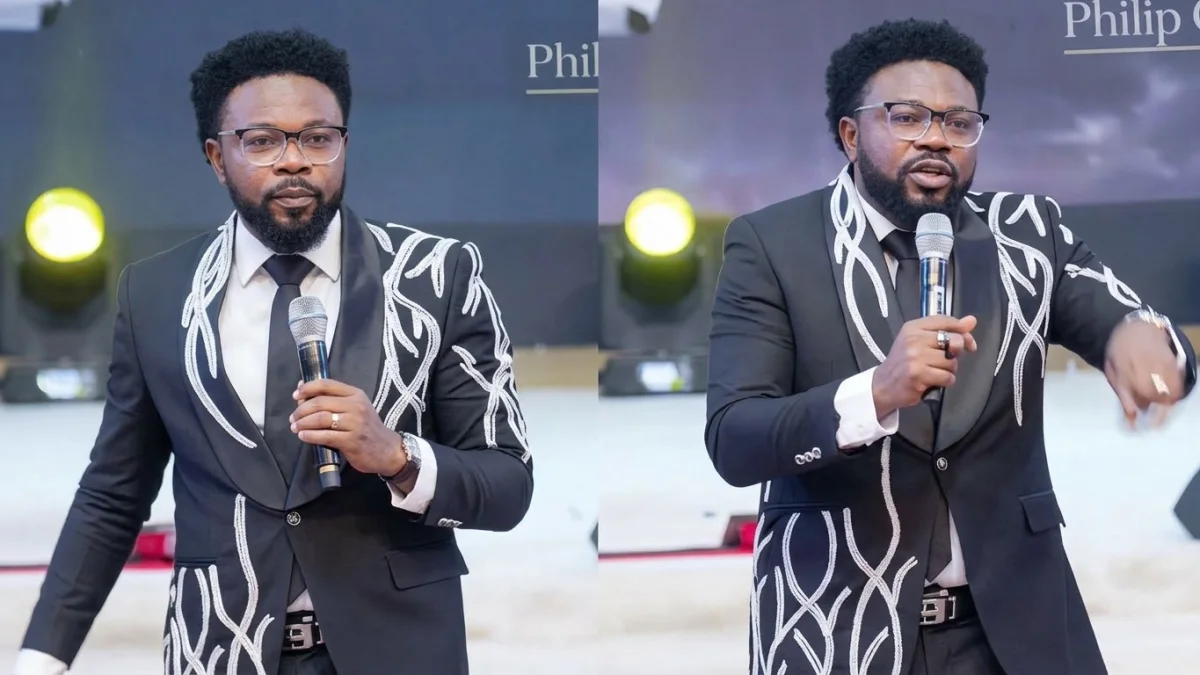
Nigerian clergyman Philip Ojealo has joined the debate over prayer and national development, arguing that Christians should not allow prayer to replace intellectual effort, professional competence or practical problem-solving.
Ojealo spoke while reacting to Apostle Arome Osayi’s comments that Nigeria has a calling to prayer and is experiencing a revival. He said he supports prayer but rejects what he described as “over-spirituality”—an approach in which believers pray about every challenge while failing to use the knowledge, skills and opportunities available to them.
‘Prayer Has Made Most Believers Useless’
In the viral video, Ojealo argued that Christians in professional fields should apply their expertise to solving real-world problems.
He cited doctors and pharmacists as examples, saying their faith should not prevent them from developing medical solutions, conducting research or using professional knowledge to improve lives.
“Prayer has made most believers to be useless in the church in the name of over-spirituality,” Ojealo said.
He immediately clarified that he was not opposing prayer itself.
“Am I against prayer? No. But am I against prayer that pours your brain?” he asked.
Ojealo added:
“God did not give you brain for decoration. He gave you brain to also man over.”
His broader position is that faith, intelligence and action should work together. In his view, a Christian doctor can pray and still practise medicine; a pharmacist can seek divine guidance while applying scientific training; and believers can pursue spiritual growth while contributing practical solutions to their communities.
‘Rich Spiritually, Poor Physically’
Ojealo warned that Christians could become heavily focused on religious activity while neglecting economic, technological and social development.
“We will be rich in spiritual things and be poor in physical things,” he said.
The statement reflects his concern that prayer should not become a substitute for innovation, education, work, civic responsibility or professional excellence.
His intervention comes amid a growing public disagreement over whether Nigeria’s challenges should be understood mainly through a spiritual lens or addressed through a combination of faith, leadership, institutional reform, economic activity and practical development.
Apostle Arome Osayi had described Nigeria as having a spiritual mandate centred on revival, a position that has attracted both support and criticism online.
Debate Over Nigeria’s ‘Calling’
Ojealo’s position aligns with a broader argument that Nigeria’s religious life should be accompanied by stronger action in areas such as education, science, governance, entrepreneurship and public accountability.
Prophet Chukwuemeka Ohanaemere, popularly known as Odumeje, recently made a similar argument, saying Nigeria’s calling should be development rather than prayer alone.
“We have a calling to be developers,” Odumeje said, while urging young Nigerians to focus on building the country and demanding better governance.
The difference among the speakers is not necessarily whether Nigerians should pray. The main disagreement is over whether prayer should be considered the country’s primary response to social and economic challenges.
Ojealo Criticises Christian Infighting
Ojealo also used the video to criticise personal attacks and divisions among Christian leaders and their followers.
He argued that disagreements should focus on ideas rather than insults about a person’s physical appearance, health condition or private circumstances.
“For me, you don’t abuse people with their deformity. That’s rather too harsh. Let’s argue on issues.”
He also questioned why some ministers publicly label other pastors as fake, dishonest or spiritually illegitimate.
“When you say, I am a custom officer, I’m called to check the body of Christ, who made you a judge?”
Ojealo called for humility, saying Christians should recognise that people may have different callings and assignments.
“We know in part and prophesy in part.”
Calls for Respectful Disagreement
The clergyman also criticised what he described as selective support within Christian circles—where believers condemn a practice when it involves a minister they dislike but defend the same behaviour when it involves someone they support.
He argued that pastors who have concerns about another minister should consider addressing the issue privately rather than turning it into public humiliation.
“If you want to correct any man of God, meet them, correct them.”
Ojealo also defended the memory of late Prophet TB Joshua, arguing that critics should consider the impact of repeated public attacks on the families of deceased ministers.
His central appeal was for Christians to disagree without turning theological or personal differences into campaigns of public destruction.
Bottom Line
Philip Ojealo is not arguing that Christians should stop praying. Rather, he is warning against a form of spirituality that, in his view, discourages believers from thinking, working, innovating and applying their professional abilities.
His message is that prayer should support action—not replace it. For Ojealo, faith is most productive when it is combined with knowledge, responsibility, skill, innovation and respectful engagement with others.
Source: Gistreel