
Business | Public Interest
PAC Issues Fresh Summons to FCT Area Councils Over N100bn Audit Queries
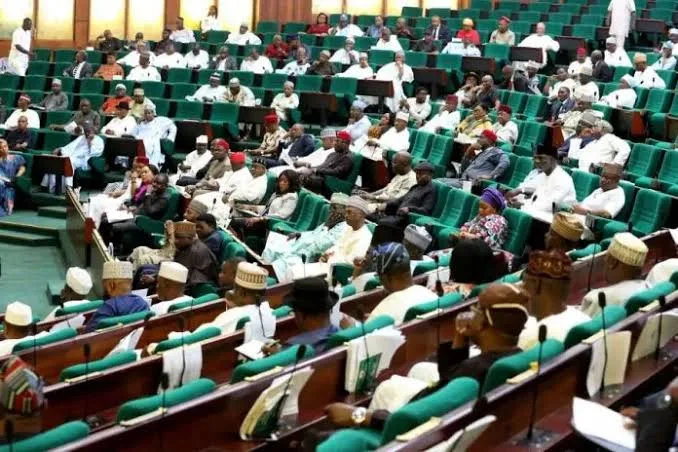
The House of Representatives Public Accounts Committee (PAC) has issued a fresh seven-day summons to officials of the six Federal Capital Territory (FCT) area councils over unresolved audit queries involving approximately N100 billion.
The decision followed the failure of the six council chairpersons to appear before the committee on 22 September 2026, despite having requested the date themselves.
The committee has directed the Directors of Personnel Management and Finance, as well as the Heads of Audit of the affected councils, to appear before it on Wednesday, 14 October 2026. They have been warned that failure to comply could attract sanctions under the relevant public service rules.
The affected councils are Abaji, Abuja Municipal Area Council (AMAC), Bwari, Gwagwalada, Kuje and Kwali.
Outstanding Liabilities of N7.65bn
The latest summons arose from financial queries contained in the Annual Audit Report of the Auditor-General for the Six FCT Area Councils for the year ended 31 December 2021.
The report identified outstanding liabilities totalling approximately N7.65 billion across the six councils. The liabilities included unremitted pension deductions, Pay As You Earn (PAYE), Value Added Tax (VAT), withholding tax and unpaid obligations to contractors.
AMAC recorded the highest outstanding liability at N2.19 billion, followed by Bwari with N1.49 billion and Kwali with N1.46 billion. Gwagwalada recorded N1.01 billion, while Kuje and Abaji had outstanding liabilities of N892.2 million and N593.8 million, respectively.
According to the Auditor-General, the outstanding sums were owed to tax authorities, Pension Fund Administrators and contractors.
The audit report stated that the liabilities comprised “unremitted pension deduction, unremitted Pay As You Earn (PAYE), unpaid capital projects, unpaid value added tax and withholding tax.”
N24.87bn Expenditure Under Review
In addition to the outstanding liabilities, the committee is seeking explanations and supporting documents for N24.87 billion spent by the six councils on personnel, overheads and capital expenditure in 2021.
AMAC accounted for N5.03 billion of the expenditure, while Gwagwalada spent N4.66 billion. Kuje recorded expenditure of N3.85 billion, followed by Kwali with N3.84 billion, Bwari with N3.74 billion and Abaji with N3.71 billion.
The Auditor-General also raised concerns about the management of fixed assets, noting that the councils had failed to properly maintain and update their asset registers.
Gwagwalada was specifically queried over non-current assets valued at N336 million. According to the audit report, the council’s ledger records for the assets were not properly maintained or updated as required, creating the risk of asset loss or misappropriation without trace.
The report added that the same deficiency was common among the other FCT area councils.
PAC Identifies Additional Irregularities
The Chairman of the Public Accounts Committee, Bamidele Salam, said on Tuesday that the repeated failure of the council chairpersons to appear before the committee had hindered efforts to resolve the audit queries.
“The last date of appearance of the Abuja Area Councils was September 22, 2026, which was a date they requested and which was graciously granted by the committee. Yet, they failed to appear or send in any representation,” Salam said.
He explained that the committee had therefore resolved to summon the Directors of Personnel Management and Finance, together with the Heads of Audit, to appear on 14 October.
“The committee has therefore decided to issue summons to the Directors of Personnel Management and Finance of these local governments, including their Heads of Audit, to appear without fail on Wednesday, October 14, failure of which they will be made to bear consequences according to service rules,” he said.
Salam further disclosed that the committee’s review of the councils’ 2022 and part of their 2023 audit reports had uncovered additional concerns. These include the alleged understatement of Internally Generated Revenue (IGR), unauthorized disposal of assets, failure to disclose statutory revenue and non-remittance of withholding tax to the appropriate authorities.
(Source - premiumtimesng.com)