
Technology | News
$1.8bn AI Biology Project Targets Virtual Cell
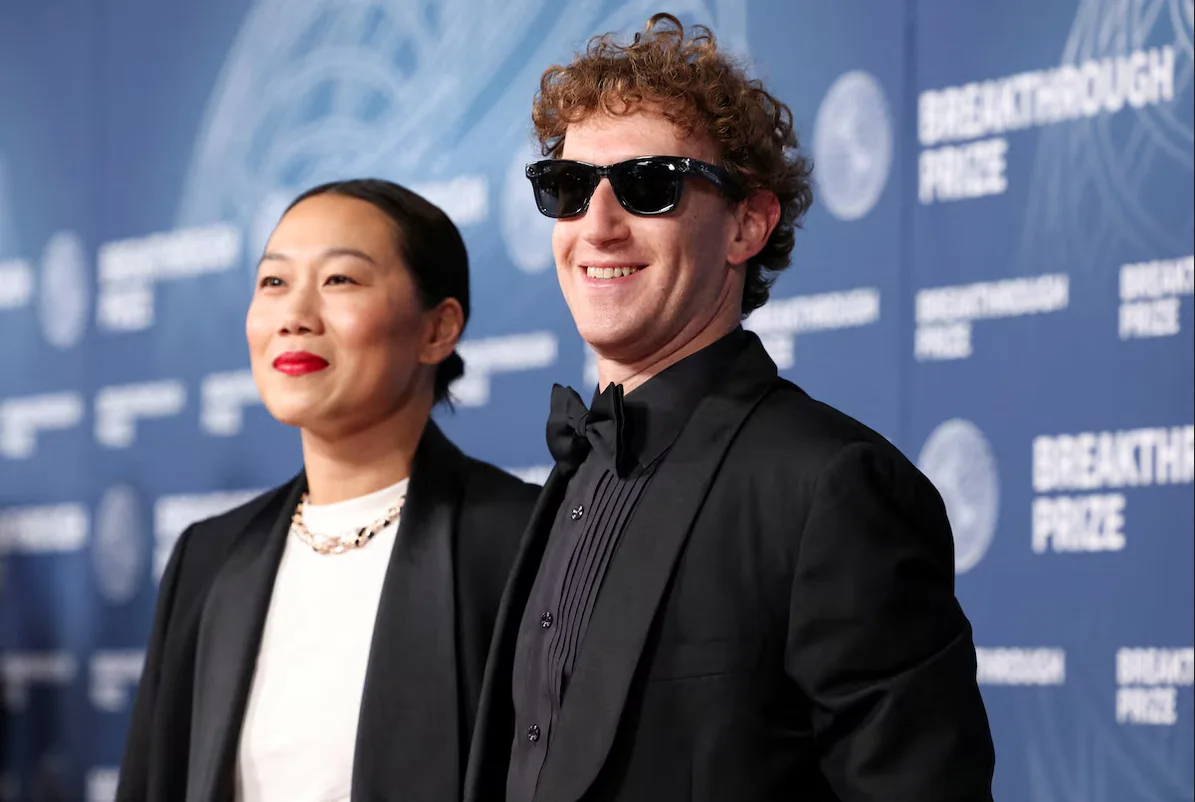
A coalition involving the Chan Zuckerberg Biohub, the US government, Meta, Google DeepMind and Isomorphic Labs has expanded an artificial-intelligence and biology initiative to about $1.8 billion.
The project aims to create large, standardised biological datasets that can train AI models to predict how living cells respond to drugs, genetic changes, diseases and other conditions.
The long-term ambition is to develop increasingly accurate “virtual cell” models that allow scientists to test some biological questions computationally before carrying out laboratory experiments.
Who Is Funding the Initiative?
The project brings together philanthropic, government and commercial resources.
| Partner | Reported contribution or role |
| Chan Zuckerberg Biohub | Initial $500 million commitment |
| Meta, Google DeepMind and Isomorphic Labs | Joint $300 million investment |
| US Department of Energy | More than $500 million over five years |
| National Institutes of Health | Coordinates and standardises data from more than $500 million in earlier federal funding |
| Other research organisations | Biological measurements, computing and scientific infrastructure |
Taken together, those resources bring the initiative’s estimated value to approximately $1.8 billion.reuters+1
What Is a Virtual Cell?
A virtual cell would be an AI-based model capable of predicting how a cell behaves under different biological conditions.
Researchers could eventually ask questions such as:
- How might a cancer cell respond to a particular drug?
- What effect could a genetic mutation have on a cell?
- How might a disease alter cellular activity?
- Which drug candidates are most likely to produce a useful response?
The AI would not replace laboratory experiments. Instead, it could help scientists identify the most promising experiments before committing time and resources to physical testing.
The intended research cycle would look like this:
AI prediction→laboratory test→new data→improved model\text{AI prediction} \rightarrow \text{laboratory test} \rightarrow \text{new data} \rightarrow \text{improved model}AI prediction→laboratory test→new data→improved model
The Data Challenge
The project is not simply about building a larger chatbot. Its central task is generating and organising vast quantities of high-quality biological data.
Biological information is currently spread across laboratories and research institutions, often collected using different methods and formats. That makes it difficult to combine datasets or train models consistently.
Biohub’s head of science, Alex Rives, said existing datasets involve hundreds of millions of cells, while reliable predictive models may eventually require data involving billions or even trillions of cells.reuters+1
The initiative will therefore focus on:
- Producing new biological measurements.
- Standardising data from different laboratories.
- Developing advanced imaging systems.
- Recording how cells respond to changed environments.
- Making datasets usable for AI training.
One important technique is spatial transcriptomics, which helps scientists examine molecular activity within intact tissue and identify where biological processes occur.
Potential Impact on Drug Discovery
Developing a medicine can take years and cost billions of dollars. Many drug candidates fail during laboratory testing, animal studies or human clinical trials.
AI models that identify weak candidates early could help researchers avoid spending years pursuing treatments unlikely to work.
Potential benefits include:
- Faster identification of promising drug candidates.
- Better understanding of disease mechanisms.
- More targeted treatments.
- Improved prediction of drug responses.
- More efficient laboratory research.
- Greater support for personalised medicine.
However, an AI prediction is not proof that a medicine is safe or effective. Every important result would still require laboratory validation and, where appropriate, clinical trials.
Why Biology Is Difficult for AI
AI systems can generate text, images and computer code by recognising patterns in digital information. Biology is more difficult because a model must make predictions about complex physical systems.
Cells are dynamic and interconnected. Their behaviour can change depending on factors that may not be captured in a dataset.
A drug that appears effective in a laboratory cell may behave differently in animal models or the human body. A model may also produce a convincing prediction that fails when tested experimentally.
That is why the Biohub project places strong emphasis on generating new experimental data instead of relying only on existing databases.
Open Data and Commercial Access
Biohub says the datasets generated through the initiative are intended eventually to become publicly available.
However, commercial partners that contribute funding may receive temporary exclusive access to some datasets before public release. Government-funded work is expected to operate under different access arrangements.reuters+1
The model attempts to balance two competing goals:
- Attracting private investment for expensive scientific research.
- Preserving biological datasets as a wider public resource.
The arrangement could influence how future AI and scientific-data projects are funded.
Safety Concerns
AI systems capable of modelling biology could accelerate medical research, but they may also create safety risks if misused.
A powerful model might provide information that could be abused to manipulate biological systems or design harmful pathogens.
The challenge is to make AI useful for legitimate medical research while limiting dangerous capabilities and introducing strong safeguards.
That will require attention to model access, data governance, monitoring, laboratory security and responsible scientific oversight.
Five-Year Ambition
Biohub and its partners hope to produce a major dataset within about one year and develop increasingly accurate predictive models over approximately five years.
The immediate goal is not to create a complete digital replica of the human body. It is to build useful models of cellular behaviour that can improve scientific research.
If successful, those models could later become building blocks for more complex simulations involving tissues, organs and biological systems.
Bottom Line
The $1.8 billion Virtual Biology Initiative is one of the largest efforts to combine AI, biological measurement and drug-discovery research.
Its goal is to create AI models capable of predicting how cells behave, allowing scientists to prioritise experiments and potentially accelerate the search for new medicines.
The project faces major uncertainties: biology is exceptionally complex, AI predictions can be wrong, high-quality data is difficult to generate and powerful biological models may create security risks.
The key test will be whether the models can make accurate, reproducible predictions that withstand laboratory testing. If they can, AI-powered virtual biology could become an important new tool in medical research.
Source: https://www.reuters.com/business/healthcare-pharmaceuticals/us-government-google-join-zuckerberg-backed-biohub-18-billion-push-ai-biology-2026-10-07