

Middle East | News
One Year After Gaza Ceasefire, Trump’s Board of Peace Faces Questions Over Unfulfilled Promises
Gaza | October 11, 2026
One year after United States President Donald Trump launched a peace initiative intended to end the war in Gaza, the international body established to oversee the agreement is facing mounting questions about its ability to deliver lasting peace, restore Palestinian governance and begin the reconstruction of the devastated territory.
The US-led Board of Peace was created to supervise the implementation of Trump's 20-point Gaza peace plan, which envisaged an end to major hostilities, the release of captives, increased humanitarian assistance, a transitional Palestinian administration and eventual reconstruction.
Although the ceasefire that took effect on October 10, 2025, helped secure the release of Israeli captives and Palestinian prisoners, many of the agreement's most consequential provisions remain unfulfilled.
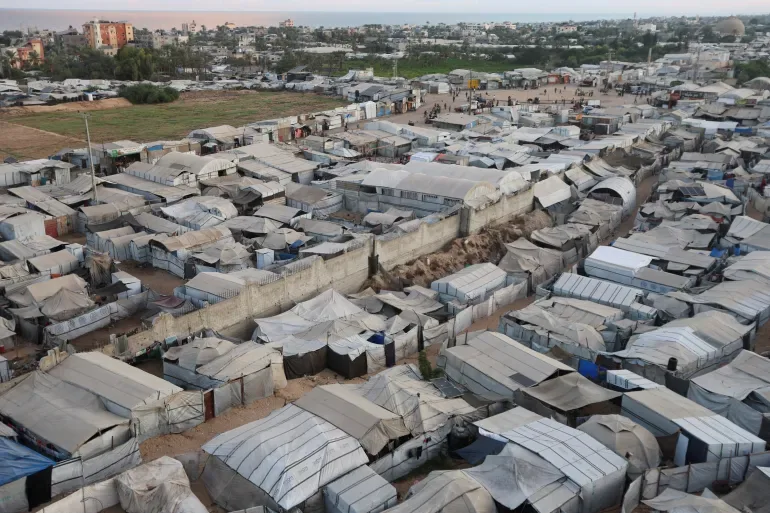
Israeli military attacks have continued, humanitarian assistance remains below the plan's stated targets, and the proposed Palestinian transitional administration has yet to establish itself inside Gaza. Reconstruction has also made little meaningful progress, leaving displaced families struggling to survive in temporary shelters and damaged buildings.
Al Jazeera's October 10 assessment, published to mark the first anniversary of the ceasefire, highlighted the gap between the Board of Peace's original ambitions and conditions on the ground.
The developments have raised questions about whether the initiative can move beyond diplomatic commitments and deliver the security, political transition and economic recovery that Palestinians were promised.
What Was the Board of Peace Supposed to Achieve?
Trump first proposed the Board of Peace in September 2025 as part of a broader initiative intended to bring an end to the war in Gaza and establish arrangements for the territory's future.
The plan subsequently received backing through a United Nations Security Council resolution in November 2025, which recognized the board's role in a proposed transitional administration.
The 20-point framework envisaged several connected stages.
First, the ceasefire was intended to stop major military operations and facilitate the release of Israeli captives held by Hamas and Palestinian prisoners held by Israel.
Second, Israeli forces were expected to withdraw to agreed positions, while humanitarian crossings would reopen to permit the delivery of food, medical supplies, shelter materials and other essential goods.
Third, a Palestinian technocratic committee would take responsibility for transitional governance, with an international stabilization force eventually helping to establish security arrangements.
The longer-term objective was to create conditions for Gaza's reconstruction and establish a credible pathway towards Palestinian statehood.
The agreement also required Hamas to disarm during a later phase, with provisions concerning amnesty or safe passage for eligible members.
These commitments were interdependent. The proposed political transition, security arrangements and reconstruction program were all expected to advance as the parties implemented their obligations.
However, disagreements over the order of implementation, particularly Hamas's disarmament and Israel's withdrawal, have become major obstacles to progress.
What Has the Board of Peace Actually Achieved?
Despite the continuing difficulties, the initiative has recorded some concrete milestones.
One of the most significant was the release of Israeli captives and Palestinian prisoners under the ceasefire arrangements.
According to Al Jazeera's review, Hamas released all 168 living captives covered by the relevant arrangement, while Israel freed Palestinian prisoners. Hamas also announced the dissolution of its government in Gaza, although Israeli officials dismissed the announcement as insufficient to demonstrate a genuine political transition.
The Board of Peace has also organized international funding commitments and announced proposals intended to support Gaza's eventual recovery.
At its first summit in Washington in February 2026, participating states pledged $7 billion in funding. In September, the board unveiled a recovery program comprising 66 projects valued at approximately $2.4 billion.
These announcements indicate that diplomatic engagement and preliminary planning have continued.
However, pledges and project proposals are not equivalent to money being disbursed, construction beginning or displaced families returning to safe homes.
The central question is whether these initiatives can be translated into tangible improvements in the daily lives of Gaza's population.
For many Palestinians, the answer remains uncertain because the basic conditions needed for recovery have not been established.
Why the Ceasefire Has Failed to Deliver Lasting Security
The continued violence is one of the most serious challenges facing the initiative.
Al Jazeera reported that Israeli attacks had continued almost daily during the year following the ceasefire's introduction.
According to figures attributed to Gaza's Ministry of Health, more than 1,400 Palestinians had been killed since the truce began. The ministry's figures do not, by themselves, establish responsibility for every individual death, and the parties continue to dispute the circumstances of particular attacks.
Israeli officials have said their military operations target Hamas members and security threats. Hamas disputes Israel's account and has accused it of undermining the ceasefire.
The continued fatalities have raised concerns among humanitarian organizations and international observers about whether the agreement is functioning as an effective protection for civilians.
A ceasefire is intended to reduce violence and create the conditions necessary for political negotiations, aid delivery and recovery. When attacks continue and people remain at risk of displacement or death, confidence in the process becomes more difficult to sustain.
The continuing confrontation has also complicated efforts to establish the security arrangements needed for a transitional administration.
Israeli Military Control Remains a Major Obstacle
Another central issue is the extent of Israeli military control over Gaza.
Under Trump's plan, Israeli forces were expected to withdraw to agreed positions covering approximately half of the territory as part of the initial arrangements.
However, Al Jazeera reported that Israeli forces controlled about 60 percent of Gaza by the time of its October anniversary assessment.
The report also described changes to the so-called Yellow Line, which separates areas under Israeli military control from other parts of the enclave. The line's reported expansion has further restricted the territory available to Palestinians.
The consequences extend beyond the question of borders or military positioning.
Territorial control affects where displaced families can live, whether farmers can access land, which roads remain usable and whether Palestinian administrators can exercise authority.
It also has implications for humanitarian organizations seeking to deliver assistance and for contractors planning reconstruction.
Israeli Defense Minister Israel Katz said in December 2025 that the Israeli military would never fully leave Gaza, according to Al Jazeera's account.
That position raises questions about how the proposed transition can proceed if the territory's future security arrangements and the extent of Israel's withdrawal remain disputed.
For the Board of Peace, the challenge is to translate the original commitments into an agreed framework that all relevant parties will implement.
Humanitarian Aid Remains Below Agreed Targets
The humanitarian situation provides another measure of the distance between the agreement's promises and its results.
The peace plan envisaged approximately 600 aid trucks entering Gaza daily to meet the population's urgent needs.
However, Al Jazeera cited figures indicating that about 227 aid trucks were entering the territory each day, substantially below the stated target.
The figures underline the continuing difficulties faced by humanitarian organizations attempting to deliver essential supplies to a population of more than two million people.
Food, clean water, medical supplies, fuel, shelter materials and sanitation equipment remain critical to preventing further deterioration in living conditions.
The restrictions also affect the operation of hospitals and other essential services, particularly when equipment or replacement parts are delayed.
According to the Integrated Food Security Phase Classification, approximately 1.4 million Palestinians in Gaza were projected to face hunger through at least December 2026. The assessment indicated that the number facing hunger had increased compared with the previous assessment in May.
Israeli authorities have classified various items as having potential dual civilian and military uses, restricting their entry. Israel says security controls are necessary to prevent materials from being diverted for military purposes; humanitarian organizations have argued that restrictions on essential civilian supplies obstruct recovery.
The continued shortfall in aid deliveries has therefore become both a humanitarian concern and a test of the ceasefires implementation.
Why Gaza's Transitional Government Has Not Taken Control
The establishment of a Palestinian transitional administration was intended to be a central part of the Board of Peace's strategy.
The National Committee for the Administration of Gaza was created to serve as an interim governing authority, comprising Palestinian technocrats who would oversee the territory's administration during the transition.
The committee is led by Chief Commissioner Ali Shaath and reports to the Board of Peace.
However, Al Jazeera reported that the committee was operating from Cairo and had not been permitted to enter Gaza.
Israel had not publicly explained, in the reporting reviewed, why the committee was not allowed to enter the territory.
The arrangement creates a practical problem: a transitional authority cannot fully administer public services, coordinate reconstruction or establish a visible governing presence while operating outside the territory it is supposed to govern.
The absence of an effective administration inside Gaza also complicates plans for policing, public services, the distribution of assistance and coordination with international organizations.
Without an agreed mechanism for transferring authority, the proposed transition risks remaining a diplomatic structure rather than a functioning government.
The issue also raises questions about Palestinian political participation and the extent to which decisions about Gaza's future will be made by Palestinians themselves.
Hamas Disarmament and Israel's Withdrawal Remain Deadlocked
The dispute over disarmament has become one of the principal barriers to moving into the next phase of the peace plan.
The framework envisaged Hamas surrendering its weapons as part of a broader transition towards new security arrangements.
Hamas has indicated a willingness to hand weapons to the proposed National Committee for the Administration of Gaza, but it has rejected the disarmament provision under the existing circumstances, arguing that Israel must stop its attacks and withdraw in accordance with the agreement.
Israel, meanwhile, has maintained that it will not advance the plan without Hamas's disarmament.
This creates a difficult impasse.
Israel wants disarmament to occur before further progress on key provisions, while Hamas argues that the conditions required for a lasting ceasefire and Israeli withdrawal must be met as part of the process.
The Board of Peace has not yet secured an arrangement that resolves this disagreement.
The dispute matters because the security transition, political administration and reconstruction program were designed to operate together. If one remains blocked, the others become harder to implement.
A sustainable agreement would require a credible sequence of steps, monitoring arrangements and mechanisms to address violations or disputes without returning to widespread fighting.
International Stabilization Force Still Has Not Deployed
The peace plan also envisaged an International Stabilization Force that would help oversee security arrangements as Israeli forces withdrew.
Al Jazeera reported that six countries, Indonesia, Morocco, Kazakhstan, Albania, Kosovo and Uganda, had committed personnel towards a proposed force of 20,000 soldiers and 12,000 police, under a framework involving US military leadership.
However, the force had not been deployed inside Gaza by the time of the anniversary report.
Without the force, the planned transfer of security responsibilities remains incomplete.
Its absence also leaves unresolved questions about who would police the territory, protect civilians, secure humanitarian corridors and support the transition to a new Palestinian administration.
Deploying an international force would require more than commitments to contribute personnel. Participating countries would need an agreed mandate, command arrangements, rules governing the use of force, logistical support and clarity about their relationship with Palestinian institutions.
They would also need sufficient guarantees concerning the security of their personnel and the political legitimacy of the mission.
The failure to establish these arrangements has delayed another essential component of the peace plan.
Reconstruction Remains Largely on Paper
The destruction caused by the war has left Gaza facing enormous reconstruction needs.
Homes, schools, hospitals, roads, water networks, sanitation facilities and other essential infrastructure have been damaged or destroyed.
Estimates cited in coverage of the peace initiative put the cost of reconstruction at approximately $70 billion, far above the initial funding commitments announced by the Board of Peace.
The board's $7 billion funding pledge and its $2.4 billion recovery program represent proposed resources and projects, but they do not demonstrate that reconstruction on the required scale has begun.
Major rebuilding efforts depend on reliable access to construction materials, heavy machinery, fuel, engineers, contractors and safe working conditions.
They also require a functioning administration capable of establishing priorities, managing procurement, coordinating donors and ensuring that resources reach their intended beneficiaries.
The continuing military presence, restrictions on essential supplies and uncertainty over Gaza's political future have made those conditions difficult to achieve.
Meanwhile, displaced Palestinians continue to live in tents and damaged buildings, exposed to harsh weather and inadequate sanitation.
For families who have lost their homes and livelihoods, announcements about future development projects offer little immediate relief unless they lead to safe housing, restored services and opportunities to earn a living.
The Future of UNRWA Raises Further Questions
The Board of Peace's position on the United Nations Relief and Works Agency for Palestine Refugees in the Near East, commonly known as UNRWA, has added another point of contention.
UNRWA has long provided education, health services, social assistance and humanitarian support to Palestinian refugees, including in Gaza.
The board announced in September that it would not work with UNRWA, echoing Israel's longstanding opposition to the agency's role. An official associated with the board indicated that the organization’s future role would be limited to programs deemed relevant by the new arrangement.
UNRWA criticized the approach as illogical, while supporters of the agency have emphasized its established infrastructure and experience in delivering services to Palestinian communities.
In June 2026, the UN General Assembly voted to extend UNRWA's mandate until 2029.
The disagreement raises practical questions about how humanitarian assistance and essential services would be maintained if an established provider were excluded before an adequately resourced alternative was operational.
Any transition in humanitarian service delivery would require clear arrangements to avoid interruptions to food assistance, healthcare, education and other essential programs.
It also raises wider questions about the relationship between the Board of Peace, the United Nations and the international legal framework governing assistance to Palestinian refugees.
International Credibility at Stake
The difficulties facing the Board of Peace have consequences beyond Gaza.
The initiative was presented as a mechanism through which international diplomatic influence and coordinated funding could help end the war and support a political transition.
Its credibility therefore depends not simply on the creation of committees or the announcement of financial commitments, but on whether the parties implement the agreement and whether civilians experience measurable improvements.
Simon Mabon, a professor at Lancaster University, described the board as having failed to implement its plan, according to Al Jazeera's reporting.
Other observers have also questioned whether the initiative has sufficient leverage to ensure compliance by Israel and Hamas.
The board's supporters can point to the release of captives, the establishment of a transitional committee and the mobilization of international pledges as evidence of progress.
Critics, however, point to continuing deaths, restrictions on aid, the absence of the transitional administration inside Gaza and the lack of meaningful reconstruction.
These competing assessments reflect a central distinction: diplomatic milestones can be real without being sufficient to deliver the intended outcome.
The Board of Peace must now demonstrate that it can turn its existing structures and commitments into an effective process that protects civilians and produces a credible political transition.
What Must Happen Next?
Several issues will determine whether the initiative can make meaningful progress during its second year.
First, the ceasefire must provide more effective protection for civilians. Continued attacks and displacement undermine confidence in the agreement and make recovery more difficult.
Second, humanitarian access must improve. Aid agencies need reliable entry routes and sufficient quantities of food, medical supplies, shelter materials and other essential goods.
Third, the transitional Palestinian administration must be able to operate inside Gaza. Its authority, responsibilities and relationship with other Palestinian institutions need to be clarified.
Fourth, the parties must resolve the dispute over disarmament and Israeli withdrawal. Without an agreed sequence of obligations, the political and security transition is likely to remain blocked.
Fifth, reconstruction funding must be converted into actual assistance and building work. Funding pledges, project announcements and planning documents must be followed by transparent spending and measurable improvements in housing and essential services.
Finally, the international community will need to establish credible monitoring and accountability mechanisms to assess compliance and respond to violations.
These steps will not, on their own, resolve every political dispute surrounding Gaza. However, without progress on them, the Board of Peace will struggle to demonstrate that it can deliver the outcomes it was established to achieve.
Conclusion: A Ceasefire Is Not the Same as Lasting Peace
One year after the Gaza ceasefire took effect, Trump's Board of Peace is confronting a substantial gap between its original objectives and conditions on the ground.
The agreement helped secure the release of Israeli captives and Palestinian prisoners and created structures intended to oversee Gaza's political transition and reconstruction.
However, continuing Israeli attacks, restricted humanitarian assistance, unresolved disputes over disarmament and withdrawal, the absence of an international stabilization force and the failure of the transitional administration to enter Gaza have left the wider peace process stalled.
The announced financial commitments and recovery projects have yet to translate into reconstruction on the scale required by the territory's devastated population.
The coming months will test whether the board can secure compliance with the agreement, improve civilian protection and establish the conditions necessary for Palestinians to rebuild their lives.
Ultimately, the initiative's success cannot be measured solely by meetings held, declarations issued or funds pledged. It must also be assessed by whether violence declines, humanitarian needs are met, Palestinian institutions can function and families gain a realistic opportunity to return to safe and dignified lives.
Note: The first anniversary of Gaza's ceasefire reveals the difference between stopping a war on paper and creating lasting peace. The Board of Peace has recorded some diplomatic milestones, but its wider objectives remain largely unfulfilled. Durable progress will require effective civilian protection, unrestricted and adequate humanitarian assistance, a workable political transition, accountable security arrangements and reconstruction that reaches the people who need it most.
Editorial note: This analysis reflects reporting available on October 11, 2026. Casualty figures, humanitarian assessments and the status of political arrangements may change as new information becomes available.
Sources: Al Jazeera