

News
Nigeria’s 2027 Elections: Crisis of Trust Deepens as Voters Question Whether Their Ballots Will Count
October 11, 2026
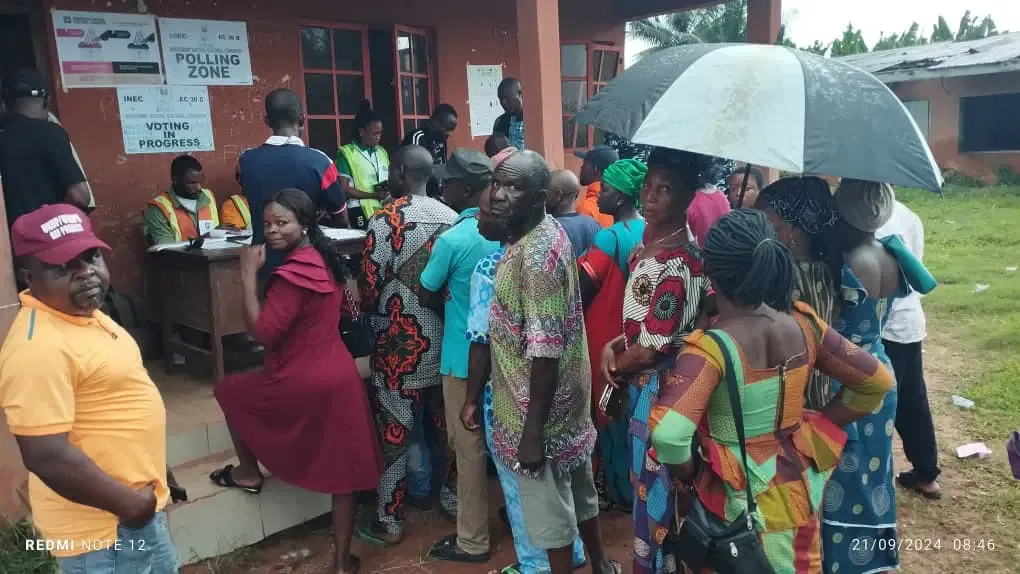
As Nigeria moves closer to the 2027 general elections, growing concerns about electoral credibility, vote-buying, political violence and public confidence in the Independent National Electoral Commission (INEC) are raising difficult questions about the future of democratic participation in Africa's most populous country.
Political parties are preparing for another election cycle, alliances are shifting, politicians are positioning themselves for nominations and campaigns, and electoral authorities are working towards the scheduled polls. Yet beneath these preparations lies a fundamental concern: will Nigerians believe that their votes can determine who governs them?
An opinion article published by Ripples Nigeria on October 11, 2026, by Allen Durueke, describes this challenge as a dilemma between participating in an electoral process that many citizens distrust and withdrawing from a system they fear may continue to produce leaders without meaningful public accountability.
The argument comes amid fresh survey findings showing a gap between Nigerians' stated willingness to vote and their confidence in the institutions responsible for conducting elections.
According to a Yiaga Africa survey reported on October 7, 84 per cent of respondents said they were likely or very likely to vote in 2027. However, only 41 per cent of that group said they were certain and committed to participating. The survey also found that just 34 per cent expressed confidence in INEC's ability to conduct credible elections. These findings suggest that enthusiasm for participation and confidence in the electoral system are not the same thing.
The figures do not establish how the election will turn out, but they highlight the challenge confronting electoral authorities, political parties, security agencies and civil society organisations before Nigerians head to the polls.
The 2023 Election Experience Still Shapes Public Confidence
The 2023 general elections remain central to the debate about trust in Nigeria's electoral system.
INEC registered more than 93 million voters for the presidential election, but participation was relatively low. Approximately 24.9 million valid votes were recorded, representing about 27 per cent of registered voters.
The figures illustrated the gap between the number of people eligible to vote and those whose votes ultimately determined the presidential result.
Low turnout can have multiple causes, including logistical difficulties, insecurity, limited confidence in candidates, dissatisfaction with political parties and the belief that participation may not produce meaningful change.
However, concerns about the handling of the 2023 presidential election were particularly significant because of problems surrounding the electronic transmission of results.
INEC had introduced the Bimodal Voter Accreditation System (BVAS) and the INEC Result Viewing portal, known as IReV, as part of efforts to strengthen accreditation and transparency.
The delayed uploading of presidential election results to IReV generated widespread criticism and controversy. INEC attributed the problem to technical difficulties, while opposition parties and other critics questioned the commission's explanations and the transparency of the process.
The controversy did not mean that every result was invalid, nor did it establish that all electoral procedures had failed. Nevertheless, it damaged public confidence among voters who had expected electronic transmission to provide a clearer and more transparent process.
For many citizens, the central issue ahead of 2027 is whether the problems experienced in 2023 have been adequately addressed.
Vote-Buying and Economic Hardship Threaten Electoral Integrity
One of the most persistent concerns identified in the Ripples Nigeria opinion article is vote-buying.
The practice involves offering money, gifts or other material benefits to influence how voters cast their ballots or whether they participate in an election.
Vote-buying undermines the principle that electoral choices should reflect voters' preferences rather than financial pressure or inducement.
Nigeria's economic difficulties can make such practices particularly damaging. When households struggle to afford food, transport, healthcare and other essentials, even relatively small payments may become difficult to refuse.
The opinion article argues that political actors can exploit economic hardship by turning financial vulnerability into an electoral advantage.
However, poverty does not automatically mean that a voter will accept money or surrender their political independence. Many voters make decisions based on a combination of economic concerns, public policy, party identity, candidates' records and expectations about the future.
The broader challenge is ensuring that voters can make their choices freely without intimidation, coercion or improper financial inducement.
The International Republican Institute's August 2026 pre-election assessment identified vote-buying, insecurity and declining confidence in INEC as important risks ahead of the 2027 elections.
The assessment recommended stronger enforcement against voter inducement, clearer electoral procedures and more robust testing of the systems used to accredit voters and transmit results.
These recommendations suggest that tackling vote-buying requires more than public condemnation. It requires credible investigations, enforcement of the law, accountability for offenders and greater public confidence that electoral rules apply consistently.
The Judiciary's Growing Role in Electoral Disputes
Another concern raised in the opinion article is the perception that the judiciary has become an increasingly important arena for determining electoral outcomes.
Nigeria's courts play a constitutionally recognised role in resolving disputes over elections. Election petitions provide a mechanism through which candidates and political parties can challenge results they believe were affected by irregularities or breaches of electoral law.
That judicial oversight is an important component of democratic accountability.
However, prolonged litigation and contentious judgments can deepen public distrust when citizens believe that political competition has shifted from polling stations to courtrooms.
The perception that an election may ultimately be decided through litigation rather than by the votes cast can weaken confidence in the electoral process, particularly when legal decisions are difficult for the public to understand or when proceedings are delayed.
At the same time, the existence of election petitions does not itself demonstrate that the judiciary has improperly displaced voters. Courts must be able to examine credible evidence, apply the law and issue decisions without political interference.
The challenge is to ensure that elections are administered transparently enough to minimise avoidable disputes while preserving the right to seek judicial remedies when genuine irregularities occur.
For 2027, electoral authorities and political parties will need to prioritise transparent result management, accessible documentation and compliance with legal requirements at every stage of the process.
Electoral Violence and the Role of Security Agencies
The safety of voters is another major concern ahead of the next general elections.
Electoral violence can take several forms, including threats against candidates, attacks on polling units, intimidation of voters, assaults on party agents and interference with the movement or collation of election materials.
Such incidents can prevent people from voting and undermine confidence in the ability of the state to protect democratic participation.
The European Union Election Observation Mission's report on Nigeria's 2023 elections raised concerns about electoral violence and the lack of prosecution in some cases, including allegations involving security personnel.
The concern is not simply whether security agencies are present at polling stations. Their conduct, neutrality and willingness to protect all eligible voters are equally important.
Security personnel must protect voters, electoral officials, observers, candidates and election materials without favouring a political party or suppressing lawful participation.
They must also respond consistently to intimidation and violence, regardless of the identity or political connections of those involved.
Ahead of 2027, security agencies and INEC will need to identify high-risk locations, prepare contingency plans, protect collation centres and ensure that election-related offences are investigated appropriately.
Without credible protection, even well-designed electoral technology may fail to guarantee meaningful participation.
Can Electoral Technology Restore Confidence?
INEC's use of technology remains a central issue in the debate about electoral credibility.
BVAS was introduced to improve voter accreditation, while IReV was designed to make polling-unit result sheets accessible to the public.
These systems can help strengthen transparency, but technology cannot independently eliminate every opportunity for electoral manipulation.
The effectiveness of electronic systems depends on their reliability, clear operating procedures, staff training, network availability, cybersecurity and the consistent application of the law.
The IRI's 2026 assessment recommended more robust stress testing and mock elections to identify potential problems before the general elections.
It also called for clearer guidance on how communication failures should be documented and resolved, including circumstances in which physical result sheets are used during collation.
These issues are important because uncertainty over procedures can create opportunities for disputes and make it harder for the public to assess whether the final results accurately reflect votes cast.
INEC can help rebuild confidence by publishing clear procedures, communicating technical problems promptly, making relevant records accessible and explaining how discrepancies are investigated and resolved.
Political parties and observers also have responsibilities. Party agents must monitor the process lawfully, preserve evidence of suspected irregularities and use established reporting and legal channels.
The goal should be an electoral system in which the public can verify the process as far as the law and available technology permit, rather than being asked to accept assurances without adequate evidence.
INEC Faces a Test of Institutional Credibility
The crisis of trust described in the Ripples Nigeria opinion article places INEC at the centre of the debate.
As the body responsible for organising federal elections, INEC must demonstrate administrative competence, consistency, transparency and impartiality.
Its responsibility extends beyond publishing an election timetable and deploying accreditation devices.
It must ensure that electoral officials understand the rules, political parties receive consistent treatment, result management follows established procedures and credible complaints are addressed promptly.
INEC must also communicate clearly with the public when problems arise.
In a politically competitive environment, silence or delayed explanations can create room for rumours, misinformation and competing claims about what happened.
The commission cannot control every political narrative, but it can improve public understanding by releasing timely, accurate and verifiable information.
Rebuilding trust will also require the institution to investigate failures, correct errors where legally appropriate and demonstrate that misconduct by electoral officials will not be ignored.
Public confidence is unlikely to improve through technology announcements alone. It will depend on whether voters see the electoral process working consistently and transparently in practice.
Misinformation Could Intensify the Crisis
Social media has become an important source of electoral information, but it can also accelerate the spread of false claims.
Unverified polling-unit results, fabricated announcements, manipulated videos and misleading allegations about electoral officials can create confusion before INEC completes the formal process.
Such content can damage trust, provoke hostility and make it harder for voters to distinguish genuine irregularities from fabricated claims.
The solution is not to suppress legitimate criticism of INEC or political parties. Public scrutiny is essential to electoral accountability.
Instead, authorities, journalists, election observers and political parties should provide verifiable evidence, correct demonstrably false information and avoid announcing unofficial results as though they were final.
INEC should make official information easy to find, while media organisations should distinguish between preliminary reports, allegations and confirmed results.
Political parties also have a responsibility to prevent their supporters and representatives from deliberately circulating fabricated electoral materials.
In a closely contested election, information integrity will be an important part of protecting public confidence and preventing avoidable tensions.
The Dilemma of Voter Participation
At the heart of Durueke's argument is a difficult question: what should citizens do when they distrust the electoral system but recognise that their absence may reduce their influence over the outcome?
The opinion article argues that withdrawing from elections can leave decisions in the hands of a smaller and potentially less representative group of voters.
It also argues that citizens who participate can contribute to monitoring the process, documenting irregularities and demanding accountability.
However, participation alone does not guarantee a credible election. Voters need reasonable security, accessible polling arrangements, trustworthy administration and confidence that complaints will be addressed.
The recent Yiaga Africa survey illustrates the complexity of the problem. Although 84 per cent of respondents expressed an intention to vote, only 41 per cent of that group said they were certain and committed to doing so.
The findings suggest that stated willingness may not translate into actual turnout.
The survey also found that 34 per cent expressed confidence in INEC's ability to conduct credible elections, indicating a substantial gap between interest in participating and trust in the institution.
These figures should not be interpreted as a prediction of actual turnout in 2027. People's intentions may change as campaigns progress, candidates emerge, security conditions evolve and electoral preparations become clearer.
They nevertheless show why voter education must go hand in hand with efforts to improve electoral administration.
Citizens need accurate information about registration, voting procedures, the secrecy of their ballots, the role of party agents and the lawful methods available for reporting misconduct.
They also need credible reasons to believe that participation is meaningful.
What Political Parties Must Do Before 2027
Political parties are also responsible for the quality of Nigeria's elections.
Their conduct during primaries, campaigns, voting and result collation can either strengthen or undermine public confidence.
Parties that rely on vote-buying, intimidation or inflammatory rhetoric contribute to an environment in which citizens may see elections as contests of financial power rather than competing public programmes.
By contrast, transparent candidate selection, clear policy proposals and responsible campaign practices can help voters make informed decisions.
Parties should instruct their agents to observe procedures lawfully, report suspected irregularities through appropriate channels and preserve evidence rather than resorting to confrontation.
They should also discipline members who engage in electoral misconduct, irrespective of their position within the party.
Campaigns should provide voters with meaningful information about candidates' plans for employment, security, education, healthcare, infrastructure and the economy.
Voters should be able to compare policy commitments and assess public records without intimidation or pressure.
Ultimately, the credibility of an election depends not only on INEC but also on the willingness of political actors to compete within the rules.
Practical Steps That Could Rebuild Public Trust
Restoring confidence before 2027 will require coordinated action from electoral authorities, political parties, security agencies, courts, civil society and citizens.
1. Publish clear and consistent electoral procedures. INEC should communicate how accreditation, result transmission, collation and dispute resolution will work, including procedures for technical failures.
2. Test electoral technology before election day. Stress tests, mock elections and transparent explanations of identified weaknesses can help reduce preventable problems.
3. Investigate and prosecute credible allegations of electoral offences. Vote-buying, intimidation, violence and deliberate result manipulation should be addressed through fair and consistent enforcement of the law.
4. Protect voters and electoral officials. Security arrangements should focus on preventing violence, safeguarding election materials and maintaining political neutrality.
5. Strengthen independent observation. Credible observer groups can document events, identify recurring problems and publish evidence-based assessments of electoral conduct.
6. Improve public communication. INEC should provide timely updates, explain delays and publish authoritative information that allows citizens to assess competing claims.
7. Make electoral disputes more transparent and accessible. Clear documentation, timely proceedings and reasoned judgments can help the public understand how complaints are resolved.
8. Encourage responsible political campaigning. Parties and candidates should reject intimidation, vote-buying and misinformation while competing on policies and performance.
These measures cannot eliminate every disagreement or guarantee that every voter will be satisfied with the outcome. They can, however, strengthen the conditions under which electoral results are produced, scrutinised and accepted.
Conclusion: The Test Is Whether Nigerians Can Trust the Process
Nigeria's 2027 elections will take place amid continuing debate about the credibility of electoral institutions and the relationship between political participation and public confidence.
The argument advanced by Allen Durueke in Ripples Nigeria is that the country faces more than a problem of voter apathy. It faces a challenge of trust—whether citizens believe their participation can influence the outcome and whether the institutions responsible for elections can demonstrate that the process is fair.
Recent survey findings reinforce the importance of that question. Many respondents say they are willing to vote, yet confidence in INEC remains limited and a smaller proportion of those expressing willingness say they are fully committed to participating.
The 2023 election experience, concerns about electronic result transmission, reports of vote-buying and electoral violence, and disputes that proceed to the courts all contribute to the public debate.
None of these concerns should be treated as proof that the 2027 elections have already been compromised. The election has not yet taken place, and its credibility will depend on decisions and actions taken in the months ahead.
The central task is to ensure that electoral rules are clear, technology is tested, voters are protected, allegations are investigated and results can be scrutinised through transparent procedures.
The credibility of Nigeria's next election will ultimately be judged not by campaign promises or official assurances alone, but by the conduct of the process and the evidence available to the public.
Note: Nigeria's electoral challenge ahead of 2027 is not simply persuading citizens to vote. It is creating conditions in which they can participate safely and have confidence that the process is transparent, accountable and governed by consistent rules. Restoring trust will require demonstrable action from INEC, political parties, security agencies and the justice system—not promises alone.
Editorial note: This article is a news analysis based on the cited opinion article and additional reporting available on October 11, 2026. Figures attributed to surveys or observers should be read in the context of their respective methodologies and reporting periods.
Sources
Ripples Nigeria — The Dilemma Before the Ballot: Nigeria's 2027 elections and the crisis of trust