

News
World Bank Report: Tinubu Says Economic Reforms Are Working as Nigeria Faces Pressure to Deliver Relief
October 11, 2026
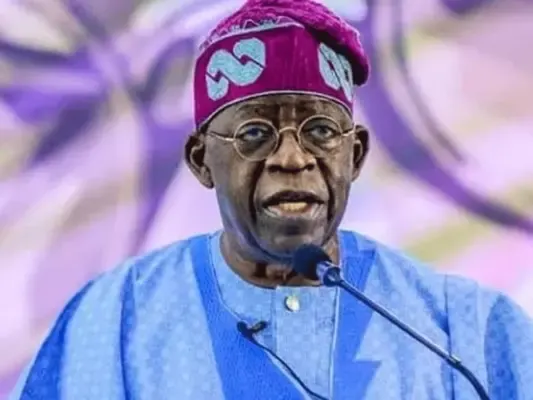
President Bola Ahmed Tinubu has welcomed the World Bank’s latest assessment of Nigeria’s economy, arguing that reforms introduced by his administration since 2023 are strengthening public finances, supporting economic growth and creating more resources for development.
The President’s reaction followed the release of the World Bank’s October 2026 Nigeria Development Update, titled Beyond the Federal Purse: How Higher Revenues Reshaped State Priorities. The report examines Nigeria’s recent economic performance and, in particular, how increased government revenues have influenced spending decisions at the state level.
According to a statement issued by Tinubu’s Special Adviser on Information and Strategy, Bayo Onanuga, the President said the findings demonstrated that measures such as the removal of the petrol subsidy, changes to the foreign-exchange market and efforts to strengthen fiscal discipline were beginning to produce results.
The World Bank reported that Nigeria’s economy grew by 4.2 per cent in the first half of 2026, compared with 3.9 per cent in the corresponding period of 2025. It projected average annual growth of approximately 4.4 per cent between 2026 and 2028, provided reforms continue and the country makes progress on public service delivery.
However, the report does not suggest that Nigeria’s economic difficulties have been resolved. While some macroeconomic indicators have improved, inflationary pressures, widespread poverty, inadequate job creation and uneven public-service delivery remain significant challenges.
The central question is whether the improving national figures can translate into tangible benefits for ordinary Nigerians.
What the World Bank Report Says About Nigeria’s Economy
The World Bank’s October update identifies improvements in economic growth, government revenue and Nigeria’s external financial position.
The 4.2 per cent growth recorded in the first half of 2026 represents an improvement on the corresponding periods of the previous two years. The Bank attributed much of the expansion to the services sector, alongside a stronger contribution from agriculture.
The report also said Nigeria’s poverty rate had stabilised for the first time since 2019. This is a significant development in the Bank’s assessment, but stabilisation should not be confused with a substantial reduction in poverty or proof that living standards have recovered across the country.
The institution expects poverty to decline gradually if economic growth continues to outpace population growth and the benefits of expansion reach more households.
The distinction is important. A growing economy can generate higher national output and government revenue without automatically ensuring that workers earn more, food becomes affordable or enough jobs are created for people entering the labour market.
The World Bank has therefore emphasised the need to move beyond macroeconomic stabilisation towards faster, more inclusive growth that improves living conditions.
Sources: World Bank — October 2026 Nigeria Development Update; Reuters — World Bank sees Nigeria growth averaging 4.4% through 2028.
Tinubu Defends Fuel Subsidy Removal and Foreign-Exchange Reforms
Reacting to the report, Tinubu said the difficult economic decisions taken since his administration assumed office in May 2023 had strengthened government finances and helped stabilise the economy.
The principal measures highlighted by the President were the removal of the petrol subsidy, the unification of the foreign-exchange market and stronger fiscal discipline.
The removal of the petrol subsidy reduced the Federal Government’s direct spending on keeping pump prices artificially low. However, it also contributed to a sharp increase in the cost of petrol, raising transportation expenses and putting additional pressure on businesses and households.
Changes to the foreign-exchange market were intended to reduce distortions and improve the functioning of Nigeria’s currency market. Yet exchange-rate movements and the cost of imported goods have remained important factors affecting businesses and consumers.
The government’s argument is that these adjustments have helped correct structural problems and improve the country’s capacity to generate revenue.
Tinubu said the reforms had raised revenues, stabilised the economy and created fiscal space for federal, state and local authorities to invest in development.
The World Bank’s findings provide evidence of improvement in certain areas, particularly economic growth and public finances. Nevertheless, the full assessment of the reforms must also consider their social costs, the distribution of their benefits and the pace at which household incomes recover.
Economic restructuring may improve government accounts while creating immediate hardship for consumers. The policy challenge is ensuring that the resulting gains are sufficient, sustainable and shared more widely.
Government Revenue Rises, Giving States More Resources
One of the central findings of the report concerns the impact of increased government revenues on state finances.
According to the figures highlighted in the Presidency’s account of the report, federation revenues rose by 69 per cent in real terms between 2023 and 2025. State governments emerged as the largest beneficiaries of the increase.
The report said states used the additional resources to increase capital spending by 151 per cent in real terms over the same period.
Much of this spending was directed towards roads and other transport infrastructure, agriculture, energy and housing.
The findings suggest that changes in national revenue collection and distribution have altered the resources available to state governments. But the value of additional revenue depends on how effectively it is spent and whether projects produce lasting benefits.
Increased expenditure alone does not establish that roads have been completed to an acceptable standard, hospitals have adequate supplies, schools are delivering better education or communities have gained reliable access to electricity and clean water.
The World Bank’s emphasis on spending quality reflects this distinction between receiving more money and converting that money into development.
State governments now face an important responsibility: demonstrating that larger allocations and increased capital budgets are producing measurable improvements in public infrastructure, employment opportunities and essential services.
Twenty-Nine States Shift Spending Towards Economic Infrastructure
The World Bank report also identified changes in the spending priorities of state governments.
According to the figures reported by the Presidency, 29 of 33 states covered by the relevant analysis shifted their spending towards economic infrastructure.
The report also found that real social spending per person increased in all but one state.
These findings indicate that additional public resources have, in many states, been accompanied by increased investment in infrastructure and social expenditure.
Infrastructure can support economic activity by reducing transport costs, improving access to markets and helping businesses move goods and services more efficiently. Investments in agriculture and energy may also support productivity, while housing projects can address some of the needs associated with urban growth and population expansion.
However, the quality and distribution of such investments matter. A road project may improve movement between communities, for example, but its economic value will depend on its location, construction quality, maintenance and connection to productive areas.
Similarly, higher social spending needs to be assessed against actual outcomes, including access to healthcare, school attendance, learning standards and the availability of essential public services.
The figures therefore offer a basis for examining state-level performance, but they do not remove the need for independent monitoring, transparent procurement and public accountability.
Internally Generated Revenue and State Debt
Another notable finding concerns states’ efforts to generate revenue internally rather than relying exclusively on allocations from the federation.
The report found that internally generated revenue grew in real terms in 31 of 35 states included in the analysis.
It also reported that 21 states reduced their debt-to-GDP ratios between 2021 and 2025.
These developments suggest that a number of state governments have improved their revenue position or reduced their debt burden relative to the size of their economies.
Stronger internally generated revenue can give states greater flexibility to fund public services and infrastructure. However, revenue mobilisation must be balanced against the ability of residents and businesses to pay taxes and levies, particularly during periods of elevated living costs.
States also need to ensure that revenue collection is transparent, fair and efficient, while reducing leakages and improving the management of public funds.
The report projects that Nigeria’s overall public debt will decline from 40.0 per cent of GDP in 2025 to 38.1 per cent in 2026.
That projection offers a potentially positive fiscal signal, but the debt ratio alone does not tell the whole story. Borrowing costs, debt-service obligations, the composition of government spending and the returns generated by public investment remain important considerations.
The long-term benefit of improved public finances will depend on whether governments can sustain responsible budgeting while meeting the needs of a growing population.
Inflation Remains a Major Concern for Households
Despite the improvements highlighted in the report, inflation remains one of the most important tests of the administration’s economic programme.
The World Bank reported that Nigeria’s headline inflation rate fell from 27.6 per cent in January 2025 to 15.2 per cent in December 2025. However, higher global fuel prices associated with the conflict in the Middle East subsequently slowed the decline.
The Bank expects inflation to ease towards approximately 12 per cent by 2028, assuming economic conditions and policy implementation support that trajectory.
A lower inflation rate generally means that prices are rising more slowly. It does not necessarily mean that prices have returned to their previous levels or that households can now afford the same goods and services they could before the recent cost increases.
For example, if the price of a bag of rice rises sharply and inflation later slows, the price of that bag may remain high even though the rate at which prices are increasing has declined.
This distinction helps explain why improvements in headline inflation may not immediately translate into relief for families struggling to pay for food, transport, rent, electricity and healthcare.
Food affordability is especially important for lower-income households, which generally have less room in their budgets to absorb increases in essential expenses.
For the government, the challenge is to sustain disinflation while improving agricultural productivity, reducing distribution bottlenecks, supporting employment and addressing other factors that contribute to the cost of living.
Nigeria’s External Financial Position Improves
The World Bank also highlighted improvements in Nigeria’s external accounts.
The country’s current-account surplus increased to approximately $12 billion in the first half of 2026, equivalent to about 7 per cent of gross domestic product, compared with $8.6 billion in the corresponding period of 2025.
The current account records transactions between Nigeria and the rest of the world, including trade in goods and services, income and transfers. A surplus indicates that the country received more through these current-account transactions than it paid out during the period.
Nigeria’s gross external reserves also increased from $45.5 billion at the end of 2025 to $53.8 billion at the end of August 2026.
Stronger external balances can improve the country’s capacity to meet international payment obligations and help strengthen confidence in its financial position.
However, these indicators should not be interpreted as proof that all currency-market difficulties have disappeared or that the benefits will be distributed evenly among households.
The durability of the improvement will depend on several factors, including oil-market developments, export performance, foreign investment, currency-market conditions and the country’s ability to expand productive activity.
The Middle East conflict has also demonstrated how global developments can affect Nigeria through energy prices, trade and inflation.
The improvement in external indicators is therefore important, but sustaining it requires a broader economic base and resilience to external shocks.
The Critical Test: Turning Growth Into Jobs and Better Living Standards
While Tinubu welcomed the World Bank’s assessment, he acknowledged that more work was needed to ensure that economic improvements translated into better conditions for households.
The President identified lower food prices and decent jobs for young Nigerians as priorities.
He also pledged to expand targeted cash transfers, accelerate the deployment of compressed natural gas, improve agricultural productivity and increase access to affordable healthcare and quality education.
Tinubu said targeted cash transfers had already reached more than 10 million households. That figure is the administration’s stated position; assessing the programme’s effectiveness would also require information on eligibility, payment regularity, the amount received by beneficiaries and the impact on household welfare.
Cash assistance can provide immediate support to eligible households, but its impact depends on adequate funding, transparent beneficiary selection and reliable delivery.
Likewise, compressed natural gas initiatives may help reduce some transport or operating costs where the necessary vehicles, infrastructure and fuel supply are available. Agricultural improvements can support food supply, but their impact depends on factors such as security, access to inputs, storage, transport and market conditions.
Job creation remains another essential measure of success. Economic growth that does not generate sufficient productive employment may fail to improve incomes for a large proportion of the population.
The World Bank has stressed that Nigeria needs faster and more inclusive growth, supported by private investment, productivity, job creation and stronger public services.
This means the administration’s performance cannot be judged only by growth rates, foreign reserves or government revenue. It must also be assessed by whether people can find work, businesses can expand, families can afford essential goods and public services improve.
Why State Governments Are Central to the Next Phase
The report’s focus on state spending is particularly significant because state governments are responsible for delivering many services that directly affect residents.
These include primary and secondary education, healthcare, local infrastructure and a range of community-level services, although responsibilities and funding arrangements differ across sectors and levels of government.
Higher allocations can provide states with more opportunities to address longstanding infrastructure gaps. But the results will depend on planning, procurement, project execution, maintenance and the accountability of public officials.
Tinubu has urged state governments to manage their increased revenues prudently and prioritise projects that improve living standards, healthcare and education.
That appeal highlights a central issue in Nigeria’s federal system: improved revenue at the national level is only one stage in the development process. Public money must still pass through government institutions and budget systems before it can deliver services to communities.
Residents therefore have a legitimate interest in knowing how much their states receive, how those funds are budgeted, which projects are completed and what outcomes follow.
Transparent reporting and independent scrutiny can help establish whether higher revenues are being translated into durable improvements rather than merely higher expenditure.
What the Report Does—and Does Not—Prove
The World Bank’s findings provide evidence that Nigeria’s economy has recorded improvements in several macroeconomic and fiscal indicators.
Growth strengthened in the first half of 2026, the external position improved and the additional resources available to state governments supported higher capital spending.
These findings support the view that some of the economic adjustments introduced since 2023 have coincided with measurable changes in public finances and economic performance.
However, the report should not be read as an unconditional endorsement of every government policy or as a declaration that Nigeria’s economic crisis is over.
The World Bank has called for continued reforms and better public-service delivery, while warning through its broader assessment that the priority must shift towards growth that creates jobs, reduces poverty and improves living standards.
The difference between economic stabilisation and broad-based prosperity is central to understanding the report.
Stabilisation concerns whether key economic conditions are becoming more manageable. Broad-based prosperity requires those improvements to create opportunities and tangible benefits for a wider share of the population.
The two are related, but they are not the same.
The next phase will therefore require evidence not only of higher revenue and stronger growth, but also of rising real incomes, more productive employment, more affordable essentials and better-quality public services.
Conclusion
President Bola Tinubu has described the World Bank’s October 2026 Nigeria Development Update as evidence that his administration’s economic reforms are producing results.
The report points to stronger growth, increased government revenues, higher state capital expenditure and an improved external financial position. It also finds that Nigeria’s poverty rate stabilized for the first time since 2019 and projects further economic growth if reforms continue.
Yet major challenges remain. Inflation continues to put pressure on household budgets, poverty remains widespread, and improved public finances have not automatically translated into better living conditions for every Nigerian.
The report’s central message is therefore twofold: Nigeria has made progress in some important economic indicators, but the next stage must focus on making that progress inclusive and sustainable.
For the administration, the challenge is to show that its policies can deliver affordable food, decent jobs and reliable public services. For state governments, it is to demonstrate that additional revenue is being spent effectively and transparently.
Ultimately, the success of economic reform will be measured not only by national statistics, but also by the changes Nigerians experience in their everyday lives.
Note: The World Bank’s assessment provides evidence of improvement in Nigeria’s growth, revenue and external balances. But it is not a declaration that hardship has ended. The decisive test is whether these gains translate into lower pressure on household budgets, more productive jobs, reduced poverty and better public services. Economic indicators matter; so do the lived experiences of the people they are meant to serve.
Editorial note: Economic projections are estimates, not guaranteed outcomes. Figures and statements attributed to the World Bank or the Presidency should be read in the context of the report’s stated assumptions and limitations.
Sources
TVC News — World Bank Report Confirms Economic Reforms Are Working, Tinubu