

Middle East | News
Saudi Arabia Vows Retaliation After Deadly Houthi Missile Strike on Riyadh Airport Kills 12, Injures More Than 300
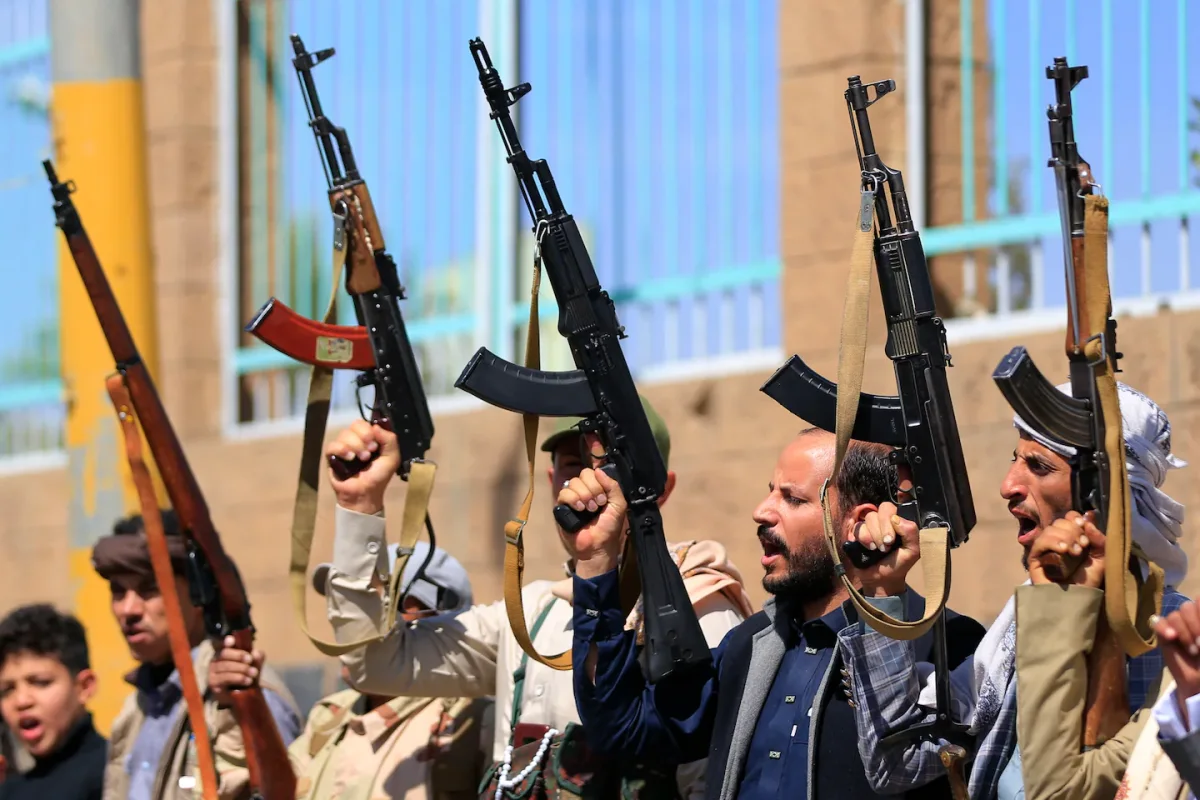
October 11, 2026 | Riyadh, Saudi Arabia
Saudi Arabia has vowed to respond after a deadly missile attack attributed to Yemen’s Houthi movement struck King Khalid International Airport in Riyadh, killing 12 people and injuring more than 300 others in a major escalation of the regional conflict.
The attack, which occurred on October 10, damaged airport facilities and forced authorities to suspend operations. Saudi officials blamed Yemen’s Iran-aligned Houthi rebels for the strike, describing it as a serious violation of international law and promising a decisive response.
The incident has intensified concerns about the expanding conflict between the Houthis and the Saudi-backed Yemeni government, while raising the possibility of deeper military involvement by the United States and other international partners.
According to reports from The Washington Post, The Associated Press, Reuters and Al Jazeera, the attack was among the deadliest assaults on a Gulf Arab country since the wider conflict involving Iran began in March 2026.
The consequences extend beyond Saudi Arabia. The threat to a major international airport has raised questions about civilian protection, regional aviation, oil-market stability and the security of important maritime routes connecting Asia, Europe and the Middle East.
What Happened at Riyadh’s International Airport?
King Khalid International Airport, located in Saudi Arabia’s capital, was struck on Saturday, October 10, according to reports citing Saudi authorities.
Saudi Arabia’s General Authority of Civil Aviation reported that 12 people were killed and 309 injured. The victims included Saudi citizens and foreign nationals from several countries.
Those reported killed included four Saudis, two Bangladeshi nationals and one national each from the United States, Egypt, Jordan, Palestine, Syria and Sudan. The reported nationalities underscore the international civilian impact of an attack on a major airport serving passengers and airline personnel from multiple countries.
Some of the injured were reported to be in critical condition and were receiving hospital treatment.
The strike also caused property damage, prompting authorities to suspend airport operations while officials assessed the situation.
The attack followed other reported assaults on Saudi airports and infrastructure during the same week, suggesting a broader escalation rather than an isolated security incident.
Saudi authorities subsequently extended the closure of the country’s main international airport, while schools were reportedly scheduled to move to online learning temporarily as security measures were strengthened.
The disruption has placed additional pressure on a transport hub that plays an important role in international travel, business activity and religious tourism.
Saudi-Led Coalition Promises a Firm Response
Following the attack, the Saudi-led coalition fighting in Yemen said it would respond firmly.
Coalition spokesperson Major-General Turki al-Maliki condemned the strike, describing it as a serious violation of international humanitarian law. The coalition’s statement signaled that Saudi Arabia and its partners were considering a response but did not publicly establish the precise scale, timing or targets of any forthcoming military operation.
The lack of publicly confirmed operational details leaves uncertainty over whether the response will involve expanded airstrikes, additional defensive measures or a wider military campaign against Houthi positions.
Saudi Arabia has previously led military operations against the Houthis as part of the long-running conflict in Yemen. Its renewed confrontation with the group follows a period in which the intensity of fighting had eased relative to earlier phases of the war.
The latest attacks, however, have increased pressure on Riyadh to protect its territory and demonstrate that repeated strikes on civilian infrastructure will carry consequences.
Any retaliation could produce further escalation if the Houthis respond with additional missile or drone attacks against Saudi cities, airports, military installations or energy infrastructure.
The immediate challenge for Saudi authorities is to strengthen security and prevent further casualties while determining how to respond without widening the conflict beyond control.
Houthis Warn Airlines and Travelers to Avoid Saudi Airports
The Houthi movement subsequently renewed its warnings to airlines, passengers, airport employees and other aviation personnel.
In a statement reported by Reuters on October 11, the group said Saudi airports and airspace were vulnerable to attacks and warned people against using them, with exceptions stated for airports in the holy cities of Mecca and Medina.
The warning represents a significant escalation because it extends the potential consequences of the conflict to commercial aviation and international travel.
Airlines must consider the possibility of missile attacks, airspace restrictions and sudden changes to airport operations when deciding whether to maintain flights to a particular destination.
Passengers may face cancellations, diversions, delays and difficulties arranging onward journeys. Airline staff and airport workers also face safety concerns when threats are directed at aviation infrastructure.
The threat does not necessarily mean that every Saudi airport will be attacked, but it increases uncertainty for carriers operating in or near the region.
For governments and aviation regulators, the priority is to assess credible security information, communicate risks clearly and determine whether additional restrictions are necessary to protect passengers and crews.
The situation also highlights the importance of distinguishing between a threat issued by an armed group and an independently verified assessment of the likelihood of future attacks.
Why the Conflict Between Saudi Arabia and the Houthis Has Intensified
The confrontation has deep roots in Yemen’s prolonged civil war.
Saudi Arabia intervened militarily in Yemen in 2015 at the head of a coalition supporting the internationally recognized Yemeni government after the Houthis took control of the capital, Sanaa, and challenged the government’s authority.
The Houthis, a political and armed movement originating in Yemen, have since fought government-aligned forces and Saudi-backed groups. The conflict has caused extensive humanitarian suffering, damaged infrastructure and weakened Yemen’s already fragile economy.
Although periods of reduced fighting created hopes for a more durable settlement, tensions have persisted.
Recent military developments have again drawn Saudi Arabia more directly into the confrontation. According to reporting by The Guardian and The Associated Press, Houthi attacks have increased amid renewed fighting between the movement and forces aligned with Yemen’s internationally recognized government.
The Saudi-led coalition has also intensified its operations against Houthi positions.
The latest airport strike therefore occurred against a background of rising military pressure on both sides.
For Saudi Arabia, the attacks present a direct security challenge. For the Houthis, threats against airports and other infrastructure appear intended to raise the cost of Saudi military involvement and deter further operations against the movement.
However, the strategic consequences could extend well beyond the immediate confrontation if attacks continue to affect civilian infrastructure and international transport.
Could the United States Join Saudi Arabia’s Military Campaign?
The attack has increased pressure on Washington to consider a more direct role in the conflict.
US President Donald Trump said he was evaluating whether the United States should join Saudi military operations against the Houthis. His remarks indicated that direct involvement was under consideration, but they did not amount to confirmation that a decision to participate in strikes had been made.
According to reporting by The Associated Press and The Guardian, the United States has already provided intelligence cooperation and targeting assistance to Saudi Arabia. Approximately 200 US military advisers were reported to be stationed in the kingdom to assist with the campaign.
Before the airport attack, Washington had not directly participated in the fighting against the Houthis described in those reports.
A decision to join offensive operations could significantly widen the conflict.
US involvement might strengthen Saudi Arabia’s military capabilities, but it could also make American personnel and interests more direct targets for retaliation.
The Houthis have previously threatened regional infrastructure and maritime traffic. Expanded US military action could prompt the group to target additional facilities or resume attacks against commercial shipping in nearby waters. Such an escalation could also complicate Washington’s broader regional objectives, particularly as the United States remains engaged in the wider conflict involving Iran.
For now, the public reporting establishes that US participation was being considered, not that a final decision had been announced.
Britain and Other Countries Consider Support for Riyadh
Saudi Arabia has also sought assistance from international partners as it responds to the attacks.
The Guardian reported that the United Kingdom would provide defensive military support, including refueling assistance for aircraft involved in intercepting Houthi missiles directed towards Riyadh.
Saudi Arabia has also sought further assistance from France, Egypt and Pakistan, according to the same report, amid concerns about the supply of interceptor missiles.
Defensive support can include measures intended to detect, track and intercept incoming threats. Such assistance is distinct from direct participation in offensive attacks against Houthi positions.
Nevertheless, the involvement of additional countries could internationalize the confrontation further.
Governments providing support must weigh their commitments to Saudi security against the risk of becoming involved in a broader regional war.
The nature of any assistance, its legal basis and the limits placed on its use will be important in determining how much it changes the military balance. The situation also presents a diplomatic challenge. International partners must consider how to protect civilians and regional stability while avoiding steps that could trigger further retaliatory attacks.
Why the Airport Attack Matters for Global Aviation
King Khalid International Airport is a major gateway to Saudi Arabia. An attack on the facility has implications beyond the immediate loss of life and damage to infrastructure.
Airport security threats can disrupt commercial aviation even when airlines are not directly struck. Operators may suspend flights, reroute aircraft or delay services while authorities assess the risk.
Such disruptions can affect passengers traveling for business, employment, tourism, family visits and religious purposes.
The consequences can be particularly difficult for travelers connecting through international hubs, because a single airport closure may affect multiple onward journeys.
Airlines and aviation regulators must also consider airspace risks, the reliability of airport operations and the safety of ground personnel.
The Houthis’ warning against using Saudi airports adds uncertainty because it signals that the movement may continue to treat aviation facilities as potential targets.
For passengers, the practical response is to check current flight status and official airline or government travel advisories before traveling. Travelers should not assume that a previously scheduled flight will operate normally during a rapidly changing security situation.
For aviation authorities, the incident reinforces the need for coordinated threat assessments and clear communication with airlines and passengers.
The Threat to Oil Markets and Maritime Trade
Saudi Arabia is the world’s leading oil exporter, making the security of its territory and energy infrastructure important to international energy markets.
Although the airport attack was not itself a confirmed strike on an oil facility, the wider escalation has raised concerns about potential threats to Saudi energy infrastructure and regional shipping routes.
The conflict is also significant because of the geography of the Red Sea and the Bab al-Mandab Strait, a strategic maritime passage connecting the Red Sea to the Gulf of Aden and the wider Indian Ocean.
A significant share of international maritime trade passes through this corridor. Any sustained threat to commercial shipping can force vessels to change routes, increase insurance costs and extend delivery times.
The Guardian reported that direct US involvement could increase the risk of renewed Houthi attacks on vessels passing through the Bab al-Mandab Strait.
The economic impact would depend on the scale and duration of any disruption, the number of ships affected and the availability of alternative routes. Energy markets may also react to fears that the conflict could spread to oil-producing facilities or other strategic infrastructure.
However, the airport attack alone does not establish that Saudi oil production or exports have been interrupted. Such claims would require separate confirmation from relevant authorities and market data.
The broader concern is that a conflict already involving several regional actors could create additional risks for trade, energy supply and international transport.
Civilian Protection and International Law
The deaths and injuries reported at Riyadh airport have renewed attention on the protection of civilians during armed conflict.
The airport is civilian infrastructure used by passengers, airline workers and other members of the public. The Saudi-led coalition said the attack amounted to a serious violation of international humanitarian law.
On October 11, the African Union Commission condemned the attack attributed to the Houthis and expressed solidarity with Saudi Arabia and the families of those killed. It called for an immediate cessation of attacks and urged all parties to protect civilians and civilian infrastructure.
The United Nations also condemned the attack, with Secretary-General António Guterres calling for an immediate end to attacks on civilians and civilian infrastructure.
International humanitarian law requires parties to an armed conflict to distinguish between civilians and combatants and prohibits deliberate attacks against civilians. It also places restrictions on attacks against civilian objects and requires parties to take precautions to reduce harm to civilians.
The legal assessment of a specific strike depends on the facts, including the target, the circumstances of the attack and the information available to those responsible for carrying it out.
The broader principle remains that civilians should not bear the burden of military escalation.
The reported casualties at Riyadh airport demonstrate the human consequences of attacks that affect public facilities, regardless of the strategic calculations behind them.
What Happens Next?
Several developments will determine whether the airport attack leads to a wider regional confrontation.
First, Saudi Arabia’s response. The scale and targets of any retaliation will influence whether the conflict expands or remains concentrated on existing battlefronts in Yemen.
Second, the Houthis’ next actions. Further attacks on airports, military installations or energy infrastructure could increase the pressure on Saudi Arabia and its international partners to take stronger military measures.
Third, the US decision. Direct American participation in offensive operations would mark a significant change in Washington’s role and could expose US personnel and interests to further retaliation.
Fourth, international aviation and shipping. Continued threats to Saudi airports or regional maritime routes could disrupt travel and trade, with consequences extending well beyond the immediate conflict zone.
Finally, diplomatic efforts. Regional and international actors will face pressure to prevent further civilian casualties and reduce the risk of an uncontrolled escalation.
At this stage, the full extent of the Saudi response and the future level of US military involvement remain uncertain. Statements of intent should not be confused with confirmed military decisions or completed operations.
Conclusion
Saudi Arabia has vowed a firm response after an attack attributed to Yemen’s Houthi movement killed 12 people and injured more than 300 at Riyadh’s King Khalid International Airport on October 10.
The strike has disrupted airport operations, raised concerns about aviation safety and intensified an already dangerous confrontation between the Houthis and the Saudi-led coalition.
The possibility of direct US participation adds another dimension to the crisis, while reported British defensive support and requests for assistance from other countries show the international significance of the unfolding events.
The consequences could extend to commercial aviation, regional energy security and maritime trade, particularly if the Houthis carry out further attacks or the Saudi-led coalition expands its military campaign.
For now, the central priorities are protecting civilians, establishing the circumstances of the attack, preventing further strikes and avoiding a wider conflict that could destabilize the region.
Note: The Riyadh airport attack is a serious escalation because it has caused substantial civilian casualties and placed international aviation at risk. Saudi Arabia’s promised retaliation and the possibility of deeper US involvement could widen the conflict. The key questions now are whether further attacks can be prevented, how the parties will protect civilians and whether diplomatic efforts can stop the confrontation from spreading.
Editorial note: Casualty figures and responsibility for the attack are attributed to the cited reports and official statements. The military intentions of the parties, the timing of any retaliation and the possibility of direct US involvement remain subject to further developments.