

Africa | News
South Africa’s Deputy Police Chief Resigns Amid Rape, Child Grooming and Human Trafficking Charges
Africa News | October 13, 2026
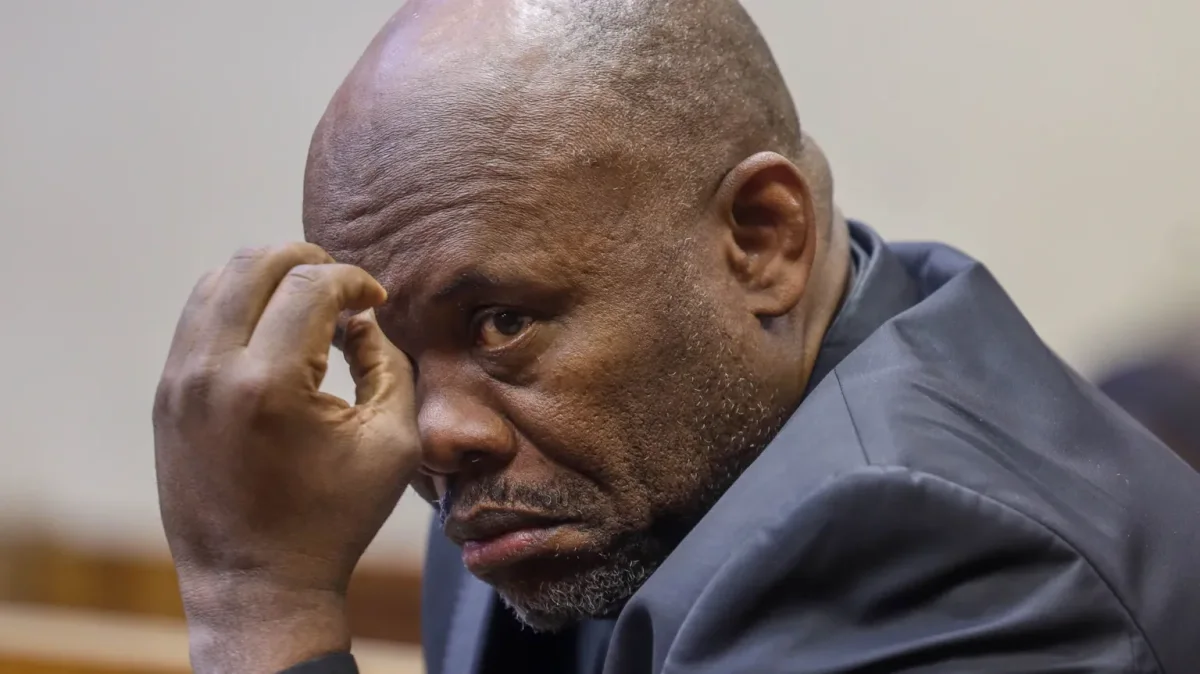
Lieutenant General Shadrack Sibiya leaves the South African Police Service while facing serious criminal allegations and a disciplinary case, as a separate public inquiry examines alleged corruption and links between police officials and organized crime.
Deputy Police Chief Resigns During Disciplinary Hearing
South Africa’s suspended deputy police chief, Lieutenant General Shadrack Sibiya, has resigned from the South African Police Service (SAPS) while facing criminal charges involving alleged sexual offenses, including rape, the grooming of a minor and human trafficking.
Sibiya’s lawyer submitted his resignation letter at the beginning of a scheduled disciplinary hearing on Monday, October 12, according to police spokesperson Athlenda Mathe.
The resignation marks a significant development in a case that has drawn public attention to allegations of misconduct within South Africa’s police leadership.
Mathe said Sibiya’s departure would be regarded as a “dishonorable discharge” because he resigned while disciplinary proceedings against him remained unresolved.
The former deputy police chief, who is 59, denies the allegations against him. He has also denied separate accusations that he maintained improper relationships with alleged criminal figures.
His resignation does not amount to a criminal conviction, and the allegations must still be determined through the appropriate legal process.
The Criminal Charges Against Sibiya
The allegations against Sibiya include the sexual grooming of a 16-year-old girl, the alleged rape of an 18-year-old woman and a charge of human trafficking.
According to the BBC report, Sibiya has denied the charges relating to the minor and the alleged rape. Regarding the 18-year-old woman, he has acknowledged that sexual relations took place but maintains that they were consensual.
Consent is a central issue in the allegation involving the adult woman, and the matter must be resolved through the legal process rather than through assumptions based on either party’s account.
Sibiya was arrested in September 2026 and has remained in custody. His application for release on bail was postponed to October 13.
The outcome of that scheduled bail proceeding was not established in the reporting available for this article.
The charges represent a serious legal challenge for a former senior law-enforcement official who previously occupied a position of considerable responsibility within the national police service.
However, the allegations remain allegations, and Sibiya retains the right to defend himself in court.
Why His Resignation Is Being Described as a Dishonorable Discharge
The circumstances of Sibiya’s departure are important.
Rather than completing his disciplinary proceedings while remaining in service, his legal representative submitted his resignation at the start of the hearing.
Police spokesperson Athlenda Mathe said the resignation would be treated as a dishonourable discharge because the disciplinary case was still pending.
The designation relates to the circumstances of his departure from the police service. It should not be confused with a judicial finding that he is guilty of the criminal charges.
Sibiya had been suspended since September 2025 following allegations that he was connected to organized criminal figures and had engaged in conduct requiring investigation.
His departure therefore follows months of scrutiny, culminating in criminal proceedings and the unresolved disciplinary case.
The resignation also raises questions about accountability mechanisms when senior police officials face allegations of serious wrongdoing. The effectiveness of those mechanisms depends on whether investigations proceed appropriately and whether criminal allegations are tested independently of employment decisions.
The Madlanga Commission and Allegations of Police Corruption
Sibiya’s legal troubles extend beyond the sexual offense charges.
He has also been implicated in the Madlanga Commission, a public inquiry investigating allegations of corruption, misconduct and collusion between police officials and criminal networks.
The commission, chaired by retired judge Mbuyiseni Madlanga, began its work in September 2025. It was established amid allegations of improper relationships between senior law-enforcement officials, political figures and criminal groups.
During proceedings connected to the inquiry, Sibiya faced accusations that he received money and gifts from an alleged criminal kingpin.
One allegation concerned a gift involving 20 impalas, reportedly linked to the award of a police contract. He was also accused of interfering with investigations into political killings in KwaZulu-Natal.
Sibiya has denied the corruption-related allegations.
The claims have attracted attention because they concern the integrity of the institutions responsible for investigating serious crime and protecting the public.
However, allegations presented at a public inquiry must be distinguished from findings formally established by the commission or criminal courts. The inquiry’s work is intended to examine evidence, establish relevant facts and assess whether misconduct occurred.
A Wider Crisis of Confidence in South Africa’s Police Service
The case has unfolded during a period of intense scrutiny of South Africa’s police leadership.
The Madlanga Commission has heard allegations concerning relationships between police officials, alleged criminal networks and individuals connected to political and business interests.
The controversy has also involved suspended Police Minister Senzo Mchunu, who has faced allegations of links to criminal gangs and has denied wrongdoing.
The allegations against different individuals are distinct and should not be treated as proof that every official implicated in the wider controversy committed an offense.
Nevertheless, the inquiry has placed questions of police accountability and institutional independence at the center of public debate.
Police services depend on public cooperation. People are more likely to report crimes, provide information and assist investigations when they have confidence that officers will act professionally and that complaints against senior officials will be investigated fairly.
Where allegations of corruption or criminal connections involve senior officers, transparent investigations become especially important.
The challenge for South African authorities is to establish the facts, protect the integrity of investigations and ensure that criminal proceedings are not undermined by political pressure or institutional interference.
What Happens After Sibiya’s Resignation?
Sibiya’s departure from the police service does not automatically end the criminal cases against him.
Criminal proceedings can continue independently of his employment status. His resignation also does not determine whether the allegations investigated by the Madlanga Commission are substantiated.
The immediate legal questions include the progress of his bail application, the handling of the criminal charges and the evidence that prosecutors may present in court.
The commission’s wider investigations also remain important for determining whether the allegations concerning police misconduct and links to organised crime can be established.
For the public, the case will be measured not simply by whether a senior official leaves office, but by whether the relevant authorities follow due process and establish accountability on the basis of evidence.
Note:
Shadrack Sibiya’s resignation marks a major development in a case involving alleged sexual offences, a pending disciplinary proceeding and separate accusations of corruption and links to organised crime.
He denies the allegations, and his resignation should not be presented as proof of criminal guilt.
The wider significance lies in the questions the case raises about accountability at the highest levels of law enforcement. The criminal courts and the Madlanga Commission have separate roles in examining the allegations, while the public awaits clear findings based on evidence.
The central issue is whether South Africa’s accountability systems can investigate allegations involving powerful officials fairly, transparently and without interference.
Sources: BBC News | Associated Press | Al Jazeera