

Politics
INEC Explains Why Four Candidates Are Missing From Final List
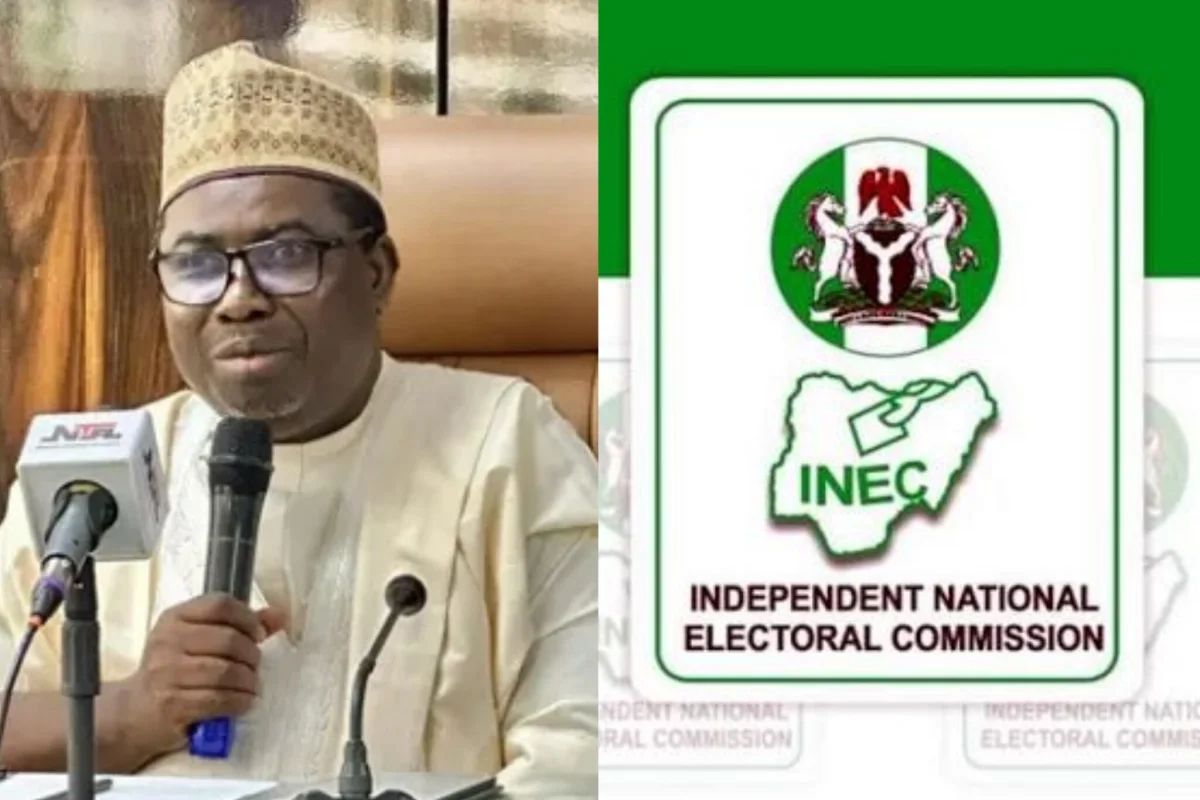
INEC Excludes Adebutu, Pantami and Two Other Governorship Candidates Over Membership Register Issues
Politics | October 13, 2026
The Independent National Electoral Commission (INEC) has reportedly attributed the exclusion of four governorship candidates from its final list for the February 2027 elections to alleged non-compliance with statutory requirements governing political party membership registers.
The affected candidates are Oladipupo Adebutu of the Peoples Democratic Party (PDP) in Ogun State, Isa Ali Pantami of the PDP in Gombe State, Abdulsalam Gwarzo of the Nigeria Democratic Congress (NDC) in Kano State and Danjuma La’ah of the NDC in Kaduna State.
According to a report published by GistReel on October 13, an unnamed INEC source said the candidates’ names were absent from electronic membership registers submitted by their respective parties at least 21 days before the relevant primaries.
The source reportedly linked the commission’s position to a Supreme Court judgment delivered on September 24, 2026, which restored provisions of the Electoral Act 2026 governing membership registers and participation in party primaries.
The explanation comes amid growing political controversy over the final list of candidates for the February 6, 2027 governorship elections.
However, the commission’s published candidate lists did not themselves provide detailed explanations for the omissions. The account attributed to an unnamed source should therefore be distinguished from a formal, publicly documented determination addressing each candidate’s individual circumstances.
What the Electoral Act Says About Party Membership Registers
The dispute centres on Sections 77(5), 77(6) and 77(7) of the Electoral Act 2026.
These provisions establish requirements concerning the submission of political parties’ membership registers and their use during primaries, congresses and conventions.
Section 77(5) restricts participation in party primaries to members whose names appear on the relevant membership register submitted to INEC within the prescribed period.
Section 77(6) requires parties to use the submitted register for their selection processes, while Section 77(7) provides consequences for parties that fail to submit their membership registers as required.
The Supreme Court’s September 24 judgment restored these provisions after an earlier Court of Appeal decision had declared them unconstitutional.
The ruling has significant implications for parties preparing for the 2027 elections because it reinforces the importance of complying with the statutory requirements governing membership documentation and candidate selection.
Nevertheless, determining whether a particular candidate was properly registered, whether the relevant register was submitted on time and whether the law was correctly applied requires consideration of the evidence in that specific case.
Why Isa Pantami Was Excluded in Gombe State
Pantami, a former Minister of Communications and Digital Economy, emerged as the PDP’s governorship candidate in Gombe State following a fresh primary conducted on September 29.
The rerun followed a Federal High Court decision that nullified his earlier emergence and directed the party to conduct another primary within 30 days.
The legal dispute arose after other PDP aspirants challenged the process that produced Pantami as the party’s candidate in May. The court found problems with the original nomination process and ordered a fresh exercise.
Pantami subsequently contested the rerun and emerged as the party’s candidate again.
His name was nevertheless absent from INEC’s final list.
According to GistReel, Pantami’s lawyers challenged the omission in a protest letter dated October 12, arguing that he was a registered PDP member and that his details had been submitted to the commission.
The lawyers also pointed to his participation in the fresh primary, which was reportedly conducted under INEC’s observation.
The dispute therefore raises a question that goes beyond whether the rerun took place: whether the membership documentation and other statutory requirements were satisfied.
The PDP and Pantami’s legal team are seeking clarification and have indicated that they may pursue legal remedies.
Until the dispute is resolved, the omission creates uncertainty about the party’s participation in the Gombe governorship election.
Adebutu’s Exclusion Raises Questions in Ogun State
In Ogun State, Adebutu’s omission has also triggered controversy over the PDP’s compliance with membership registration requirements.
Civil society groups had questioned whether Adebutu’s name appeared in the party’s membership register submitted to INEC. The concerns formed part of the controversy surrounding his eligibility to contest the election.
The Ogun PDP rejected the allegations, maintaining that Adebutu was a properly registered member and that the party had complied with the relevant requirements.
However, the final list published by INEC did not include Adebutu or his running mate.
The omission leaves the PDP without a listed governorship ticket in Ogun State in the published document, although the party may pursue any remedies available under the law.
The case highlights the importance of accurate membership records and timely submission of required documentation. It also demonstrates why disagreements over nomination procedures can have consequences extending beyond internal party politics.
For Adebutu and the PDP, the immediate challenge is to establish whether the omission resulted from a substantive eligibility problem, a documentation issue or another matter that can be addressed through the applicable legal process.
NDC Candidates Also Affected in Kano and Kaduna
The controversy is not limited to the PDP.
GistReel also identified Abdulsalam Gwarzo, the NDC candidate in Kano State, and Danjuma La’ah, the party’s candidate in Kaduna State, among those omitted from the final list.
The report attributed the exclusions to the same broader membership-register requirements.
In Kaduna, NDC state chairman Mordecai Ibrahim reportedly blamed La’ah’s omission on errors during online submission.
That explanation, if substantiated, would raise questions about the distinction between a candidate’s personal eligibility and administrative errors made during a party’s submission process.
However, an alleged submission error does not automatically establish that an omission can be reversed. Any correction would have to comply with the applicable law and INEC’s procedures.
The circumstances surrounding Gwarzo’s omission would also need to be established through reliable documentation or a formal explanation from the commission.
The cases illustrate how electoral administration increasingly depends on the accuracy of digital records, the proper handling of party documentation and compliance with statutory deadlines.
PDP Gives INEC 48 Hours to Explain
According to GistReel, the PDP has given INEC 48 hours to explain its decision and has threatened legal action over the omissions.
Pantami’s legal team has separately challenged his exclusion, arguing that his membership status and participation in the fresh primary should be taken into account.
The next stage may involve further correspondence with the commission, legal proceedings or other steps permitted under the Electoral Act.
Section 32(2) of the Electoral Act 2026 also provides a procedure for a political party to notify INEC when a nominated candidate’s name is missing from the published list. The provision specifies a written notification supported by an affidavit and signed by the party’s national chairman and secretary, within the prescribed 14-day period.
The availability and application of that procedure will depend on the facts of each case and the relevant statutory deadlines.
The affected parties will need to clarify whether they have invoked the applicable procedures and whether any formal determination has been made.
INEC, meanwhile, will be expected to explain the basis for its decisions through the appropriate channels and comply with any binding court orders.
What the Dispute Means for the 2027 Elections
The controversy comes as political parties prepare for governorship elections scheduled for February 6, 2027, in 28 Nigerian states.
The final candidate lists are an important part of the electoral process because they inform voters, political parties and election observers about the candidates officially listed to contest each election.
When prominent candidates are omitted, the consequences can extend beyond individual political ambitions. The disputes can affect campaign planning, party strategy, voter expectations and confidence in the electoral process.
At the same time, statutory requirements governing party primaries and membership registers are intended to provide clear rules for candidate selection. Their enforcement is part of the legal framework under which parties must operate.
The challenge is to apply those requirements consistently while ensuring that candidates and parties have access to lawful procedures for correcting genuine errors or challenging disputed decisions.
The controversy should therefore be assessed through the available evidence, the commission’s formal explanations and any decisions subsequently issued by the courts.
What Happens Next?
The immediate questions are whether INEC will provide further formal clarification, whether the affected parties will submit additional documentation and whether any of the disputes will proceed to court.
The outcomes could determine whether the omitted candidates can be restored to the lists under the applicable legal framework.
Until such developments occur, it would be premature to declare that any of the four candidates has permanently lost the opportunity to contest or that the commission’s decision has been conclusively upheld by a court.
The cases also provide a reminder to political parties that compliance with electoral legislation involves more than conducting a primary. Membership records, submission deadlines and nomination documentation can be equally consequential.
Note: INEC’s reported explanation points to compliance with party membership-register requirements as the central issue behind the exclusion of Adebutu, Pantami, Gwarzo and La’ah. The affected parties are challenging the decisions, and the next steps will depend on the evidence, the commission’s formal position and any legal proceedings. The key test is whether the rules are applied transparently and consistently before the 2027 elections.
Sources: GistReel — INEC explains the omissions | Premium Times — Final governorship candidates’ list | PUNCH — PDP candidates missing from INEC list