

Technology | News
Global Smartphone Shipments Plunge 20% as Memory Shortages Push Market to 14-Year Low
Technology | October 14, 2026
Global smartphone shipments fell by 20% year-on-year in the third quarter of 2026, reaching their lowest third-quarter level in 14 years, as memory-chip shortages and rising component costs put pressure on manufacturers and consumers.
The figures, reported by Counterpoint Research and covered by 9to5Google on October 13, point to a difficult period for the global smartphone industry. While manufacturers face tighter supplies and higher production costs, buyers are increasingly keeping their existing phones for longer rather than upgrading.
What is driving the decline?
The downturn is being linked to a shortage of memory components, including the chips used to store data and run applications. Demand from AI infrastructure projects has intensified competition for memory supplies, pushing up costs for smartphone makers.
Manufacturers are responding by reducing shipment volumes, adjusting product line-ups and prioritizing devices that offer stronger profit margins. That approach may protect company finances, but it could also make affordable smartphones harder to find.
Another factor is changing consumer behavior. With new devices becoming more expensive, more people are holding on to their current phones longer or considering refurbished models instead of buying brand-new ones.
Samsung and Apple gain market share despite weaker shipments
Samsung retains the lead
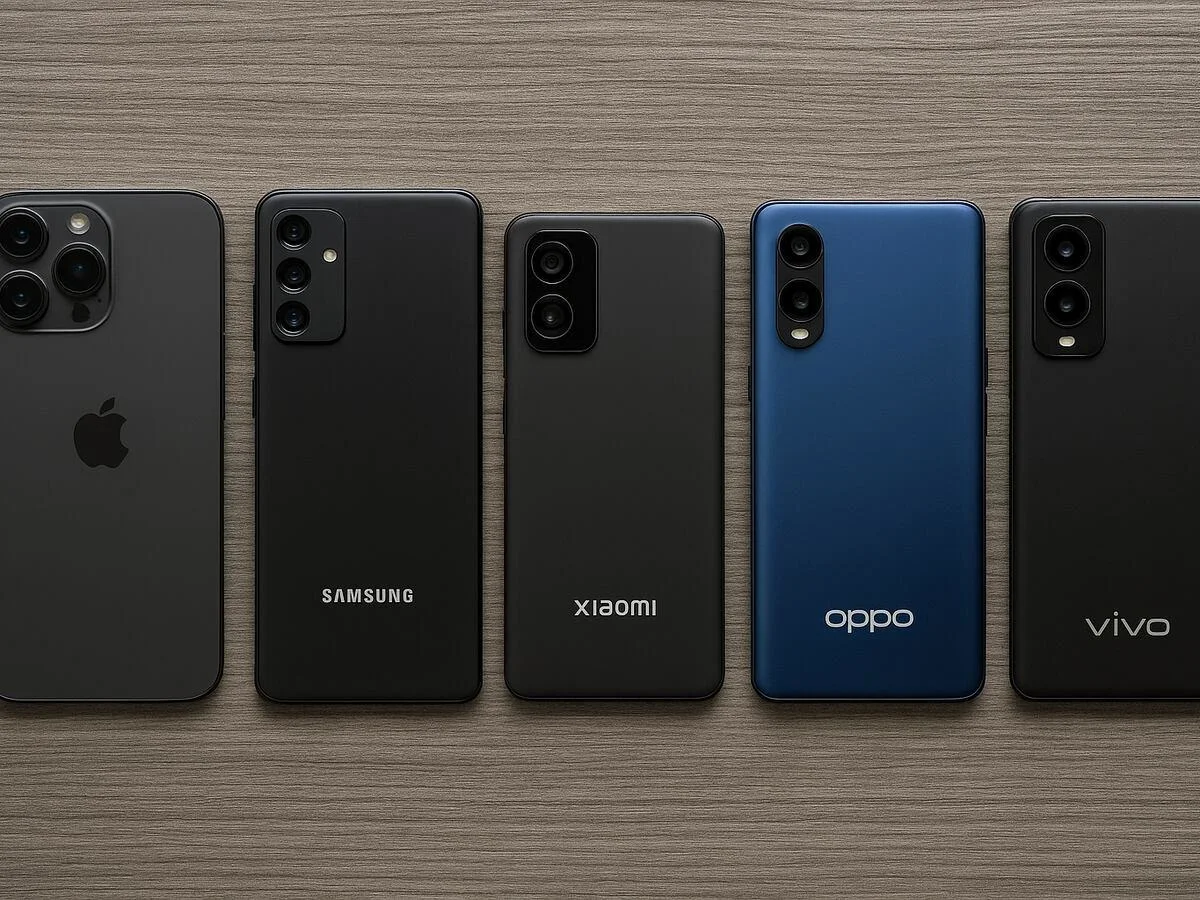
Samsung remained the world's largest smartphone vendor by shipment share, accounting for 23% of the market. Its shipments declined by just 3% compared with the same quarter last year. Counterpoint attributed its relative resilience partly to demand for the Galaxy Z Fold8 and better access to components for some mid-range phones.
Apple reaches 22% market share
Apple took 22% of global smartphone shipments, up from 18% a year earlier in the third-quarter comparison cited by 9to5Google. However, its shipments reportedly fell 22% year-on-year. The absence of a standard iPhone 18 model was identified as one factor affecting launch-period distribution.
Chinese Android brands face pressure
Xiaomi's shipments dropped by approximately 30%, while Oppo and Vivo each experienced decline of around 20% or more. Xiaomi's market share fell to 10%, with its strategy of reducing exposure to some budget devices and overseas markets contributing to the change.
Why these matters to smartphone buyers
The downturn could have consequences beyond the number of phones shipped. If component costs remain high, manufacturers may pass more of those costs on to customers, reduce the number of entry-level models they offer or concentrate on premium devices.
For consumers in price-sensitive markets, including Nigeria, the concern is affordability. Buyers who depend on lower-priced Android phones could face fewer options, while those needing to replace damaged or outdated devices may find that their budgets no longer stretch as far.
These are potential implications of the reported global trends, rather than confirmation that every smartphone brand or Nigerian retailer has already raised prices. Local prices will also depend on exchange rates, import costs, taxes, distribution and retailer margins.
What happens next?
The industry's near-term outlook remains uncertain. Counterpoint third-quarter findings indicate that manufacturers are prioritizing supply management and profitability rather than simply trying to ship more units. A meaningful recovery will depend in part on memory-chip availability, component prices and consumers' willingness to upgrade.
A separate forecast published by IDC in August projected that worldwide smartphone shipments could fall 16.7% across the whole of 2026, with the average selling price rising sharply. That is an annual forecast, not the measured third-quarter decline reported by Counterpoint.
Note
The global smartphone market is facing a supply-and-affordability challenge. Samsung and Apple have maintained relatively strong market positions, but that does not mean their shipment volumes are immune to the downturn. Meanwhile, budget-focused manufacturers face pressure from rising component costs and shrinking demand.
For consumers, the practical lesson is to compare specifications, warranty coverage and total cost before upgrading. If an existing phone still meets every day needs, delaying replacement or considering a reputable refurbished device may be worth exploring.
The central question is whether memory supplies and prices will stabilize soon enough to prevent smartphones from becoming less accessible to lower-income buyers.
Sources: 9to5Google's report