

Technology | News
Google Upgrades Play Store with AI App Comparisons and Personalised Game Discovery
Technology | October 14, 2026
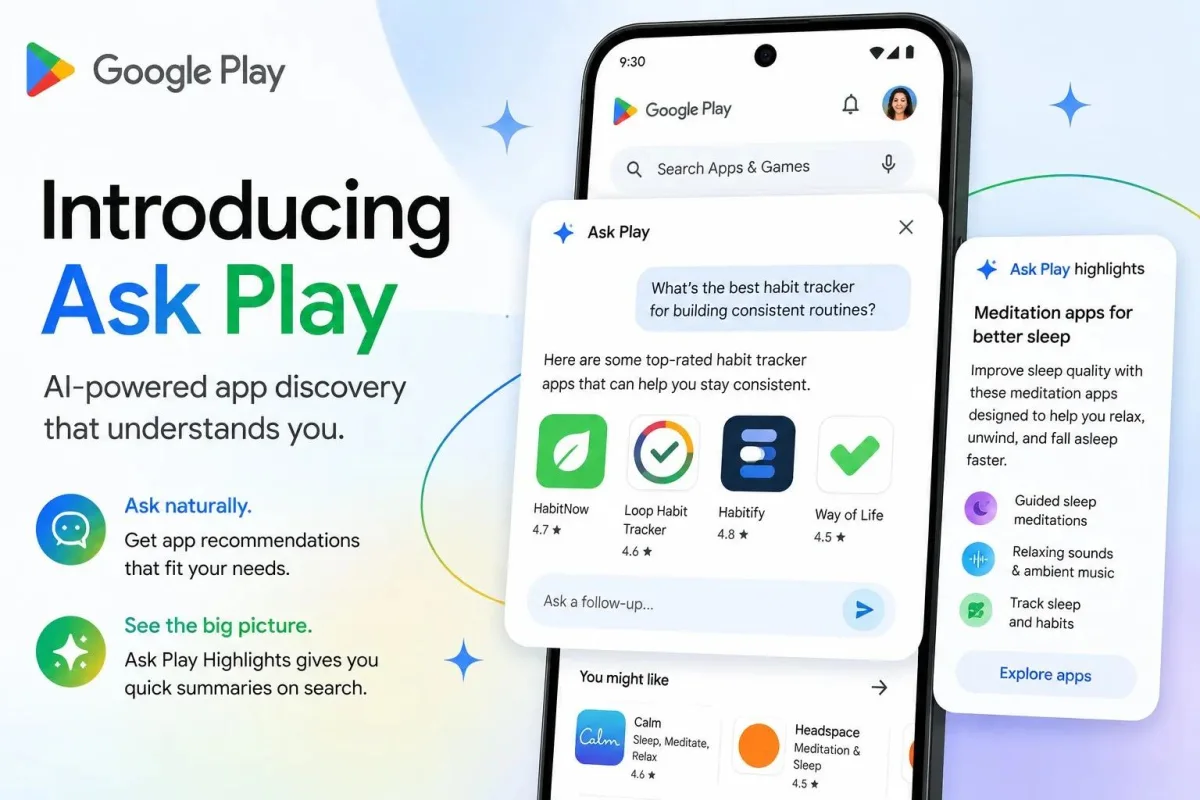
Google is introducing new artificial intelligence-powered features designed to make it easier for Android users to discover apps, compare services and find games suited to their interests.
The changes, announced on October 13, 2026, expand Google Play's role beyond a conventional app marketplace. New tools include Ask Play, which can compare apps using information about their features and user reviews, and Game Finder, which recommends games based on individual preferences and gaming habits.
The update comes as technology companies increasingly use AI to help people navigate enormous digital catalogues and find products that better match their needs.
Ask Play: AI helps users compare apps
Google is expanding Ask Play to provide more useful answers when people search for apps through everyday language rather than relying only on keywords.
Users can describe what they need, and the feature can recommend relevant apps. The latest improvement introduces side-by-side comparisons that highlight differences such as subscription options, offline capabilities and other features. It can also summarize information drawn from user reviews to help people make more informed decisions.
For example, someone looking for a free photo editor, an offline music player or a task-management app could use the feature to compare options before installing one.
The aim is to reduce the time users spend opening multiple listings and checking features individually.
Game Finder introduces personalized gaming recommendations
Google is also rolling out Game Finder, a feature designed to help Android users discover games that match their interests rather than simply showing them the most popular titles.
At the center of the system is Gamer DNA, a profile built around a user's gaming activity, ratings and stated preferences. Players can refine their recommendations by specifying preferred genres, game mechanics and other characteristics.
Game Finder can also provide information about:
- How players with similar interests engage with a game.
- Which games people they follow are playing.
- Summaries of user reviews.
- Why particular games are trending or being recommended.
Google says the initial rollout is for English-language users in the United States, with additional markets expected later. Its availability in Nigeria should not be assumed until Google confirms an expansion.
Game Playlists and new social features
Google is also developing Game Playlists, which allow players to curate collections of games. The company plans to make these collections shareable, adding a social dimension to game discovery.
Other additions include Sprints, short gaming challenges lasting 48 hours and matching groups of two to five players, as well as improved in-game tools for recording short clips of gameplay.
Google is also expanding Sports Topic Pages to cover competitions including the Premier League, UEFA Champions League, La Liga, Liga MX and Major League Soccer. These pages help users follow scores and find compatible streaming apps.
Gemini is becoming another route to app discovery
Google is connecting app discovery more closely with Gemini, its AI assistant. Through Play in Gemini, users can describe a task or problem and receive recommendations for apps that could help.
Google reported that this experience generated more than six million app installs during its first two months, from May 19 to July 31, 2026, according to company data. Google also says app recommendations are being extended to voice conversations through Gemini Live.
The direction is significant: instead of opening an app store and searching for a specific product, users may increasingly explain what they want to accomplish and let an AI assistant suggest the tools.
What does this mean for app developers?
The changes could alter how developers attract users. App visibility may increasingly depend on whether a product's features, description and reviews clearly communicate what it does and whom it serves.
Google is advising developers to keep app listings updated, use high-quality images and video previews, and check that deep links work correctly. These steps can help ensure that AI-driven discovery tools represent their products accurately.
However, greater reliance on AI recommendations also raises questions about transparency. Users may want to know why a particular app is recommended, whether commercial placement affects its visibility and how accurately summaries reflect user reviews.
Google's announcements describe the discovery features, but do not establish that every recommendation will be free of commercial influence.
Privacy and availability remain important considerations
Personalized recommendations work by drawing on signals about a user's interests and activity. Google's Game Finder documentation says that access requires a Play Games profile and certain history and personalization settings to be enabled. Users should review these settings if they do not want their gaming activity used to personalize recommendations.
Availability also differs by feature and market. Some tools are launching in the United States first, while other Google Play changes are rolling out more broadly. Android users should check their Play Store and Gemini apps for features available to their accounts and regions.
Note:
Google's latest Play Store changes point to a broader shift in how people find digital products. AI is moving from answering questions to helping users compare, evaluate and select the apps they install.
For consumers, the benefit could be faster discovery and better-informed choices. For developers, it creates another route to reach potential customers—but also increases the importance of accurate app descriptions, credible reviews and clear pricing.
The key question is whether AI-powered recommendations will consistently help users find the best app for their needs, or whether visibility and commercial incentives will influence what they see.
Source: Phone Arena's report | Google's official announcement