

United States | News
Trump Takes Midterm Campaign to Alaska as Republicans Face Pressure Over Energy Costs
US Politics | October 14, 2026
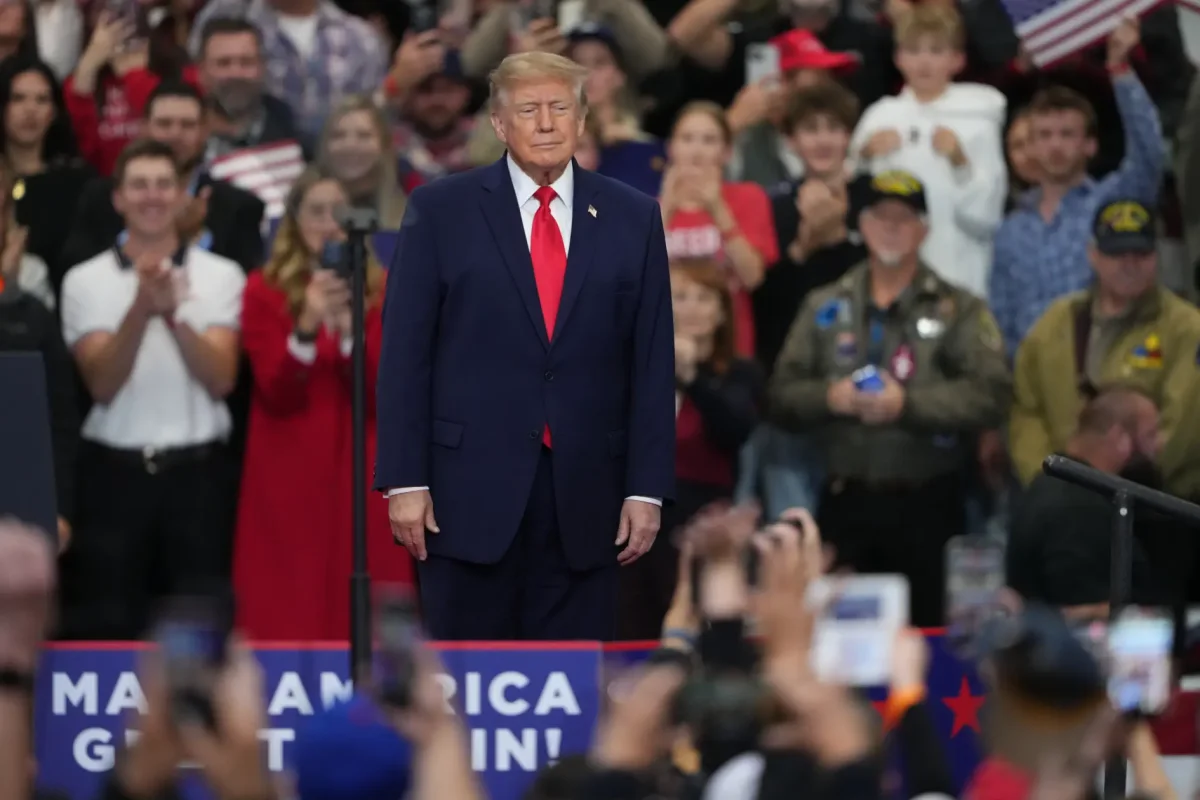
US President Donald Trump travelled to Alaska on October 13 to campaign for Republican candidates ahead of the November 3, 2026, midterm elections, highlighting the battle to retain Republican control of Congress.
At a rally in Wasilla, Trump sought to strengthen support for Republican Senator Dan Sullivan and also backed Republican Representative Nick Begich. The trip drew attention because Alaska has traditionally leaned Republican in federal elections, yet its Senate contest has become closely watched as voters contend with rising energy costs.
The campaign visit forms part of a broader effort by Trump to support Republicans in competitive races as voters prepare to decide the balance of power in the House of Representatives and Senate.
Why Alaska matters in the midterm contest
Alaska's Senate race is attracting national attention because control of the Senate could depend on a limited number of competitive contests across the country.
Sullivan faces Democratic challenger Mary Peltola, a former member of Congress, as well as another candidate named Dan Sullivan. Reuters reported that polling had shown Peltola running competitively against the incumbent, although polling snapshots do not determine the final result.
Energy prices are a central concern in Alaska, where many residents depend on fuel for transportation and heating. Rising gasoline and diesel costs have added to the economic pressures confronting voters, creating a challenge for Republicans campaigning on their record and policy agenda.
Trump criticises Alaska's ranked-choice voting system
During the rally, Trump criticised Alaska's ranked-choice voting system, which allows voters to rank candidates in order of preference. He also raised concerns about the presence of another candidate named Dan Sullivan in the Senate race.
Ranked-choice voting is used in Alaska's federal elections, and voters may rank candidates rather than select only one. Trump's criticism puts the state's election rules back into the political debate ahead of November 3.
Trump also announced pardons for two Alaskan truckers convicted of Clean Air Act violations and discussed proposed energy and broadband investments. The AP reported that he referred to a proposed 20-year gas purchase agreement with Taiwan and an additional $162 million for expanding high-speed internet access in Alaska.
Bipartisan criticism grows over Trump's Russian diesel deal
Another major development in the AP's live coverage was the growing congressional opposition to Trump's agreement to allow Russian diesel exports following a relaxation of sanctions.
On October 13, a bipartisan group of 12 senators, including six Republicans, urged Trump to reverse the arrangement. They argued that revenue from Russian energy exports could help finance Moscow's war against Ukraine and questioned whether the deal would meaningfully lower fuel prices for Americans.
The dispute is politically significant because energy costs have become a concern for voters ahead of the midterms. Trump has defended the arrangement as a way to increase fuel supplies, while critics say the potential economic benefits do not justify the security and diplomatic risks.
The administration's next steps also matter. Reuters reported that an October 18 deadline was approaching for a decision on sanctions under a new law, although the administration had not yet clarified whether it would impose the measures or issue a waiver.
Kimberly Guilfoyle resigns as US ambassador to Greece
The White House also confirmed that Kimberly Guilfoyle had resigned as US ambassador to Greece after allegations of improper and potentially illegal conduct before and during her diplomatic tenure.
The administration had asked her to leave the post, according to the Associated Press. Guilfoyle denied the allegations and said she would defend herself. The claims should therefore be understood as allegations, not established findings of guilt.
Her departure adds another personnel issue to the political news cycle as the administration navigates campaign pressures and scrutiny over its decisions.
Supreme Court agrees to hear case involving Elon Musk's government watchdog role
The US Supreme Court agreed to hear a lawsuit concerning a watchdog's effort to obtain public records about Elon Musk's Department of Government Efficiency, known as DOGE.
The case could have implications for public access to records and the transparency obligations surrounding government operations. The court's decision to hear the dispute does not, by itself, resolve the underlying legal questions.
What the midterm campaign means
The November 3 elections will determine control of the US House and Senate, affecting the administration's ability to advance legislation and Congress's capacity to investigate executive-branch actions.
The developments in AP's October 13 coverage show several issues converging in the campaign: energy prices, foreign policy toward Russia and Ukraine, election rules, government transparency and the performance of political appointees.
Trump's Alaska visit was a direct campaign effort for Republican candidates, while the bipartisan criticism of the diesel arrangement shows that disagreements over policy can cross party lines.
No outcome should be assumed before voters cast their ballots. The significance of these developments will depend on how candidates address voters' concerns and how the election results reshape congressional representation.
Note:
The October 13 campaign developments illustrate how the 2026 midterms are being fought on several fronts. Trump's trip to Alaska focused attention on a competitive Senate race, while the Russian diesel dispute exposed disagreement among Republicans and Democrats over energy policy and national security.
Guilfoyle's resignation and the Supreme Court's decision to hear the DOGE records case add further questions about accountability and governance.
For voters, the key issues to assess include the cost of living, energy policy, the conduct of public officials and the balance of power in Congress. The election's consequences will extend beyond individual candidates to the policies and oversight priorities that lawmakers pursue afterward.
Sources: Associated Press live coverage