

Politics
2027: Why I asked Atiku to step down for Peter Obi – Kwankwaso
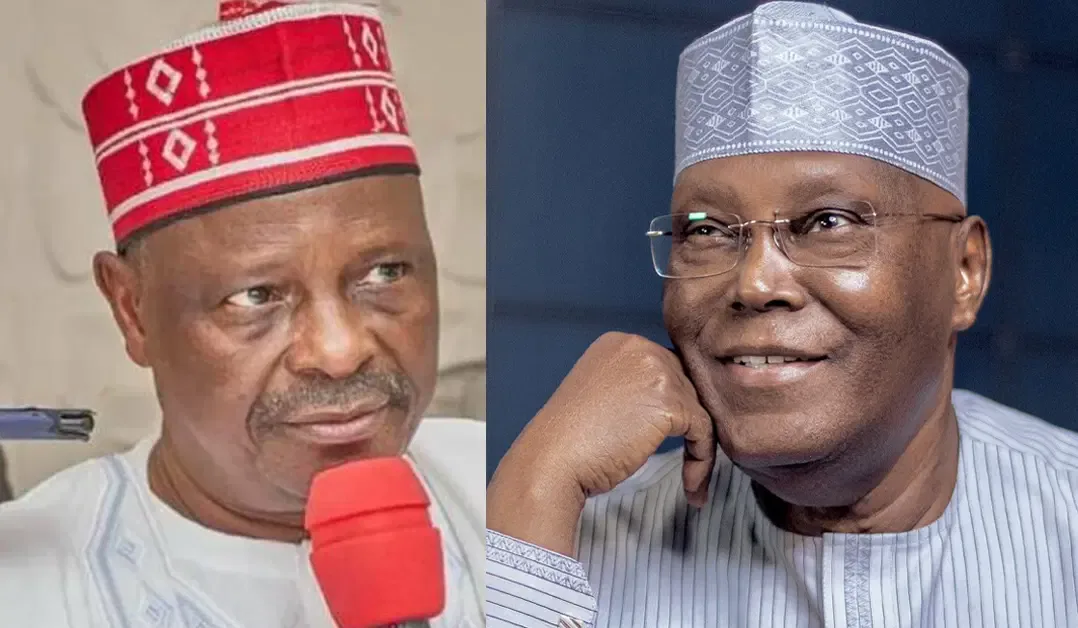
Nigeria Democratic Congress (NDC) vice-presidential candidate Rabiu Musa Kwankwaso has explained why he is urging former Vice-President Atiku Abubakar to abandon his presidential ambition in favor of Peter Obi ahead of Nigeria’s 2027 general election.
Speaking on Channels Television’s Politics Today, Kwankwaso said his appeal was not driven by personal hostility towards Atiku. Instead, he pointed to their decades-long political relationship and argued that political ambitions must give way when the time comes for a different arrangement.
Kwankwaso’s comments add another dimension to negotiations among opposition politicians seeking to challenge the ruling All Progressives Congress (APC). The disagreement is no longer simply about whether opposition parties should cooperate; it is also about which candidate should lead the opposition and whether competing presidential ambitions can be reconciled.
Why Kwankwaso wants Atiku to step aside
According to Vanguard’s October 16 report, Kwankwaso confirmed that he wanted Atiku to withdraw from the presidential contest and make way for Obi, the NDC’s presidential candidate.
He described the appeal as an attempt to encourage Atiku to consider a new political arrangement rather than a rejection of their longstanding relationship.
Kwankwaso said he recently received a group of Fulani visitors from different parts of Nigeria at his residence. He used the opportunity to encourage them to speak with Atiku about stepping aside before returning to their communities.
He also emphasised that he had known and worked with Atiku for many years, arguing that their shared political history should be understood in the context of his present appeal.
The statement is politically significant because Kwankwaso is not merely commenting as an outside observer. He is Obi’s running mate, and his position directly concerns the configuration of the opposition ticket ahead of the election.
Kwankwaso and Atiku: A political relationship stretching back to 1993
Kwankwaso traced his relationship with Atiku to 1993, when both were involved in the political movement associated with the late General Shehu Musa Yar’Adua.
He recalled that the group supported Atiku’s bid for the Social Democratic Party (SDP) presidential ticket. He also described their subsequent political interactions during the transition to civilian rule in 1999, the 2003 election and later contests.
Kwankwaso said he and Atiku were among the aspirants seeking the APC presidential ticket before the 2015 election, which Muhammadu Buhari won. He also recalled political cooperation in earlier years, despite their changing party affiliations.
His account serves two purposes: it establishes the history behind his appeal and reinforces his insistence that asking Atiku to step aside should not be interpreted as personal animosity.
However, their past cooperation does not establish that Atiku will accept the request. Any withdrawal would be a political decision for Atiku and the ADC to address.
Why the dispute matters for the 2027 election
The disagreement reflects the opposition’s continuing challenge of reconciling competing ambitions and agreeing on a common presidential candidate.
Atiku is the ADC’s presidential candidate, while Obi and Kwankwaso are running on the NDC ticket as presidential and vice-presidential candidates, respectively, according to the reports. Their separation followed the breakdown of the earlier opposition coalition.
The two political camps now face a difficult question: can they negotiate a shared arrangement without undermining their own parties’ candidates and supporters?
Three issues stand out.
- Candidate selection: Any proposed alliance would need an agreed and credible process for choosing a candidate.
- Party negotiations: Obi has previously argued that a possible alliance must be negotiated between the parties, rather than treated solely as a personal decision between candidates.
- Political compromise: The parties would need to agree on leadership, policy priorities and the terms under which a candidate might withdraw.
A public appeal from one candidate’s running mate does not, by itself, demonstrate that an agreement has been reached.
What happens next?
The next developments to watch are whether Atiku responds directly to Kwankwaso’s latest appeal, whether the ADC makes any statement about a possible alliance, and whether the NDC outlines conditions for cooperation with other opposition parties.
For now, Kwankwaso has made his position clear, but the report does not establish that Atiku has agreed to step aside. The distinction between an appeal and an actual withdrawal is essential.
Note:
Kwankwaso’s latest remarks place the question of opposition unity back at the centre of Nigeria’s 2027 political debate. His argument draws on a longstanding relationship with Atiku, but the underlying disagreement concerns the leadership of the opposition and the terms of any possible alliance.
The key issue is not simply whether Atiku should step aside. It is whether the parties can establish a transparent process for resolving competing ambitions while presenting voters with clear policy alternatives.
As of October 16, 2026, Kwankwaso’s request is a reported political appeal—not evidence that Atiku has withdrawn from the presidential race.
Source: VanguardNews