

Politics
Atiku, Peter Obi Challenge Tinubu: ‘You Can’t Campaign Through Surrogates’
Politics · Nigeria · October 16, 2026
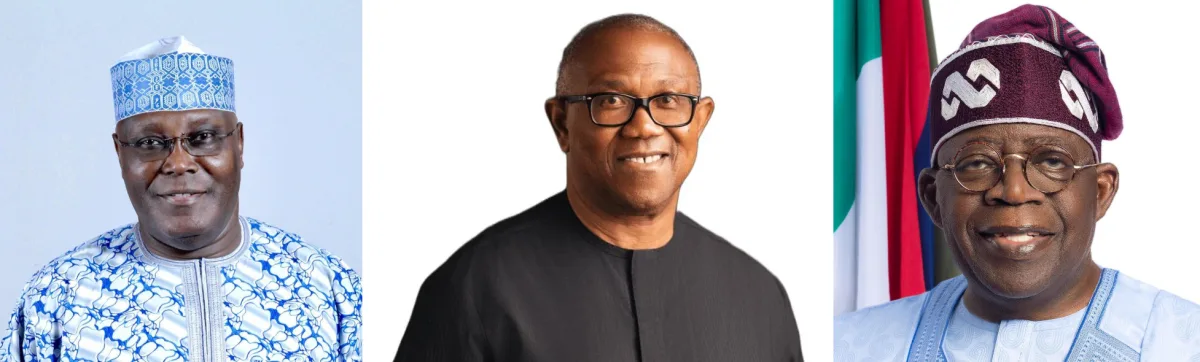
Former Vice President Atiku Abubakar and the media office of former Labour Party presidential candidate Peter Obi have challenged President Bola Tinubu to defend his administration’s record personally as he prepares to seek re-election in 2027, arguing that governors, ministers and other political allies cannot take responsibility for his decisions.
Their reactions followed Tinubu’s announcement that he would not accompany the All Progressives Congress (APC) Presidential Campaign Council to every campaign event, citing the need to continue governing, meet Nigeria’s financial obligations and attract investors.
The exchange has brought a central question into Nigeria’s emerging election debate: how should a sitting president balance the responsibilities of governing with the obligation to answer directly to voters when seeking another term?
Atiku: Tinubu must answer for the economic hardship
In a statement issued by Phrank Shaibu, Director of Strategic Communication for the African Democratic Congress (ADC) Presidential Campaign Council, Atiku argued that Tinubu should explain the consequences of his administration’s policies before asking Nigerians for another four-year mandate.
Atiku pointed to the cost of food, the affordability of medical care, pensioners’ purchasing power and the difficulty young people face in finding decent jobs. He maintained that voters would assess the President based on their daily experiences rather than the assurances of political allies.
Atiku also challenged the President’s reference to Nigeria’s financial obligations, arguing that ordinary Nigerians face urgent financial pressures of their own.
His central argument was that a candidate must personally account for the promises made and decisions taken during his tenure. Political surrogates may promote a candidate’s programme, Atiku argued, but they cannot answer every question about the effects of government policy.
The statement represents the ADC campaign council’s political position. Its criticisms of the administration’s economic record should be understood as opposition claims, rather than treated as independent findings about the causes of every household’s financial difficulties.
Peter Obi’s media office: Accountability cannot be delegated
The Peter Obi Media Office delivered a similar message in a statement by its spokesperson, Idris Zekeri.
It argued that Tinubu should explain how his administration’s policies have affected the cost of food, transportation, electricity, housing and other necessities. The office said that voters are being asked to assess Tinubu’s own record, not the performance or promises of the politicians campaigning on his behalf.
The statement also challenged the President to explain which campaign promises have been fulfilled, which remain outstanding and how Nigerians should evaluate the administration’s claim of economic progress against the cost of living.
Obi’s media office framed the issue as one of democratic accountability: the President may delegate campaign activities, but responsibility for decisions made under his administration remains with him.
This is a political argument, not evidence that Tinubu has refused all direct engagement with voters. The President has said he intends to remain involved in the campaign while allowing party officials to undertake much of the nationwide mobilisation.
Tinubu’s position: Governance must continue during the campaign
Tinubu has argued that the presidency cannot be put on hold during electioneering.
At the inauguration of the APC Presidential Campaign Council, he backed the idea that party officials should lead much of the campaign activity across states and local government areas while he concentrates on his responsibilities as President. He said Nigeria needs continued attention to governance and economic matters.
The APC’s position is that using governors, party leaders and grassroots organizers to mobilize support is a normal part of political campaigning, rather than proof that a candidate is avoiding voters.
Indeed, political surrogates can help a campaign reach more communities than a presidential candidate could visit personally. The question is whether that mobilization is complemented by sufficient opportunities for the candidate to answer questions directly.
Why this dispute matters ahead of 2027
The disagreement goes beyond the number of rallies Tinubu attends. It concerns how the incumbent intends to present his record and how opposition candidates intend to challenge it.
Voter access
Personal appearances allow voters to hear directly from a candidate and ask questions about policy, promises and performance. Surrogates can extend a campaign’s reach but may not be able to speak authoritatively for the President on every issue.
The economy as a campaign issue
The cost of food, transportation, electricity, housing and healthcare is likely to feature prominently in the debate over Tinubu’s record. Opposition claims and government responses need to be assessed against reliable economic data and households’ experiences.
Governance versus electioneering
The President has constitutional and administrative responsibilities that continue during a campaign. The political challenge is to fulfil those responsibilities while providing meaningful opportunities for public scrutiny.
What remains to be established?
Several distinctions are important when assessing the dispute:
- Not attending every rally is not the same as refusing to campaign. Tinubu has indicated that he will participate while leaving much of the nationwide mobilisation to party officials.
- Opposition criticism is not independent proof of policy failure. Atiku and Obi’s media office have raised questions about economic hardship and accountability, but specific claims should be evaluated using relevant evidence.
- Political mobilization does not replace direct accountability. Governors and campaign officials can explain party positions, but responsibility for presidential decisions remains with the administration.
- The eventual campaign matters more than the announcement alone. Tinubu’s actual appearances, interviews, public engagements and responses to questions will provide a clearer basis for judging how accessible he is to voters.
The Guardian has separately reported that the cost of rallies, insecurity and reliance on political networks are among the issues shaping the way parties organize their campaigns. The APC, however, has defended its preparations and the role of its campaign structures.
Note:
Atiku and Peter Obi’s criticism places presidential accountability at the center of the emerging 2027 campaign debate. Their position is that Tinubu must personally defend his administration’s record; Tinubu’s position is that he must balance campaigning with the continuing demands of governing Nigeria.
Both the reach of a party’s campaign and a candidate’s willingness to answer public questions are relevant to democratic engagement. The key issue for voters is whether they receive clear, evidence-based explanations of government policies, their outcomes and the commitments being made for another term.
The 2027 campaign should give Nigerians more than political promises: it should provide credible answers about the administration’s record and what each candidate intends to do differently.
Sources:
Vanguard — Atiku, Obi to Tinubu: ‘You can’t campaign through surrogates’