

Business | Public Interest
D-8 Targets $500 Billion in Trade by 2030, Puts Spotlight on Nigeria’s Abuja SME Centre
Business & Economy · Africa · October 17, 2026
The Developing Eight Organization for Economic Cooperation (D-8) has set an ambitious target of increasing trade among its member countries from approximately $157 billion in 2024 to $500 billion by 2030, while identifying Nigeria’s Small and Medium Enterprises (SME) Center in Abuja as a potential platform for expanding business partnerships and cross-border trade.
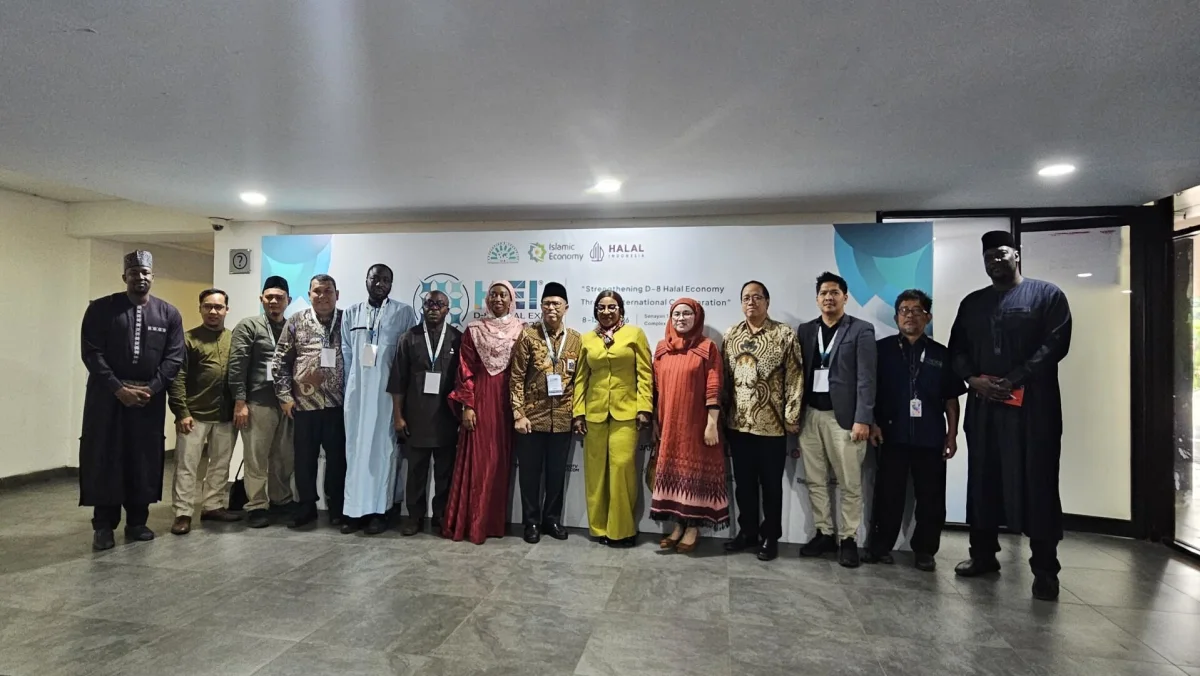
D-8 Secretary-General Ambassador Sohail Mahmood announced the target at the organization's second Business Forum in Jakarta, Indonesia, on October 15, 2026. The meeting took place alongside the 41st Trade Expo Indonesia and focused on strengthening business cooperation, supply chains and market access.
The target represents a major expansion of commercial activity that would require stronger investment, more efficient trade procedures and closer cooperation among businesses across the member economies.
What the $500 billion target means
According to Punch Newspapers, trade among D-8 members stood at about $157 billion in 2024. The organization wants to increase that figure to $500 billion by 2030.
D-8 intra-group trade target
2024 reported trade
$157bn
2030 target
$500bn
The target is approximately 3.2 times the reported 2024 level, requiring an increase of $343 billion. This is an ambition, not a confirmed forecast or achieved result.
Mahmood said achieving the target would require businesses to broaden their access to markets, diversify suppliers, establish industrial partnerships and build more integrated regional supply chains.
The D8 comprises nine economies across Asia, Africa and Europe, with a combined population of approximately 1.3 billion people and gross domestic product exceeding $5 trillion, according to the report.
Why Nigeria’s Abuja SME Center matters
The D-8 Center for Small and Medium Enterprises in Abuja was established in June 2025. Mahmood described it as an important institution for supporting entrepreneurship, building business capacity, encouraging innovation and connecting smaller firms to regional and international markets.
The center could help Nigerian businesses move beyond selling locally and begin building relationships with importers, distributors, manufacturers and investors in other D-8 countries.
Its potential functions include:
- Business matchmaking: Connecting Nigerian SMEs with international buyers, suppliers and potential partners.
- Export readiness: Helping smaller firms understand product standards, documentation, packaging and cross-border trade requirements.
- Joint ventures: Supporting partnerships that allow businesses to share technology, production capacity and investment.
- Youth and women entrepreneurship: Expanding access to commercial networks and international markets.
- Supply-chain development: Linking Nigerian producers to manufacturers and distributors across member economies.
However, the center's establishment does not automatically mean that businesses are receiving these benefits at scale. Its practical impact will depend on funding, staffing, programs, private-sector participation and measurable results.
The sectors with the greatest cooperation potential
Mahmood identified several industries in which D-8 members could deepen trade and investment.
1. Agriculture and food processing
Nigeria could expand exports of agricultural produce and processed foods by improving quality standards, packaging, storage and reliable access to overseas buyers.
2. Textiles and manufacturing
Cross-border partnerships could connect manufacturers to raw materials, machinery, technical expertise and new customers.
3. Pharmaceuticals and healthcare products
Cooperation could support manufacturing partnerships, technology transfer and supply-chain development, subject to regulatory requirements.
4. Energy and digital technology
Businesses could explore energy projects, digital services, technology partnerships and investment in infrastructure that supports wider economic activity.
Automotive manufacturing was also identified as a sector with potential for investment, technology transfer and joint ventures.
A concern for Nigeria: Where was the government delegation?
Despite the D-8 trade ambition and Nigeria’s institutional role, business representatives at the Jakarta forum expressed concern about the absence of a Nigerian government delegation.
Hassan Yaro, president of the Kano Council of Traders and Entrepreneurs and a council member of the Kano Chamber of Commerce, said more than 150 Nigerian entrepreneurs and business representatives had traveled to Indonesia to pursue commercial partnerships.
Yaro questioned why Nigerian business people were present without a corresponding government delegation, and called for better coordination to ensure that participation in international trade events produces tangible benefits. He acknowledged that the Ministry of Trade might not have received sufficient notice, but urged the government to plan more effectively for future meetings.
His concern points to a wider challenge: attending trade forums is only the beginning; businesses need the support and follow-through required to convert introductions into contracts, investment and jobs.
Government participation can help address trade barriers, facilitate official engagement and provide information about export programs. Nevertheless, the absence of an official delegation at this particular forum does not, by itself, establish the government's overall level of support for Nigerian exporters.
Yaro also urged greater attention to access to finance and the halal economy, which he said offered opportunities for Nigerian businesses.
What could prevent the target from being achieved?
The $500 billion ambition will depend on whether D-8 members can overcome practical obstacles that make international trade expensive or difficult.
Trade barriers and customs procedures: Complicated documentation, inconsistent regulations and non-tariff barriers can increase costs and delay shipments.
Transport and logistics: Inadequate freight connections, expensive shipping and weak supply-chain infrastructure can make otherwise competitive products less attractive.
Access to finance: Small firms often need working capital to fulfill export orders, purchase equipment and meet certification requirements.
Product standards: Businesses must comply with destination-market requirements for safety, quality, labeling and certification.
Trade agreement implementation: Mahmood highlighted the importance of completing ratification of the D-8 Preferential Trade Agreement by all original signatories and ensuring businesses actually use available trade preferences.
These challenges cannot be resolved through declarations alone. They require coordinated policy changes, reliable institutions and businesses capable of producing goods and services at competitive prices.
What Nigerian SMEs can do now
Businesses should not wait until 2030 to explore the opportunities represented by the D-8 target. Companies interested in exporting can begin by identifying a product or service with international demand, calculating its production and delivery costs, and checking the relevant import regulations in potential destination markets.
A practical starting plan is:
- Identify two or three products or services that can be supplied consistently.
- Research buyers and distributors in D-8 member countries.
- Confirm certification, customs, packaging and payment requirements.
- Prepare a professional company profile, price list and export offer.
- Seek introductions through chambers of commerce, trade bodies and relevant SME programmes.
- Track outcomes—buyer esquires, contracts, export revenue and jobs created—rather than counting meetings alone.
The Abuja SME Center could become an important connection point for this work, provided businesses can access clear information about its programmes and support services.
Note:
The D-8's $500 billion trade target offers an opportunity to strengthen economic links among member countries, but the ambition will be measured by commercial outcomes, not the announcement itself.
For Nigeria, the Abuja SME Center could help small businesses find buyers, develop partnerships and participate in regional supply chains. Concerns raised by Nigerian entrepreneurs about government representation in Jakarta also underline the importance of coordination between public institutions and the private sector.
The decisive questions are whether trade barriers will fall, whether businesses can obtain finance and meet export standards, and whether new partnerships produce measurable growth.
For Nigerian SMEs, the opportunity is real—but turning it into contracts, exports and jobs will require practical support and sustained execution.
Sources:
Punch Newspapers — D-8 targets $500bn trade by 2030, highlights Abuja SME centre