

News
Nigeria Urges UN to Curb Abuse of Universal Jurisdiction, Warns Against Politically Motivated Prosecutions
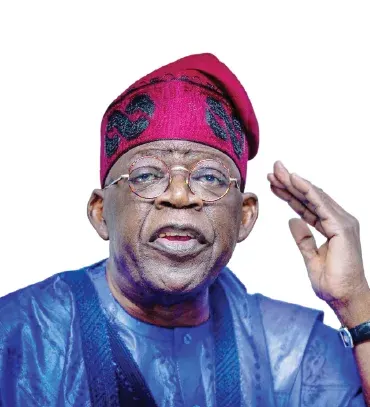
Nigeria has called on the United Nations to establish clearer safeguards governing the use of universal jurisdiction, warning that the legal principle must not become a tool for powerful countries to target officials from weaker states or interfere in their sovereignty.
The position was presented by Nigerian representative Emmanuel Nweke during a meeting of the UN General Assembly’s Sixth Committee in New York, where member states were discussing the scope and application of the principle. Nigeria said it remained committed to fighting impunity but insisted that international accountability must follow established legal standards and fair-trial procedures.
What Nigeria told the United Nations
Nigeria argued that universal jurisdiction should be used as an exceptional measure, particularly when the country’s most directly connected to alleged crimes are unable or unwilling to prosecute those responsible.
The delegation expressed concern that selective or politically motivated cases could undermine confidence in international justice. It also warned against individual countries unilaterally expanding the list of offenses they believe can be prosecuted under the principle.
Nigeria proposed several safeguards, including:
- Limiting the crimes covered: Universal jurisdiction should apply to the gravest crimes whose international character is established under treaties or customary international law.
- Giving priority to directly connected countries: A third country should intervene only when the state where the alleged offense occurred or the accused person’s country of nationality is unable or unwilling to prosecute.
- Consulting affected states: Countries directly connected to an alleged offence should be consulted before another country proceeds.
- Requiring the accused person's presence: Nigeria argued that the accused should be present in the prosecuting country and opposed trials conducted in their absence.
- Strengthening prosecutorial oversight: Decisions to initiate proceedings should be handled by senior prosecutorial authorities, with due process and fair-trial protections.
- Separating different legal mechanisms: Universal jurisdiction should not be confused with extradition obligations or the jurisdiction of international courts.
What is universal jurisdiction?
Universal jurisdiction is a legal principle that can allow a national court to prosecute certain serious international crimes even when the alleged crime was committed outside that country and neither the accused nor the victims are its nationals.
The principle is intended to help prevent serious crimes from going unpunished simply because the country with the closest connection to the offense cannot or will not bring a prosecution. Its application, however, depends on the relevant international and domestic legal rules; it does not give every country unlimited authority to prosecute any offense committed anywhere in the world.
Nigeria's argument is therefore about finding a balance between two objectives: ensuring accountability for serious crimes and preventing the selective use of criminal proceedings for political purposes.
Why Nigeria's position matters
1. Sovereignty and the treatment of African officials
Nigeria raised concerns about cases involving African officials, arguing that selective enforcement could damage the credibility of international criminal justice.
The broader issue is whether legal proceedings are based on consistent legal standards and credible evidence—or whether political considerations influence which individuals are pursued. Nigeria's intervention reflects concern that powerful states may have greater capacity to initiate proceedings abroad, potentially placing officials from less powerful countries at a disadvantage.
However, the report does not identify a specific country or ongoing prosecution as the target of Nigeria's warning. It would therefore be premature to interpret the intervention as a direct response to a particular case.
2. Accountability must not become impunity
There is an important counterargument: safeguards intended to protect sovereignty must not become a way to shield individuals accused of grave crimes from justice.
If national authorities genuinely cannot or will not investigate serious allegations, international legal mechanisms may be important in preventing impunity. The challenge is to distinguish legitimate prosecutions from proceedings that are arbitrary, discriminatory or politically motivated.
Nigeria's own statement acknowledges the importance of accountability. The country cited its Constitution, the Geneva Conventions Act, terrorism legislation and mutual legal assistance arrangements as parts of its domestic framework for addressing serious offenses. It also reaffirmed its support for the Rome Statute's principle of complementarity, under which national authorities have a primary role in investigating and prosecuting crimes within the relevant framework.
3. The proposals are not automatically international law
Nigeria's recommendations are proposals for stronger safeguards, not proof that the United Nations has adopted new binding rules.
For the proposals to become internationally agreed standards, they would need to pass through the appropriate international legal and diplomatic processes. States may also disagree over issues such as whether prior consultation should be mandatory, when a state can be considered unwilling to prosecute, and whether the accused must always be physically present.
The central debate is how to prevent abuse without creating obstacles that make legitimate prosecutions impossible.
What happens next?
The significance of Nigeria's intervention will depend on whether other UN member states support its proposed safeguards and whether the discussions produce a clearer, broadly accepted framework.
For Nigeria, the issue also carries a domestic responsibility. Its call for fair treatment of officials abroad will carry greater weight when matched by transparent, credible investigations and effective prosecution of serious crimes at home, regardless of the status or political connections of suspects.
The wider international challenge is to ensure that universal jurisdiction remains a means of pursuing justice—not a mechanism for political retaliation, and not a principle weakened by excessive restrictions.
Note:
Nigeria is asking the international community to draw clearer boundaries around universal jurisdiction. Its message is that serious international crimes must be prosecuted, but legal authority should not be applied selectively or used to undermine the sovereignty of weaker states.
The unresolved question is how the international community can protect countries against politically motivated prosecutions while ensuring that sovereignty does not become a shield for impunity.
Sources:
Based on the report published by PUNCH on October 16, 2026.
PUNCH: Nigeria warns against abuse of universal jurisdiction