

Entertainment | Africa | Asia | United States | Europe
Jide Kosoko Defends Tinubu, Says Nigeria Is Improving Despite Economic Hardship
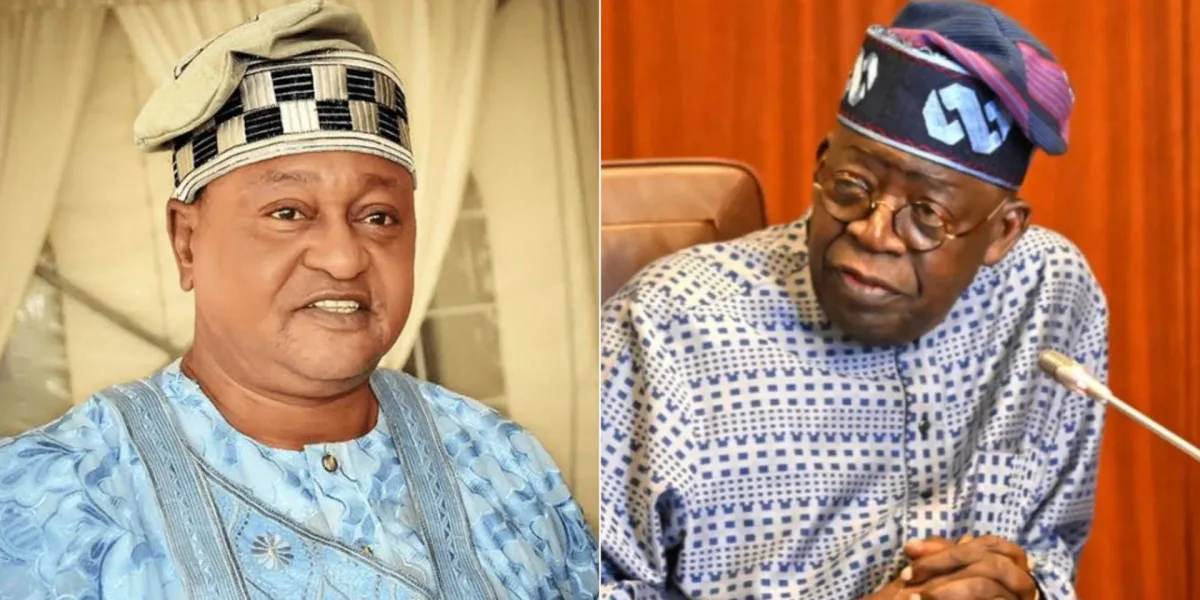
Veteran Nollywood actor Jide Kosoko has defended President Bola Ahmed Tinubu, arguing that the administration is working to address Nigeria’s longstanding problems and that the country’s situation is not as bad as some critics portray it.
Kosoko made the remarks during an interview on Talk To B, a podcast hosted by actress Biola Adebayo. The comments, reported on October 17 and 18, 2026, come amid continuing public debate over the cost of living, food affordability, fuel prices and the impact of the government’s economic reforms.
The actor acknowledged that Nigerians continue to face economic difficulties but maintained that the current administration inherited deep-rooted problems, including inadequate planning for population growth and the consequences of policies adopted by previous governments.
He argued that these longstanding challenges cannot be resolved instantly and urged Nigerians to give the government more time to deliver results.
Kosoko challenges complaints about hunger
One of the most controversial parts of the interview was Kosoko’s response to Nigerians who complain that they cannot afford food.
He questioned the circumstances of some people who say they are hungry, asking what they ate and how they supported themselves before Tinubu became president in May 2023.
His remarks reflected his view that some public criticism does not adequately consider the economic difficulties inherited by the administration or the personal circumstances of those making the complaints.
However, the comments have an important limitation: a person's economic condition before 2023 does not, by itself, establish whether that person is better or worse off today. A fair assessment requires evidence about changes in purchasing power, food prices, earnings, employment and household expenses.
Kosoko's position is therefore best understood as a political defence of the administration, rather than independent evidence that living standards have improved for the majority of Nigerians.
Fuel subsidy, student loans and government policies
Kosoko also defended the removal of the petrol subsidy, arguing that previous administrations had postponed difficult decisions and that the resulting problems were now being addressed.
He suggested that money previously used to support fuel prices could instead be directed towards public priorities. He also cited the Nigerian Education Loan Fund (NELFUND) as an example of a government initiative intended to help students finance their education.
The actor urged beneficiaries of the student loan scheme and other government programmes to speak publicly about their experiences, saying that the impact of such policies deserved greater attention.
There are, however, two sides to this argument. Removing fuel subsidies can reduce the government's direct subsidy expenditure, but it can also raise transport and distribution costs, affecting food prices and household budgets. Whether the reform produces lasting benefits depends on how the savings are managed, how effectively public programmes operate and whether economic gains reach ordinary citizens.
Similarly, student loans can expand access to education for eligible students, but their overall impact must be assessed through participation, disbursement, accessibility, repayment terms and students' experiences.
Kosoko calls for Tinubu's re-election
The actor went beyond defending the administration's current policies and called on Nigerians to give Tinubu another term in office.
He argued that the president should be allowed to complete the programme his administration has started. He also accused political opponents of allowing their ambitions to influence their assessment of the government's performance.
Kosoko maintained that the country could eventually benefit from the reforms if citizens remained patient and the government continued its efforts.
His appeal is significant in the context of the 2027 presidential election, as public debate increasingly centres on whether Tinubu's reforms are producing sufficient benefits to justify continuity or whether Nigerians should seek an alternative government.
Kosoko's position is consistent with his previously reported support for Tinubu. In July 2026, he also urged Nigerians to give the president more time to address the country's challenges.
The wider debate: are things really better?
Kosoko's comments highlight a central disagreement in Nigerian politics: whether the country's economic reforms should primarily be judged by improvements in government revenue and macroeconomic indicators or by their effects on people's everyday lives.
A balanced assessment should consider several factors:
- Cost of living: Whether wages and household incomes are keeping pace with food, transport, housing and other essential expenses.
- Employment and business conditions: Whether more Nigerians can secure decent jobs, run viable businesses and earn reliable incomes.
- Public finances: Whether changes in government revenue and expenditure are translating into better services and infrastructure.
- Social support: Whether student loans and other interventions reach their intended beneficiaries and meaningfully reduce financial pressure.
- Time and accountability: Whether the administration can demonstrate measurable progress while remaining answerable for continuing hardship.
In an Independence Day address on October 1, Tinubu also argued that Nigeria was moving from economic reform towards prosperity, citing economic growth, lower inflation than its previous peak and improved foreign reserves. Those were the president's claims about the economy; assessing how broadly the benefits are shared requires examining independent data alongside household experiences.
Note:
Jide Kosoko has made his position clear: he believes Tinubu is addressing problems inherited from previous governments and deserves more time to complete his reforms.
His argument raises a legitimate question about the time required for difficult economic changes to produce results. But the public's concerns about hunger, affordability and living standards cannot be settled by political loyalty or personal opinion alone.
Ultimately, the strongest test of whether Nigeria is improving is whether ordinary citizens can afford basic necessities, find meaningful work, access education and experience a sustained improvement in their quality of life.
As the 2027 election approaches, the debate will increasingly turn on evidence of results, not only promises of future recovery.