

Africa | News
Nigeria Joins Effort to Rebuild ECOWAS Ties with Mali, Niger and Burkina Faso
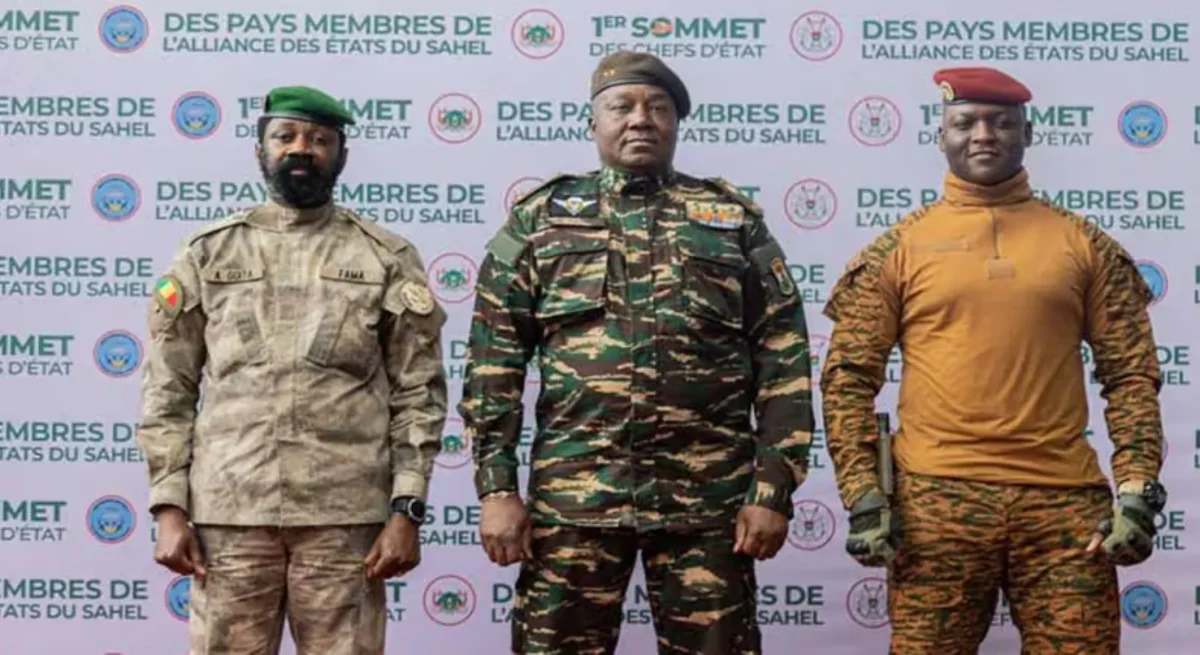
Nigeria is participating in a renewed diplomatic effort to improve relations between the Economic Community of West African States (ECOWAS) and three Sahel countries that withdrew from the regional bloc: Mali, Niger and Burkina Faso.
The talks, held in Dakar, Senegal, mark an important step towards establishing a framework for cooperation between ECOWAS and the Alliance of Sahel States (AES). Nigeria's Ministry of Foreign Affairs says the discussions are intended to restore regional cohesion, preserve longstanding ties between neighboring countries and address issues affecting the wider West African region.
Nigeria's Minister of State for Foreign Affairs, Ambassador Sola Enikanolaiye, led the Nigerian delegation to the initial discussions, which began on October 16, 2026. The engagement continued into the weekend, with both sides working towards a proposed framework agreement ahead of the ECOWAS end-of-year summit scheduled for Abuja in December.
The initiative comes after months of strained relations, political disagreements and changing international alliances that have challenged regional cooperation across West Africa.
What happened in Dakar?
The diplomatic process is intended to create a structured way for ECOWAS and the AES countries to discuss shared concerns despite their political differences.
According to Nigeria's official statement, the first round of talks was designed to align the positions of ECOWAS member states and prepare for more detailed discussions at ministerial and technical levels. The goal was to reach agreement on a draft General Framework Agreement that could guide future relations.
Reports following the meeting said the two sides agreed to establish joint thematic working groups and continue technical discussions. The proposed cooperation framework could address practical questions involving trade, movement across borders, security and other shared regional interests.
However, the talks should not be interpreted as proof that Mali, Niger and Burkina Faso have agreed to rejoin ECOWAS. The immediate objective is to explore cooperation after their withdrawal, not to announce a reversal of that decision.
Why the split happened
The disagreement between ECOWAS and the three Sahel states developed after military coups and disputes over the restoration of civilian rule.
Mali, Burkina Faso and Niger criticised ECOWAS sanctions and pressure over political transitions, arguing that the organisation did not adequately respect their sovereignty or support their security priorities. The three governments subsequently formed the Alliance of Sahel States and formally left ECOWAS on January 29, 2025.
The split also reflects a wider geopolitical shift. The three AES governments have moved away from some traditional Western security partnerships and strengthened relations with Russia, while ECOWAS continues to operate as a regional bloc whose members have different foreign-policy priorities.
This does not mean that every ECOWAS country follows an identical Western-aligned policy or that the AES states have abandoned all relations with Western countries. The region's diplomatic alignments are more complex than a simple division between Russia and the West.
What is at stake for Nigeria?
1. Trade and regional commerce
Nigeria's commercial links with neighbouring countries depend on workable border arrangements, reliable transport routes and predictable cross-border procedures. A cooperation framework could help reduce disruption for traders and transport operators.
2. Counterterrorism and border security
Armed groups operate across national boundaries in parts of the Sahel. Better communication between governments could create opportunities for intelligence-sharing and coordination, although the talks alone do not guarantee improved security.
3. Nigeria's regional diplomatic role
Nigeria's participation reflects its interest in keeping channels open between the two blocs. The official Nigerian statement identifies regional integration, peace and security as key priorities.
What has actually been agreed?
The joint communiqué issued after the October 17 ministerial meeting confirms that the two sides agreed to establish joint thematic working groups to work towards a framework cooperation agreement. The stated principles include good neighborliness, mutual respect and respect for sovereignty.
That is a concrete diplomatic step, but it is not yet a comprehensive agreement on trade, security or free movement. Those details will depend on the working groups' discussions and subsequent negotiations.
One important distinction in the original headline is that Nigeria participated actively in the diplomatic effort, but the meeting was an ECOWAS–AES process hosted in Dakar—not a bilateral negotiation led by Nigeria alone. The official Nigerian statement identifies Ambassador Sola Enikanolaiye as head of Nigeria's delegation, while reporting on the joint meeting identifies Senegal's Cheikh Niang as head of the ECOWAS delegation.
Note:
The ECOWAS–AES dialogue represents an attempt to preserve practical cooperation despite a major political rupture in West Africa.
For Nigeria, the stakes extend beyond diplomatic prestige. Security, trade, border management and the movement of people are regional issues that cannot easily be separated by political disagreements.
The immediate achievement is the agreement to establish joint working groups and pursue a cooperation framework. Whether that produces lasting results will depend on the substance of future agreements, the willingness of both sides to implement them and their ability to manage disagreements over sovereignty and governance.
The key development to watch is whether the Dakar dialogue produces a workable agreement before the ECOWAS summit in Abuja in December 2026.