

Europe | News
France Protests Turn Violent: Macron Vows Action After Mass Arrests, Looting and Deadly Unrest
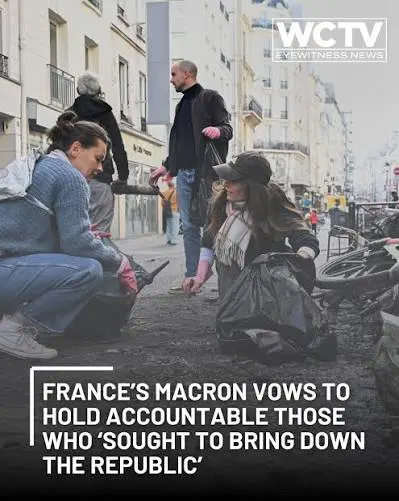
PARIS, France — October 19, 2026 — French President Emmanuel Macron has vowed to hold rioters and looters accountable after nationwide demonstrations over rising living costs and deteriorating school conditions escalated into widespread violence, property destruction and mass arrests.
The unrest, which intensified on Saturday, October 17, spread across several French cities, including Paris, Marseille, Lyon, Bordeaux and Limoges. Protesters took to the streets over economic pressures, fuel prices, educational challenges and concerns about the quality of public services.
In a televised address on Sunday, October 18, Macron condemned the destruction of public and private property, expressing what he described as anger and shame over the scenes of violence.
The president pledged that those responsible for looting and destruction would face consequences. However, he also acknowledged that peaceful demonstrators had legitimate grievances that the government needed to address.
According to reporting by Reuters and the Associated Press, French authorities reported approximately 2,400 arrests following the demonstrations, while nearly 1,000 police officers were reported injured. One protester died after suffering a cardiac arrest during demonstrations in Paris, according to the reports. The circumstances of the death should not be interpreted as proof that the person was killed by police or other protesters.
What Triggered the Nationwide Protests?
The demonstrations emerged from weeks of growing discontent, particularly among students, teachers, trade unions and campaigners concerned about the cost of living and the state of public education.
Students have raised concerns about overcrowded classrooms, teacher shortages, inadequate school facilities and limited opportunities. These complaints have increasingly converged with broader frustration over rising household expenses, fuel prices and the perceived deterioration of public services.
The mobilisation also drew participation from activists associated with France's Yellow Vest movement, which became prominent in 2018 during protests against fuel taxation and broader economic grievances.
According to Al Jazeera, France's Interior Ministry estimated that approximately 550,000 people participated in nationwide demonstrations on Saturday. Organisers and unions put the turnout at around 800,000.
Although the majority of demonstrators reportedly participated peacefully, violent incidents in several locations became a major focus of public attention.
The events have renewed questions about the government's response to economic hardship, the handling of public demonstrations and the distinction between peaceful dissent and criminal violence.
Macron Addresses the Nation
Macron's televised address followed an emergency meeting with senior government officials.
The president condemned attacks on public buildings, businesses and law-enforcement officers while insisting that legitimate protest must be distinguished from organised violence.
He promised that people who looted businesses or destroyed property would be held responsible. He also indicated that the government would review the events to identify failures and improve its ability to prevent similar outbreaks.
Macron did not declare a nationwide state of emergency or impose a national curfew in his address. Instead, he signalled that authorities could take targeted measures, including restrictions on demonstrations where necessary to protect public buildings and businesses.
The president's response reflects the government's attempt to maintain public order without formally suspending the normal framework governing public life.
His speech also comes at a politically sensitive time, with France preparing for the next presidential election in 2027.
Limoges Town Hall Damaged by Fire
One of the most serious incidents occurred in Limoges, where a fire severely damaged the town hall.
Local officials described the incident as a major attack on public property, with Mayor Guillaume Guérin warning that the city faced substantial reconstruction costs.
The destruction of the municipal building became one of the defining images of the unrest and intensified calls for stronger measures to protect public institutions.
Other cities also experienced serious damage. Reports described looting, broken shop windows, fires, vandalism and confrontations between protesters and police.
In Marseille, shops were looted and people reportedly entered the city hall before being forced out. In Bordeaux, a masked group reportedly invaded the residence of a regional prefect.
The scale of the destruction has raised concerns among local authorities about the financial burden on municipalities and the impact on residents and businesses.
Businesses Count the Cost of the Violence
Private businesses were among the most visible victims of the unrest.
French retailer Carrefour reported damage to 50 of its stores, including 20 that were looted, according to Reuters. The company's chief executive said losses from the damage could run into tens of millions of euros.
Other shops, including luxury boutiques and supermarkets, also suffered damage or theft.
The economic consequences extend beyond immediate repair bills. Businesses affected by vandalism may face temporary closures, lost sales, disrupted deliveries and additional security costs.
Small businesses could be particularly vulnerable if they lack the financial resources to absorb major losses or remain closed for extended periods.
France's Economy Minister, Roland Lescure, pledged support for affected business owners and said those responsible for destruction should be held accountable.
The government now faces the challenge of helping businesses recover while determining how to prevent further damage.
Police Response and Arrests
French security forces faced repeated confrontations during the demonstrations.
Police deployed tear gas and other crowd-control measures in areas where violence broke out. Officers also intervened to prevent attempts to loot businesses and protect public buildings.
Interior Minister Laurent Nuñez said the demonstrations had involved highly violent groups that targeted law-enforcement officers and public institutions.
The government has blamed radical far-left groups and criminal elements for much of the violence. However, the nationwide protests involved a broader range of participants, including students, unions and people protesting economic conditions.
It is therefore important to distinguish those accused of committing violent acts from demonstrators who participated peacefully.
The arrests do not establish that every person detained committed a violent offence. Individual cases will depend on the evidence gathered and the decisions of the relevant judicial authorities.
The scale of the police response and the number of reported injuries are also likely to prompt further scrutiny of crowd-control tactics and the circumstances surrounding particular confrontations.
Opposition Leaders Criticize Macron's Response
The unrest has created a political confrontation over the causes of the demonstrations and the government's handling of the crisis.
Marine Le Pen, leader of the far-right National Rally, called for calm and condemned the destruction of property.
Jean-Luc Mélenchon, associated with the left-wing France Unbowed movement, argued that the government needed to respond to the demands of protesting students and criticized its handling of public order.
Other opposition figures questioned whether Macron's address offered a sufficient response to the concerns driving the demonstrations.
The competing reactions illustrate the difficulty of addressing a protest movement that combines economic complaints, education-related demands and broader dissatisfaction with the government.
With the 2027 presidential election approaching, political parties are likely to continue debating the causes of the unrest and the appropriate balance between public safety and the right to protest.
What Happens Next?
Macron has pledged further action, including efforts to help affected businesses and review the authorities' handling of the violence.
The immediate priorities are likely to include restoring damaged public spaces, investigating criminal offences, supporting affected businesses and preventing renewed clashes.
However, restoring order may not resolve the underlying grievances.
The government must also contend with questions about the affordability of living in France, pressure on public services and the concerns of students and educators.
If those issues remain unresolved, protests could continue even as authorities seek to prevent further violence.
At the same time, the destruction of businesses and public buildings has complicated efforts by peaceful demonstrators to draw attention to their demands.
Factful24 Analysis: A Public-Order Crisis with Political and Economic Consequences
France's unrest highlights the tension that can emerge when economic frustration and demands for public-service improvements converge with a large protest movement.
The demonstrations brought hundreds of thousands of people into the streets, according to the figures cited by French authorities and organizers. The subsequent violence has created immediate security challenges and imposed financial costs on businesses and municipalities.
Three issues will shape the next phase of the crisis.
First, authorities must establish individual responsibility for offenses without treating peaceful demonstrators as equivalent to those accused of violence.
Second, businesses and local governments will need support to recover from the damage.
Third, the government will face pressure to respond to the economic and educational grievances that helped drive the mobilization.
Macron's decision not to declare a nationwide state of emergency leaves room for targeted public-order measures, but the effectiveness of the response will depend on developments on the ground and the government's ability to address the causes of the demonstrations.
Note: France's October 2026 protests have developed into a major political and public-order challenge. Macron has condemned the violence and promised accountability, while the government faces mounting pressure to restore security, assist affected businesses and respond to concerns over living costs and education. The long-term outcome will depend not only on the restoration of order but also on how effectively the underlying grievances are addressed.
Sources and verification
- Al Jazeera, France protests updates: Macron vows rioters will ‘pay for their crimes’: https://www.aljazeera.com/news/liveblog/2026/10/18/france-protests-live-macron-to-address-nation-after-deadly-protests
- Al Jazeera, ‘Anger and shame’: Macron denounces France’s nationwide rioting, looting: https://www.aljazeera.com/news/2026/10/18/macron-denounces-frances-nationwide-rioting-looting
This report is based on coverage published on October 18, 2026. Arrest totals, injury figures and damage estimates may change as authorities update their investigations.