

Europe | News
Trump Slams Zelenskyy After Ukraine Launches Massive Drone Attack on Russia, Deepening Rift With Washington
Trump | Zelenskyy | Ukraine War | October 19, 2026
US President Donald Trump has sharply criticized Ukrainian President Volodymyr Zelenskyy following one of Ukraine's largest reported drone offensives against Russia this year, intensifying diplomatic tensions between Washington and Kyiv as efforts to end the war remain uncertain.
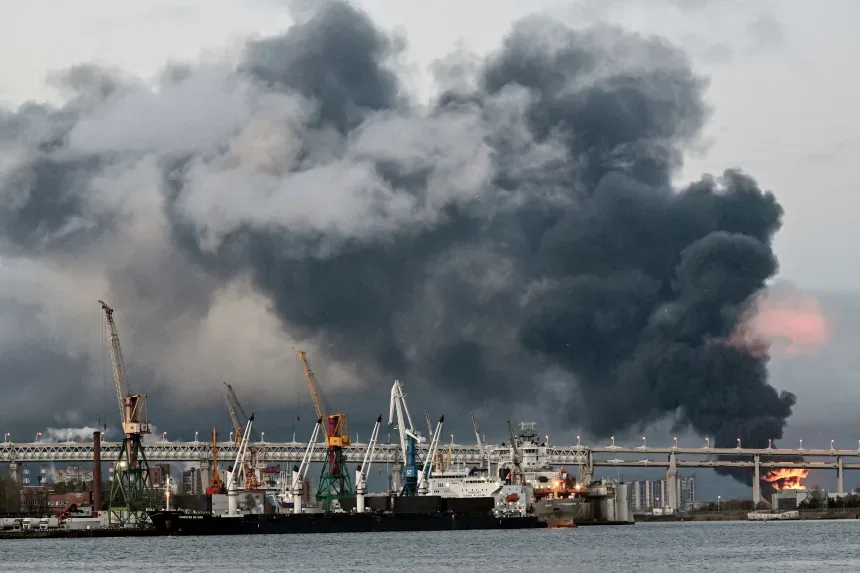
The Ukrainian offensive, which took place overnight on Saturday into Sunday, October 18, targeted Russian infrastructure, including an oil export terminal in St Petersburg, a distribution facility and a data center associated with Russian social media company VKontakte.
Trump accused Zelenskyy of having little interest in ending the conflict, while defending his administration's decision to delay additional sanctions against Moscow in an effort to preserve negotiations.
The confrontation comes at a sensitive moment for Ukraine, which continues to depend on Western military assistance, intelligence and other support as Russian forces maintain attacks on Ukrainian territory.
Trump Accuses Zelenskyy of Obstructing Peace
In a social media statement on Sunday, Trump defended his approach to negotiations with Russia and explained why he did not want to take measures that could drive Moscow away from the negotiating table.
The US president argued that progress was being made towards a possible settlement and criticized Ukraine's continued attacks on Russian energy infrastructure.
Trump also accused Zelenskyy of not genuinely wanting to end the war, deepening an already strained relationship between the two leaders.
His position reflects an administration strategy that prioritizes keeping diplomatic channels open with Russian President Vladimir Putin, even as Ukraine argues that Moscow must face greater pressure to end its invasion.
Zelenskyy, however, maintains that negotiations cannot succeed if Russia continues attacking Ukrainian cities and critical infrastructure while Ukraine is expected to limit its own military operations.
The disagreement has exposed a fundamental difference between Washington's current diplomatic approach and Kyiv's view of the conditions necessary for a sustainable peace agreement.
Ukraine Launches Major Drone Offensive Against Russia
The latest Ukrainian operation targeted several locations in Russia, including St Petersburg, a major economic center and one of the country's most important Baltic ports.
Russian authorities reported that air defenses intercepted or destroyed 1,015 Ukrainian drones overnight across different parts of the country. That figure represents the Russian defense ministry's account and has not been independently verified in full.
The reported targets included the St Petersburg Oil Terminal, which Russian authorities said was struck during the operation. Ukraine's drone manufacturer Fire Point reported a fire on the terminal's premises following the attack.
A distribution facility operated by Russian online retailer Ozon and a data center associated with VKontakte were also reportedly targeted.
Local authorities reported one death and five injuries, alongside damage to residential properties.
The scale of the reported operation demonstrates Ukraine's continued effort to strike infrastructure deep inside Russian territory, including facilities linked to fuel exports, logistics and communications.
For Kyiv, long-range attacks form part of its broader military strategy to disrupt Russia's war-supporting infrastructure. However, attacks that damage civilian property or endanger civilians also raise questions about the protection of non-combatants under international humanitarian law.
Dispute Over the Proposed Energy Ceasefire
The latest offensive has intensified disagreement over a proposed halt to attacks on energy infrastructure.
Trump had said Russia and Ukraine had agreed to stop attacking each other's energy facilities for a period of time. However, neither side publicly confirmed the arrangement as a mutually accepted formal agreement in the reporting surrounding the latest attacks.
Ukraine briefly suspended some strikes on Russian energy infrastructure before resuming them. Kyiv argues that Russia continued attacking Ukrainian energy facilities during the same period.
Zelenskyy said Russia had deliberately attacked Ukraine's energy, oil and gas sectors 76 times since Trump announced the proposed energy truce approximately a week earlier.
That figure was supplied by the Ukrainian president and has not been independently verified as a complete count.
Ukrainian authorities also reported Russian missile and drone attacks that killed people and damaged energy infrastructure, including facilities in the Odesa region.
The competing accounts have complicated efforts to establish whether the proposed arrangement was understood and observed by both sides.
The dispute also raises a practical question: can a limited ceasefire work if the parties disagree about its terms, scope and compliance?
Zelenskyy Warns Against Washington Shifting Towards Moscow
Zelenskyy has pushed back against Trump's criticism, warning that a US policy shift favoring Moscow would be a serious mistake.
In an interview with NBC's Meet the Press, the Ukrainian president criticized Washington's decision to relax certain sanctions restrictions and facilitate Russian diesel imports.
He argued that measures providing Russia with additional economic opportunities could help sustain its military campaign.
Zelenskyy has also sought to maintain direct communication with Trump's representatives, including US envoy Steve Witkoff and Trump's son-in-law Jared Kushner.
In a statement on Sunday, he said discussions with the American representatives were continuing and that Ukraine was working towards further diplomatic steps.
The Ukrainian president's position reflects a dual strategy: continuing military operations against Russian targets while seeking to preserve US engagement in negotiations.
Kyiv is particularly concerned that a breakdown in relations with Washington could weaken its access to intelligence, advanced weapons and other support required to defend against Russian attacks.
US Pauses Additional Sanctions Against Russia
Trump's criticism of Zelenskyy coincided with a controversial decision to delay or waive certain sanctions measures affecting Russia.
The administration defended the approach as necessary to keep diplomatic negotiations alive and avoid actions that could push Moscow away from discussions.
The decision drew criticism from some US lawmakers, including members of Trump's own Republican Party, who questioned whether easing pressure on Russia could undermine Ukraine's position.
The disagreement reflects a broader debate in Washington over how to end the war.
One approach emphasises maintaining economic pressure on Moscow to encourage concessions. Another seeks to preserve opportunities for direct negotiations, even if that means temporarily adjusting certain sanctions measures.
The effectiveness of either approach will depend on whether it produces concrete progress towards ending hostilities and whether the parties accept the terms of a settlement.
For Ukraine, the immediate concern is that economic concessions to Russia could weaken its negotiating position while Russian attacks continue.
Intelligence Sharing Resumes After Temporary Disruption
Another source of tension has been the temporary interruption of US intelligence sharing with Ukraine.
Zelenskyy said Washington had paused the sharing of critical intelligence for three days during a period of Russian ballistic-missile attacks before restoring the flow of information.
He said the resumption was important because US intelligence provides Ukraine with information that helps it detect incoming threats and prepare defensive responses.
Reuters reported on October 18 that the intelligence-sharing arrangement had resumed, citing the Ukrainian president.
The episode highlights Ukraine's dependence on American intelligence capabilities, particularly for early warning of Russian missile attacks.
Zelenskyy also raised concerns about restrictions affecting Ukraine's access to Starlink-related military connectivity. US officials disputed aspects of Kyiv's account, and the precise status of the relevant services and restrictions remained contested in the reporting.
The disagreements have intensified concerns in Kyiv about the reliability of US support at a time when Ukraine faces continued Russian attacks.
Russia Continues Strikes Against Ukrainian Cities and Energy Facilities
While Ukraine's drone offensive drew international attention, Russian forces continued attacking Ukrainian territory.
Ukrainian authorities reported civilian deaths and injuries in missile and drone strikes, including attacks affecting energy infrastructure in the Odesa region.
The continued attacks have reinforced Kyiv's argument that restricting its own long-range operations without enforceable commitments from Moscow could leave Ukraine at a disadvantage.
Energy facilities remain strategically important because damage to power generation, fuel supplies and distribution networks can disrupt electricity, heating, transport and industrial activity.
As winter approaches, both countries face heightened strategic stakes surrounding energy infrastructure.
For Ukraine, protecting critical facilities and ensuring reliable supplies is particularly important for civilians and essential services. For Russia, energy exports remain an important source of revenue, making oil infrastructure a significant target in Ukraine's long-range campaign.
The attacks on both sides demonstrate why an enforceable arrangement covering energy infrastructure could have substantial humanitarian and economic consequences.
What the Dispute Means for US-Ukraine Relations
The public confrontation between Trump and Zelenskyy raises questions about the future direction of American support for Ukraine.
Washington remains an important source of military equipment, intelligence and diplomatic influence. Any significant reduction in that support could affect Ukraine's ability to defend its territory and negotiate from its preferred position.
At the same time, the Trump administration is attempting to pursue a negotiated settlement with Moscow, arguing that diplomatic engagement offers a path towards ending the conflict.
European governments have also been working to sustain support for Ukraine and maintain pressure on Russia.
The disagreement between Trump and Zelenskyy therefore has implications beyond their personal relationship. It touches on the future of Western coordination, the terms of a possible ceasefire and the broader security architecture of Europe.
Whether the dispute leads to a lasting deterioration in relations or becomes another episode in difficult negotiations remains uncertain.
Analysis: Can Diplomacy Advance While the Attacks Continue?
The latest developments reveal three interconnected challenges.
First, the two governments disagree over the meaning of progress towards peace. Trump's emphasis is on preserving negotiations, while Zelenskyy argues that continued Russian attacks make concessions to Moscow dangerous.
Second, the proposed energy truce lacks clearly established mutual compliance in the public reporting. Competing accounts of attacks on energy facilities make it difficult to determine whether a common understanding exists or whether either side considers itself bound by the same restrictions.
Third, Ukraine's dependence on US assistance gives the dispute practical consequences. Intelligence sharing, military equipment and satellite communications can influence Ukraine's ability to respond to Russian attacks. Uncertainty surrounding these capabilities creates additional pressure on Kyiv.
The latest drone offensive also illustrates the difficulty of separating diplomatic negotiations from military strategy. Ukraine continues to strike Russian infrastructure while seeking American support, and Washington is attempting to influence both the pace of the fighting and the prospects for a settlement.
A durable peace will require more than public statements. It will depend on the terms agreed by the parties, mechanisms for monitoring compliance, security guarantees and credible arrangements for addressing violations.
Summary: Trump's criticism of Zelenskyy following Ukraine's large-scale drone offensive has exposed growing tensions over sanctions, military strategy and the proposed energy ceasefire. Ukraine insists that Russia must stop attacking its territory, while Washington is prioritizing negotiations with Moscow. Whether the dispute weakens US-Ukraine cooperation or leads to a clearer diplomatic framework will be important for the future course of the war.
Source:
CNN
This report reflects information available as of October 19, 2026. Military casualty figures, claims about intercepted drones and accounts of ceasefire compliance are attributed to the relevant parties where independent verification is unavailable.