

Europe | News
Zelensky Praises ‘Real Leaders’ in Europe as Trump Relationship Deteriorates: Ukraine Seeks Urgent Support in Brussels
Zelenskyy | October 19, 2026
Ukrainian President Volodymyr Zelenskyy has appealed to European leaders for stronger military, financial and diplomatic support as his relationship with US President Donald Trump deteriorates over the handling of the war with Russia.
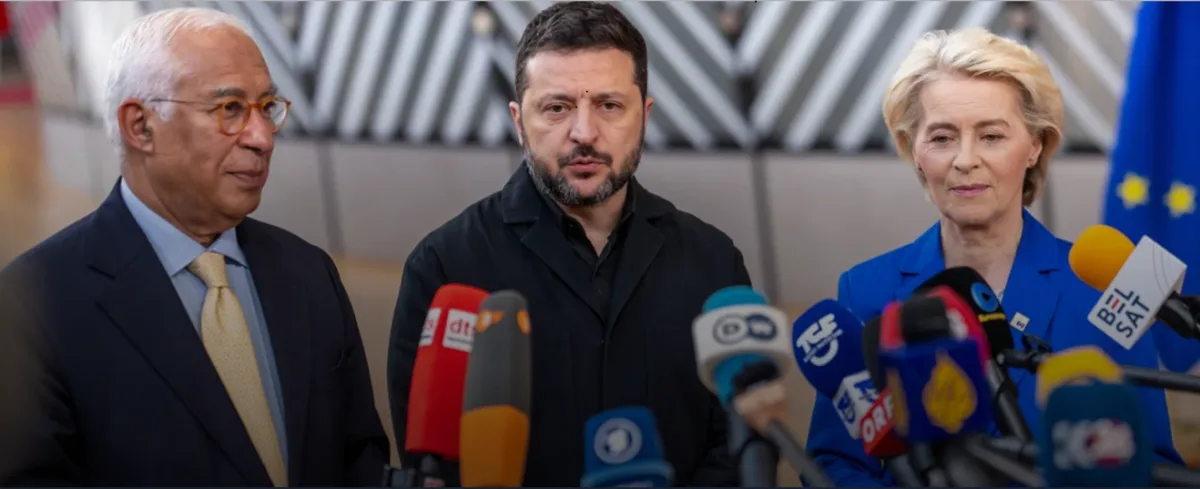
Speaking during a European summit in Brussels on October 16, Zelenskyy praised European leaders as “real leaders” in remarks widely interpreted as an indirect criticism of Trump. His comments came amid disagreements over a proposed energy ceasefire, US policy towards Russian oil and diesel exports, and restrictions affecting military satellite communications used by Ukraine.
The diplomatic tensions have raised concerns about the future of Western coordination at a time when Ukraine continues to face Russian missile and drone attacks and prepares for another difficult winter.
According to CNN's October 16 report, European leaders rallied around Zelenskyy as the dispute with Washington intensified. Reuters and other international media also reported that the Ukrainian president was seeking additional funding to maintain his country's defense and government operations.
Zelenskyy Looks to Europe as Relations With Trump Sour
Zelenskyy's visit to Brussels came at a particularly difficult point in relations between Kyiv and Washington.
Trump has criticized Ukraine's attacks on Russian oil refineries, arguing that the strikes could contribute to higher global energy prices. His administration has also pursued arrangements intended to facilitate Russian diesel exports and preserve negotiations with Moscow.
Zelenskyy has questioned whether these measures genuinely advance peace, arguing that easing economic pressure on Russia could provide Moscow with additional revenue to sustain its military campaign.
At the European summit, the Ukrainian president expressed gratitude to EU leaders for their continued support, describing them as “real leaders.”
Although he did not explicitly name Trump in that remark, its timing and context drew attention because of the increasingly public disagreement between the American and Ukrainian presidents.
The episode illustrates Kyiv's effort to strengthen its European partnerships while maintaining access to essential American military capabilities.
Dispute Over Trump's Proposed Energy Ceasefire
One of the central disagreements concerns Trump's proposal to halt attacks on energy infrastructure in both countries.
The White House announced the proposed arrangement, but Kyiv and Moscow have disagreed over its implementation and compliance.
Zelenskyy said Ukraine temporarily halted attacks on Russian oil refineries for three days following a request from Washington. He subsequently announced that Ukraine would resume those operations because, according to Kyiv, Russia continued attacking Ukrainian energy infrastructure.
Ukrainian officials reported Russian attacks on energy facilities and other targets, including strikes that disrupted electricity supplies and damaged infrastructure.
Russia, meanwhile, accused Ukraine of undermining US diplomatic efforts by continuing its attacks on Russian facilities.
The competing claims have exposed a central weakness in the proposed arrangement: without a clearly agreed framework for monitoring attacks and determining violations, each side can accuse the other of failing to comply.
For Ukraine, the concern is that suspending its own attacks without reciprocal Russian restraint could reduce its ability to pressure Moscow.
For Washington, continued strikes on Russian energy infrastructure risk complicating diplomatic negotiations and increasing uncertainty in global fuel markets.
Russian Diesel Deal Fuels Anger in Kyiv
Another major source of tension is the Trump administration's reported arrangement allowing Russian diesel exports to reach international markets.
The move has angered Ukrainian officials and drawn criticism from European allies who argue that additional energy revenues could benefit Russia while the war continues.
Zelenskyy warned that the arrangement could put more money into Russian President Vladimir Putin's hands, helping to sustain the country's military operations.
Trump, however, has defended his approach as part of an effort to ease energy-market pressures and preserve negotiations with Moscow.
The disagreement highlights competing priorities. Washington is attempting to balance diplomatic engagement and domestic economic concerns, while Kyiv argues that concessions to Russia could weaken Ukraine's negotiating position.
The dispute also illustrates how the war's economic consequences extend far beyond the battlefield, influencing fuel prices, sanctions policy and relations among Western allies.
Ukraine Raises Alarm Over Star shield Disruptions
The deterioration in US-Ukraine relations has also been accompanied by concerns about access to satellite communications.
Ukraine relies on advanced satellite connectivity to support military communications, coordinate operations and operate certain drone systems.
Zelenskyy said disruptions affecting the Star shield system had complicated Ukraine's military operations. He also warned that interruptions to essential communications could place civilians at greater risk by weakening the country's ability to respond to Russian attacks.
Star shield is the military-oriented satellite service operated by SpaceX under arrangements involving the US government. It is distinct from the standard Starlink service used for civilian connectivity.
SpaceX chief executive Elon Musk said Star shield is controlled by the US government, while Trump and senior US officials denied deliberately ordering the service to be slowed down.
The precise cause and scope of the reported disruptions remained disputed in the coverage.
The controversy nevertheless highlights Ukraine's reliance on foreign technology and the strategic implications of access to systems that cannot quickly be replaced by European alternatives.
European Union foreign policy chief Kaja Kallas acknowledged that Europe could not immediately replace this capability in the short term.
For Kyiv, maintaining reliable access to intelligence, communications and defensive equipment remains a critical concern as Russian attacks continue.
Zelenskyy Seeks €70 Billion to Cover Ukraine's Funding Gap
Alongside his diplomatic appeal, Zelenskyy urged European leaders to provide substantial additional financial assistance.
He warned that Ukraine could face a funding gap of approximately €70 billion in 2027, covering defence requirements, weapons and the resilience of essential state institutions.
The request comes as Ukraine continues to spend heavily on its war effort while sustaining public services and responding to damage caused by Russian attacks.
European governments have already committed substantial support, but securing further funding is complicated by competing national priorities, budget constraints and disagreements over the use of frozen Russian assets.
European leaders broadly reaffirmed their support for Ukraine during the Brussels summit. However, agreement on the precise financing arrangements remained a challenge.
The funding question is especially important because Ukraine needs predictable resources to plan military operations, purchase equipment, pay public-sector workers and maintain essential services.
A shortfall could force difficult decisions over spending priorities at a time when the country is preparing for another winter of potential attacks on energy infrastructure.
European Leaders Rally Around Kyiv
Zelenskyy's reception in Brussels demonstrated continuing European concern about Ukraine's security and the consequences of a potential reduction in American support.
Several European leaders emphasized that Ukraine must retain the ability to defend itself and that any peace settlement should not leave the country exposed to renewed Russian aggression.
The European response also reflects broader concerns about the future of transatlantic cooperation.
For years, US military assistance and European financial and diplomatic support have been central to Ukraine's ability to resist Russia's full-scale invasion.
A serious deterioration in relations between Washington and Kyiv could complicate coordination among Ukraine's allies, particularly if European countries are required to compensate for reduced American assistance.
However, European support is not unlimited. Governments must balance defense spending with domestic economic pressures, public services and other international commitments.
The challenge facing European leaders is therefore not simply to express solidarity, but to translate their commitments into reliable financial and military support.
Trump and Zelenskyy Face Competing Pressures
The dispute reflects different approaches to ending the war.
Trump has prioritized negotiations and has argued that maintaining communication with Moscow is necessary to secure a settlement. His administration has also sought to address energy-market concerns.
Zelenskyy argues that Ukraine cannot accept arrangements that leave Russian attacks continuing while limiting Kyiv's ability to strike military-supporting infrastructure inside Russia.
The two positions reveal a fundamental disagreement over the relationship between military pressure and diplomatic engagement.
Washington's approach places considerable emphasis on keeping negotiations alive. Kyiv maintains that a sustainable agreement must include credible restraints on Russian military operations and sufficient security guarantees for Ukraine.
Both governments face political and strategic pressures, but the consequences of their disagreement extend beyond their bilateral relationship.
If US support becomes less predictable, European governments may face greater demands to provide funding, weapons and other assistance. If diplomatic coordination weakens, efforts to secure a ceasefire could become more difficult.
What Happens Next?
The immediate priorities for Ukraine include maintaining air defenses, protecting energy infrastructure, securing financial support and ensuring reliable access to military communications.
Zelenskyy is also seeking continued coordination with European leaders and a way to preserve constructive engagement with Washington despite the public disagreements.
For the Trump administration, the challenge is to demonstrate that its diplomatic strategy can produce measurable progress towards ending the conflict without undermining Ukraine's security or alienating European allies.
The next phase will depend on whether the parties can agree on practical steps, including clearer terms for any energy ceasefire, mechanisms for monitoring compliance and a credible framework for negotiations.
European governments will also need to determine how to finance Ukraine's projected needs in 2027.
Factful24 Analysis: Europe's Support Is Important, but Replacing America Would Be Difficult
Zelenskyy's Brussels visit underscores three important developments.
First, Ukraine is strengthening its European diplomatic engagement. As disagreements with Washington intensify, Kyiv is seeking assurances that European governments will continue supporting its defense and economic stability.
Second, the dispute over the energy ceasefire demonstrates the difficulty of achieving a limited truce without a shared understanding of its terms and enforcement. Continued accusations of violations undermine confidence in the arrangement and complicate negotiations.
Third, Ukraine faces a substantial financial challenge. The requested €70 billion in additional support for 2027 highlights the scale of the resources Kyiv believes it needs to maintain its defense and government operations.
European backing could help reduce some of the uncertainty surrounding American policy, but replacing the full range of US military, intelligence and technological capabilities would be difficult in the short term.
Ultimately, Zelenskyy's challenge is to maintain Western support while persuading Washington and European capitals that continued assistance is necessary to protect Ukraine and secure a lasting settlement.
Summary: Zelenskyy's praise for European leaders reflects growing tensions with Trump over sanctions, Russian energy exports, military communications and the conditions for peace. European leaders have reaffirmed their support, but Ukraine still faces major financial and military challenges. The durability of Western coordination will be an important factor in determining Kyiv's ability to defend itself and negotiate an acceptable settlement.
Sources
CNN
This report reflects information published between October 16 and 19, 2026. Claims about military operations, satellite disruptions and ceasefire compliance are attributed to the relevant parties where independent verification is unavailable.