

Europe | News
Why Budget Airlines Thrive in Europe but Struggle to Survive in the US
Business | Aviation
Europe's low-cost airlines have built a powerful business model around cheap fares, rapid aircraft turnaround and charging passengers separately for optional services. In the United States, however, budget carriers face a tougher combination of operating costs, competition from established airlines and consumers' expectations of comfort and convenience.
A CNN report published on October 20, 2026, examines why airlines such as Ryanair and easyJet have expanded across Europe while American budget airlines have struggled to achieve comparable success.
The difference is not simply the price of a ticket. It involves airport infrastructure, route geography, airline operating strategies and the way travelers respond to low fares.
1. Europe's budget airlines have mastered low-cost operations
Ryanair: efficiency first
The Irish airline focuses on keeping operational expenses low by standardizing much of its fleet, limiting turnaround times and using airports that can offer lower fees. Passengers often pay extra for checked baggage, seat selection and other services.
The British carrier serves a broad European market, where passengers can choose among competing airlines and numerous destinations within relatively short flying distances. Its scale helps support a high-volume, low-cost approach.
According to CNN's report, Ryanair carried more than 200 million passengers in the previous year, while easyJet carried nearly 100 million. These figures illustrate the scale European low-cost carriers have achieved.
2. European airports give budget airlines a structural advantage
Many European cities have secondary airports that offer alternatives to major international hubs.
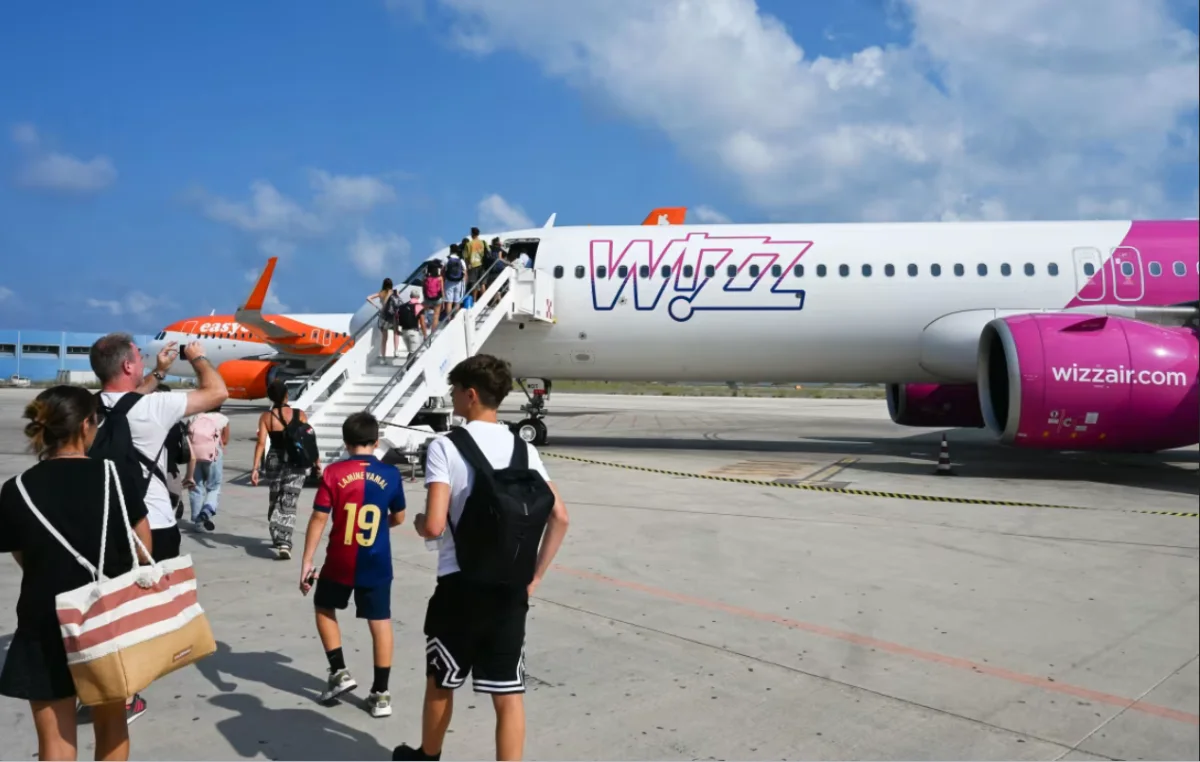
For example, Ryanair and Wizz Air use Memmingen as an alternative for travelers heading to the Munich region. London Stansted and London Luton also provide alternatives to Heathrow for certain routes.
These airports can offer lower operating costs and allow airlines to serve routes without relying entirely on expensive, congested hubs.
Aircraft turnaround times matter too. CNN's report cites industry estimates of approximately 25–30 minutes at some European airports, compared with 45–60 minutes at some US airports.
Faster turnarounds can allow an aircraft to complete more flights in a day, spreading fixed costs across more journeys.
3. Why the US model is struggling
Pressure from established airlines
American carriers such as Delta, United and American Airlines compete with budget airlines through basic-economy fares, loyalty programmes and extensive route networks. This makes it harder for smaller competitors to maintain a distinct price advantage.
Financial pressure and business failures
US discount airlines have faced higher operating costs, intense fare competition and difficulties maintaining profitability. Spirit Airlines' collapse earlier in 2026 highlighted the risks facing the ultra-low-cost model in the American market.
There are also differences in passenger behavior. Some American travelers place greater value on seat comfort, customer service and loyalty benefits, while European passengers may be more willing to accept a basic flight in exchange for a lower fare. This is a broad market observation, not a rule that applies to every traveler.
4. The hidden economics of a cheap ticket
A low advertised fare does not necessarily mean a cheap overall journey.
| Cost or feature | Typical budget-airline approach |
| Base fare | Low introductory price |
| Checked baggage | Often charged separately |
| Seat selection | May cost extra |
| Airport choice | May use airports farther from the destination |
| Onboard services | Often limited or sold separately |
| Profitability | Depends on keeping total costs below total revenue |
The business model works when airlines maintain high aircraft utilization, control expenses and generate sufficient revenue from fares and optional services. If costs rise faster than revenue, low ticket prices can become a liability rather than an advantage.
5. What this means for travelers
For passengers, Europe's established low-cost market can mean more choices and competitive fares on short-haul routes. But travelers should compare the full cost of a journey, including baggage, airport transfers and seat fees, before deciding which airline offers the best value.
The US experience demonstrates that low fares alone are not enough to guarantee survival. Airlines also need efficient operations, sufficient demand and a cost structure that allows them to compete sustainably.
A new challenge: rising fuel costs
The industry faces another source of pressure. On October 20, Reuters reported that Ryanair chief executive Michael O'Leary warned European airfares could rise by 10–20% over the following 12 months as fuel costs increase and airline capacity tightens. This was his forecast, not a confirmed industry-wide outcome.
Higher fuel prices could challenge even efficient carriers, especially if they cannot pass the additional costs on to passengers.
Note:
Europe's budget-airline success is built on more than inexpensive tickets. It reflects a combination of disciplined cost management, extensive short-haul demand, secondary airports and consumer acceptance of no-frills travel.
In the United States, strong legacy-airline competition, operating expenses and difficulties sustaining ultra-low fares have made the same strategy more challenging.
The central lesson for the aviation industry is that cheap flights are sustainable only when the entire operating model—not just the advertised ticket price—is competitive.
Sources