

United Kingdom | News
UK to Deploy Typhoon Fighter Jets to Defend Saudi Arabia Against Houthi Attacks
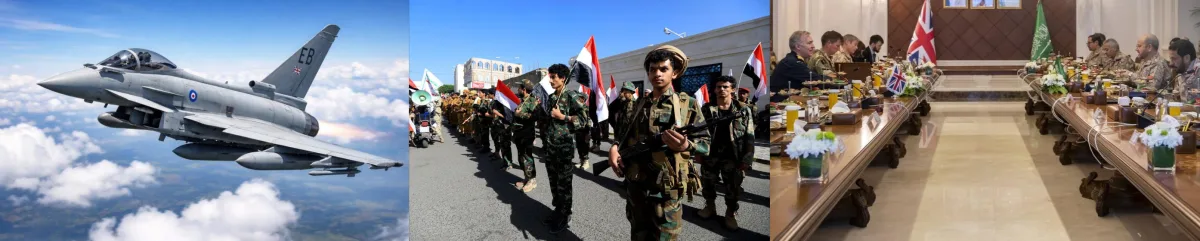
The United Kingdom has announced an expansion of its military support for Saudi Arabia, deploying Royal Air Force (RAF) Typhoon fighter jets on defensive missions amid escalating missile and drone attacks by Yemen’s Houthi movement.
The UK Ministry of Defense said the aircraft would help protect Saudi cities, civilians and critical infrastructure from aerial attacks. It explicitly stated that the fighter jets would not conduct offensive strikes against Houthi targets.
The announcement, made on October 20, 2026, marks a significant expansion of Britain's defensive military assistance to Riyadh as the conflict in Yemen increasingly threatens regional security, energy infrastructure and transport links.
1. What will the British military deployment involve?
According to the UK government, the expanded assistance includes four main elements.
RAF Typhoon fighter jets: The aircraft will conduct defensive counter-air missions to help protect Saudi airspace against incoming missiles and drones.
A400M military transport aircraft: The UK will provide an RAF Atlas A400M to help move defense equipment within Saudi Arabia.
Military advisers: British personnel will assist Saudi staff officers with military coordination and support.
Extended aerial refueling support: Britain is extending its air-to-air refueling assistance for Saudi defensive air operations by 90 days, according to reporting on the announcement.
2. Why is Saudi Arabia seeking additional military support?
Saudi Arabia has faced an intensifying campaign of Houthi attacks against strategic targets, including airports and oil infrastructure.
Reuters reported on October 14 that attacks had struck Riyadh's King Khalid International Airport and targeted facilities associated with Saudi Aramco, the kingdom's state-controlled oil giant. The airport attack reportedly killed at least 13 people and injured more than 300.
These attacks raise concerns beyond Saudi Arabia's immediate security. Damage to oil facilities could affect energy production, while threats to airports and shipping routes could disrupt passenger travel, cargo movements and regional trade.
British Defence Secretary Wes Streeting said the latest support was intended to protect Saudi airspace and critical infrastructure against missiles and drones. The government also described the attacks on civilian targets as unacceptable.
3. Who are the Houthis, and why are they fighting Saudi Arabia?
The Houthis, also known as Ansar Allah, are an armed political and religious movement that controls much of northwestern Yemen, including the capital, Sanaa.
The movement emerged from Yemen's Zaydi Shia community and became a central party to the country's civil war. Saudi Arabia intervened militarily in 2015 to support Yemen's internationally recognised government against the Houthi advance.
The Houthis receive Iranian support and are widely described by Western governments as aligned with Tehran. However, the movement has its own leadership, domestic objectives and political calculations.
The latest escalation follows renewed fighting between the Houthis and forces aligned with Yemen's internationally recognized government, which receives Saudi backing. The conflict has increasingly affected Saudi territory and critical infrastructure.
4. Does this mean Britain is entering a direct war with the Houthis?
Not necessarily. The UK government has drawn an explicit distinction between defending Saudi airspace and carrying out offensive attacks.
The newly announced Typhoon missions are defensive. The aircraft are intended to help protect Saudi cities and infrastructure rather than conduct strikes against Houthi positions.
However, the broader British military contribution is more complex. The government has also extended aerial refueling support for Saudi defensive operations, including operations intended to degrade Houthi military targets threatening Saudi and Yemeni people. That support is distinct from the stated role of the newly deployed Typhoon jets.
The deployment increases Britain's direct involvement in regional air defense, even as officials maintain that the immediate fighter-jet mission is defensive.
5. What are the implications for oil prices and global trade?
The Gulf region is important to global energy markets, and prolonged attacks on oil facilities or shipping infrastructure could increase uncertainty for energy producers and importers.
Oil supply: Damage to production, storage or transport facilities could constrain exports and increase price volatility.
Shipping and trade
Threats around the Red Sea and Bab el-Mandeb passage could force shipping companies to reconsider routes, insurance and operating costs.
Inflation and transport costs
If fuel or freight costs rise, businesses and consumers in import-dependent economies could face higher expenses. These are potential consequences rather than confirmed outcomes of Britain's announcement. Their scale will depend on whether attacks intensify, how effectively regional defenses respond and whether diplomatic efforts can contain the conflict.
6. Could the deployment widen the conflict?
The deployment comes amid a wider deterioration in regional security. Saudi Arabia's military role in Yemen, the Houthis' attacks on Saudi territory and the group's relationship with Iran create the possibility of further escalation.
At the same time, defensive interception missions may help protect civilian populations and important infrastructure. Their effectiveness will depend on the number and type of incoming threats, the coordination of air-defence systems and the ability to sustain operations.
The British government has also emphasized the need for a political solution to Yemen's conflict, acknowledging the severe humanitarian consequences of continued fighting.
The key questions now are how long the deployment will last, whether further British military assets will be committed, and whether the increased security assistance will deter additional attacks or become part of a prolonged regional confrontation.
Note:
Britain's decision to deploy RAF Typhoon fighters represents an expansion of its military support for Saudi Arabia as Houthi attacks increasingly threaten cities, airports and energy infrastructure.
The government says the fighter jets will operate defensively and will not carry out offensive strikes against Houthi targets. Nevertheless, the wider assistance—including transport, military advisers and extended refueling support—shows that Britain's involvement extends beyond a symbolic diplomatic gesture.
The consequences could reach far beyond the battlefield, affecting regional security, oil markets, shipping and the cost of international trade. Whether the deployment helps contain the violence or contributes to a broader escalation will depend on developments in Yemen and the wider Middle East.