

Technology | News
Critical PHP Flaw Triggers Global Cybersecurity Alert
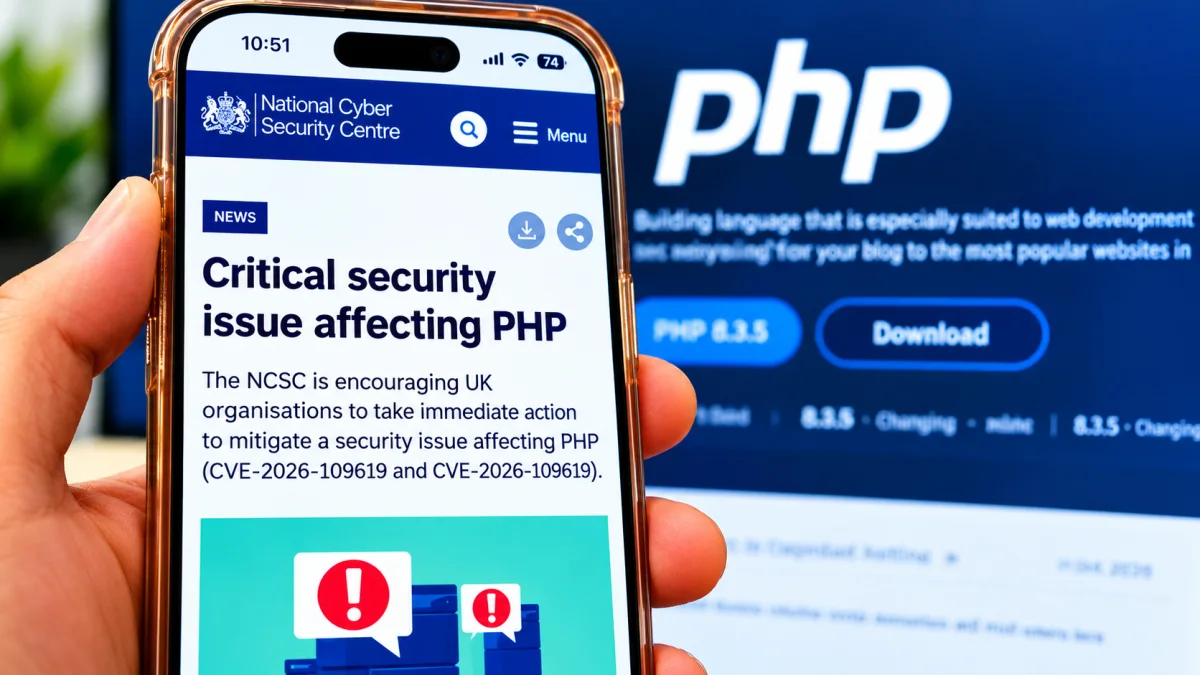
Technology | Cybersecurity | October 23, 2026
Headline: A Flaw in PHP Is Taking Down Websites: Is the Internet at Risk?
Millions of websites could be vulnerable to critical security flaws discovered in PHP, a programming language that powers much of the internet. The discovery has triggered urgent warnings from cybersecurity agencies and prompted governments and organizations to temporarily take some websites offline while applying security fixes.
What happened?
Two critical vulnerabilities in PHP, collectively associated with the name PHP2Shell, have raised concerns about the security of websites, online services and digital infrastructure worldwide.
The flaws could allow attackers to execute malicious code on vulnerable web servers without first logging in. If successfully exploited, they could potentially gain control of affected systems, steal confidential information, manipulate website content or access databases.
PHP is widely used in website development and supports major platforms, including WordPress, Drupal, Joomla and MediaWiki, the software behind Wikipedia. Cybersecurity company Wiz estimates that approximately 70% of websites could be affected, although the BBC has said it could not independently verify that estimate.
The incident demonstrates how a weakness in widely used foundational software can create security risks across an extensive network of online services.
Websites affected as organizations rush to respond
The security alert has prompted precautionary shutdowns and service disruptions in several countries. According to BBC reporting and other news organizations, affected or precautionary disrupted services have included government websites, parts of Wikipedia, and services operated by major companies.
The scale of the incident has also raised concerns for smaller businesses, charities and public institutions that may not have dedicated cybersecurity teams.
The UK National Cyber Security Center (NCSC) has urged organizations to identify their PHP systems and install security updates. It also advised taking affected systems offline if the vulnerability cannot be adequately mitigated in time.
How did artificial intelligence help uncover the flaws?
Cybersecurity researchers at Calif, Wiz and OpenAI contributed to identifying and investigating the vulnerabilities. Advanced AI tools helped researchers work through complex exploitation techniques that had previously been difficult to demonstrate.
The discovery highlights a growing cybersecurity challenge: AI can help defenders identify and repair weaknesses, but the same advances may also help malicious actors develop attacks more quickly.
The vulnerabilities reportedly remained undetected for years before researchers demonstrated their potential impact. Following a premature disclosure of information about the flaws, developers accelerated the release of security fixes.
Is the internet at risk of going down completely?
There is no evidence in the cited reporting that the entire internet is facing a complete shutdown. The principal concern is the potential compromise of individual websites and servers that use vulnerable PHP versions.
However, because PHP is so widely deployed, successful exploitation could have far-reaching consequences, including data theft, website defacement, unauthorized access to business systems and temporary interruptions to online services.
The BBC reported on October 22 that an expert saw no evidence of widespread successful breaches at that point, although Hong Kong's cybersecurity agency warned that the vulnerabilities were being exploited in the wild. The situation therefore requires urgent action, without assuming that every affected website has been hacked.
What website owners should do
- Update PHP: Install the latest security-fixed version compatible with the website and hosting environment.
- Contact the hosting provider: Confirm whether the server is affected and whether the necessary patch has been applied.
- Back up important data: Verify that website files and databases can be restored.
- Check for compromise: Review security logs and look for suspicious activity or unauthorized changes.
- Monitor systems: Continue checking for suspicious behavior after updating the software.
These measures align with guidance from the UK NCSC.
Note:
The PHP security crisis is a reminder that the internet depends on underlying technologies that many users never see. A vulnerability in one widely used programming language can affect websites, businesses and government services across multiple countries.
The immediate priority is to patch vulnerable systems, investigate possible compromises and strengthen cybersecurity monitoring. The incident also demonstrates the dual role of AI in cybersecurity: helping researchers uncover dangerous flaws while potentially lowering the barriers to developing cyberattacks.
The internet is not necessarily facing a total collapse, but the consequences of leaving vulnerable systems unprotected could be serious.
Sources for verification: UK National Cyber Security Centre advisory · Al Jazeera report · Reuters report