

Politics
The Odds Against Tinubu: Economic Hardship, Insecurity and Political Uncertainty Ahead of 2027
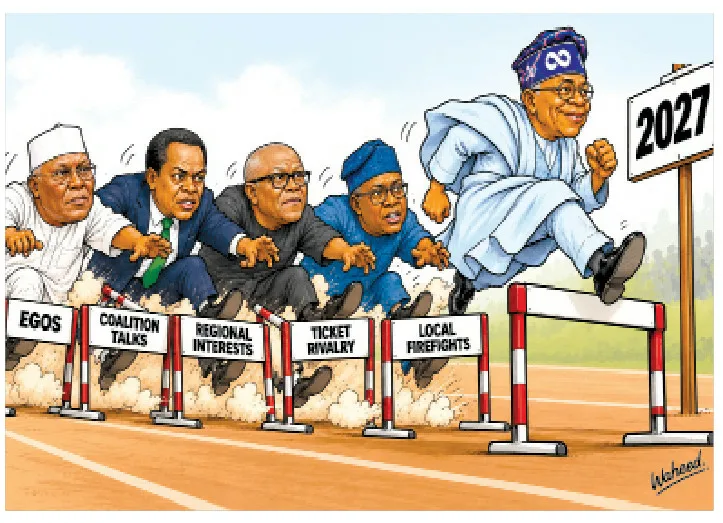
Nigeria | Politics | 25-10-2026
President Bola Ahmed Tinubu is approaching the 2027 presidential election amid mounting questions about the impact of his economic reforms, persistent insecurity and the ability of his administration to translate policy changes into tangible improvements in the lives of ordinary Nigerians.
Although the government maintains that its reforms are necessary to stabilize the economy and improve long-term growth, the immediate consequences—including higher living costs and pressure on household incomes—remain central to public debate.
With opposition figures preparing to challenge the ruling All Progressives Congress (APC), the political contest is increasingly focused on the relationship between economic recovery, public confidence, security and the government's record since taking office in May 2023.
Economic reforms and the cost-of-living crisis
One of the most significant challenges confronting Tinubu is the continuing public debate over the removal of the petrol subsidy and changes to Nigeria's foreign-exchange system.
The government has defended these measures as necessary steps to address longstanding economic distortions, strengthen public finances and encourage investment. The International Monetary Fund's 2026 assessment also acknowledged improvements in macroeconomic outcomes and resilience following the reforms.
However, improved economic indicators do not automatically translate into immediate relief for households. Food prices, transport costs, housing expenses and other essential expenditures remain important measures by which many Nigerians assess the administration's performance.
The central question is whether the benefits of reform can become sufficiently visible in employment opportunities, purchasing power, public services and household welfare.
Insecurity remains a major concern
Security is another critical issue shaping the national conversation. Kidnappings, banditry, insurgency and attacks on communities continue to raise concerns about the safety of citizens and the protection of livelihoods.
For families affected by violence, the consequences extend beyond casualties and property losses. Insecurity can interrupt education, disrupt farming, discourage investment and restrict movement.
The administration's security response will therefore remain an important subject of scrutiny, particularly in communities where residents continue to face threats despite military and law-enforcement operations.
The government and its supporters may point to ongoing security operations and other interventions. However, the broader assessment must consider whether these efforts are producing sustained improvements in public safety.
Opposition pressure and the political landscape
Tinubu's re-election campaign also faces the challenge of opposition parties seeking to turn public dissatisfaction into electoral support.
Former Vice-President Atiku Abubakar and Peter Obi are among the prominent opposition figures associated with the emerging contest. Their political messaging has included criticism of the administration's economic record and concerns about governance.
Nevertheless, dissatisfaction with an incumbent does not automatically guarantee an opposition victory. Political organisation, candidate selection, alliances, regional voting patterns, turnout and confidence in the electoral process can all influence the outcome.
The degree to which opposition parties can coordinate their efforts and present credible policy alternatives will be an important part of the political landscape.
The incumbency advantage and its limits
The APC retains the institutional advantages associated with governing at the federal level, including an established political network and access to a nationwide party structure.
Such advantages can help a governing party mobilize supporters. However, they do not eliminate the need to demonstrate results or address voters' concerns.
The administration's supporters argue that difficult reforms require time to deliver their full benefits. Critics counter that citizens cannot be expected to judge government performance solely by long-term economic projections when immediate living conditions remain difficult.
These competing arguments place the emphasis on measurable outcomes rather than campaign promises alone.
What Nigerians may examine before voting
Several issues are likely to feature prominently in public discussions ahead of the election:
- Cost of living: Whether food, transport and other essential expenses become more manageable.
- Employment and income: Whether economic growth creates opportunities and improves household purchasing power.
- Security: Whether communities experience sustained reductions in kidnapping, violence and displacement.
- Public services: Whether healthcare, education, electricity and infrastructure improve in practical terms.
- Accountability: Whether government spending, policy implementation and public commitments receive adequate scrutiny.
- Electoral credibility: Whether voters can participate freely and trust the integrity of the election process.
These are measurable areas through which citizens can evaluate competing claims from the administration and opposition parties.
Conclusion
The political challenges facing Tinubu reflect a broader question about the relationship between economic reform and citizens' everyday experiences.
The administration can point to its policy changes and stated ambitions for economic stability, while its critics can demand clearer evidence that those measures are improving living conditions and security.
Ultimately, the significance of the challenges ahead will depend on developments between now and election day, the government's delivery of results, the opposition's ability to organize and the choices Nigerian voters make.
The 2027 election will provide an opportunity for voters to assess the administration's record against its promises and compare its proposals with those of its challengers.
Note: Economic indicators, personal living conditions, security outcomes and political organization will all shape the debate over Tinubu's record. No single factor determines an election, and the final verdict belongs to Nigerian voters.
Editorial note: This is an independently structured analysis based on the linked topic and additional reporting. It is not a verbatim reproduction of Leadership's article. Claims about political positions and economic outcomes should be checked against the underlying reporting and official data before publication.
Sources for further verification