

Europe | News
Serbia’s EU Membership Bid Faces Fresh Test as Brussels Demands Democratic Reforms
BELGRADE, October 26, 2026
Subheading: European leaders signal renewed support for Serbia’s accession ambitions, but progress depends on judicial independence, media freedom, anti-corruption measures, Russia sanctions and normalization of relations with Kosovo.
Serbia’s long-stalled bid to join the European Union could gain new momentum following a major political shift in Belgrade, but European leaders have made clear that renewed engagement will depend on tangible reforms and closer alignment with the bloc’s political and foreign policy priorities.
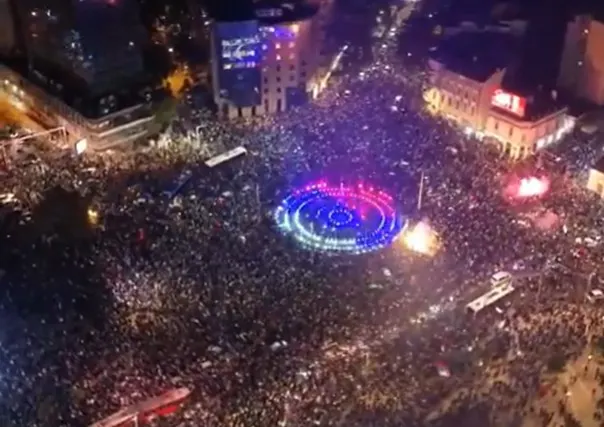
According to EU Perspectives, the European Union has signaled its readiness to support Serbia’s European integration following the reported parliamentary election victory of the student-led Student List movement. The development comes after nearly two years of protests centered on democracy, the rule of law and allegations of corruption.
European Commission President Ursula von der Leyen welcomed the reported result, saying the EU was prepared to work with Serbia on strengthening democratic institutions, protecting media freedom, improving the rule of law and fighting corruption.
EU Enlargement Commissioner Marta Kos also indicated that a new chapter could begin in relations between Brussels and Belgrade.
However, the diplomatic welcome does not amount to an unconditional commitment to admit Serbia into the 27-member bloc. European officials continue to expect measurable progress on governance, institutional independence and foreign policy alignment before the accession process can advance substantially.
Rule of Law and Media Freedom at the Centre
Judicial independence is expected to be among the most important tests for Serbia’s next government.
European institutions have repeatedly raised concerns about political influence over courts, corruption investigations, media independence and the credibility of electoral processes.
Brussels is expected to assess whether the authorities can strengthen judicial institutions, ensure that corruption allegations are investigated impartially and create conditions for fair political competition.
Media freedom is another major issue. EU officials want Serbia to demonstrate that journalists and independent media organizations can operate without undue political pressure.
The challenge will extend beyond passing new legislation. European officials are likely to look for evidence that reforms are implemented effectively and produce lasting institutional changes.
Russia Sanctions Remain a Major Obstacle
Serbia’s relations with Russia represent another significant complication in its accession negotiations.
Belgrade has maintained close ties with Moscow and has not aligned fully with the EU’s sanctions against Russia following the invasion of Ukraine. This position has contributed to disagreements among EU member states over whether Serbia is ready to advance to the next stage of negotiations.
According to the report, several member states have linked further progress to improvements in the rule of law and greater alignment with the EU’s foreign policy.
A change in Serbia’s domestic political leadership would not automatically resolve this disagreement. The next government would still need to determine how far it is prepared to adjust its foreign policy while managing existing diplomatic, energy and economic relationships.
Kosovo Normalization Remains Essential
Relations between Serbia and Kosovo remain another longstanding obstacle to EU membership.
Serbia does not recognize Kosovo’s declaration of independence in 2008, and the two sides continue to face difficulties in implementing agreements intended to normalize their relationship.
The EU regards progress in this area as an important part of Serbia’s accession process. Consequently, any new government in Belgrade will face pressure to demonstrate a willingness to advance dialogue and implement outstanding commitments.
The issue is particularly sensitive because it combines questions of national identity, regional security and diplomatic recognition.
Without meaningful progress, disagreements over Kosovo could continue to delay Serbia’s integration into the EU, even if domestic reforms improve.
Serbia’s Accession Process Has Been Slow
Serbia received EU candidate status in 2012 and began accession negotiations in 2014. Nevertheless, progress has remained limited.
The EU accession framework contains 35 negotiating chapters covering areas such as the judiciary, fundamental rights, economic policy, competition, agriculture and environmental protection.
The EU Perspectives report states that Serbia has opened 22 chapters and provisionally closed two. It also notes that an attempt to advance a further negotiating cluster was blocked in July amid concerns about the rule of law and Serbia’s position on sanctions against Russia.
These figures illustrate the distance between candidate status and full membership. Accession requires extensive legal and institutional changes, followed by agreement among EU member states at key stages of the process.
Even where the European Commission considers technical requirements to have been met, political approval from member states remains necessary.
EU Member States Differ on the Pace of Enlargement
European governments do not have a uniform position on how quickly Serbia should be allowed to advance.
Some countries favour accelerating enlargement in the Western Balkans, viewing closer integration as a way to strengthen European influence and stability in the region.
Others have stressed that membership must depend on credible reforms and compliance with the EU’s political standards.
This difference matters because accession decisions require agreement among member states. Serbia’s progress will therefore depend not only on decisions taken in Belgrade but also on whether European governments believe the country has met the necessary conditions.
The report identifies the EU-Western Balkans summit scheduled for November 25 as a possible opportunity for further discussions on Serbia’s accession process. However, any concrete advance would depend on political agreement and evidence of progress.
What the Development Means for Serbia
A renewed opening between Belgrade and Brussels could create opportunities for economic cooperation, institutional reform and closer integration with the European single market.
The EU is a major economic partner for Serbia, making the accession process important for trade, investment and the country's long-term economic direction.
However, the political transition alone cannot guarantee membership. The new authorities would need to demonstrate that promises of reform translate into independent institutions, credible elections, effective anti-corruption measures and a clear approach to outstanding foreign policy disputes.
Serbia must also navigate its existing relationships with Russia and China while determining how closely it intends to align with European policies.
The immediate question is therefore not simply whether Brussels is willing to reopen the door, but whether both sides can agree on a credible and sustained path towards membership.
Note:
Serbia’s EU accession ambitions may be entering a new phase, but renewed political engagement is only the beginning. Judicial independence, media freedom, corruption, sanctions against Russia and relations with Kosovo remain central obstacles.
For Belgrade, the next test will be turning political change into measurable reforms. For Brussels, the challenge will be balancing its commitment to enlargement with its insistence that prospective members meet the bloc’s democratic, legal and foreign policy expectations.
Source: EU Perspectives — Welcome back, Belgrade! But EU leaders attach strings to accession talks restart
Additional reporting:Euronews — EU hails Serbia’s political upheaval after student group ends Vučić’s rule
Editorial note: The election developments and seat projections should be checked against official electoral results before publication. EU membership timelines remain conditional and should not be presented as confirmed dates.