

Health & WellBeing
Nigeria’s Ebola Challenge: Why Dr Ameyo Stella Adadevoh’s Legacy Must Not Be Forgotten
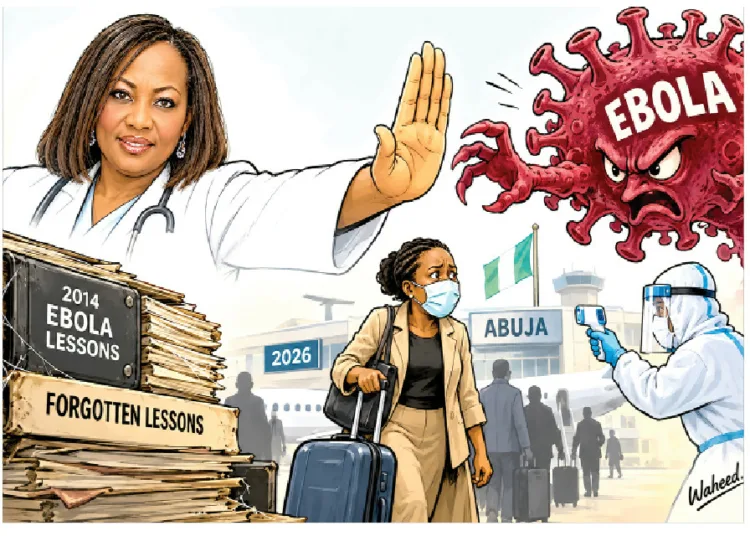
Nigeria is once again facing an important public health challenge following the reported confirmation of an imported case of Ebola virus disease in Abuja, bringing renewed attention to the country's preparedness for infectious disease outbreaks.
In an opinion article published by LEADERSHIP, columnist Azu Ishiekwene draws parallels between the current development and the 2014 Ebola outbreak, highlighting the extraordinary sacrifice of Dr Ameyo Stella Adadevoh, whose actions played a crucial role in preventing the virus from spreading widely across Nigeria.
The central argument is that Nigeria must not wait for another national emergency before strengthening its healthcare infrastructure, disease surveillance systems and emergency response mechanisms.
The 2026 Ebola Case: What Happened?
According to information provided by the Nigeria Centre for Disease Control and Prevention (NCDC), the confirmed patient was a 42-year-old woman who travelled to Nigeria from Uganda through Addis Ababa, Ethiopia.
The reported timeline is as follows:
- October 3, 2026: The woman arrived in Abuja.
- October 7: She reportedly developed symptoms, including fever, body aches and sore throat.
- October 11: She was admitted to a private healthcare facility.
- October 19: The NCDC received notification of the suspected case.
- October 20: Laboratory tests confirmed infection with the Bundibugyo strain of Ebola.
The World Health Organization (WHO) confirmed the imported case and emphasized the importance of contact tracing, laboratory testing and infection prevention measures.
Regional Office for Africa+1
The interval between the patient's arrival, the onset of symptoms and official notification has raised questions about the speed of communication between private healthcare facilities and public health authorities.
For a disease such as Ebola, early identification and isolation are essential to reducing the possibility of transmission.
Contact Tracing: Authorities Intensify Surveillance
Following confirmation of the case, Nigerian health authorities activated the national emergency response mechanism and commenced contact tracing.
On October 25, the NCDC announced that 53 contacts had been identified and were being monitored. These included healthcare workers, household members, domestic staff and other individuals who might have been exposed.
However, the NCDC's October 27 situation report subsequently increased the cumulative figure to 62 contacts, with no contact having tested positive at the time covered by that report.
Premium Times Nigeria+1
This distinction is important: being identified as an Ebola contact does not mean that an individual is infected.
The monitoring process is intended to identify possible infections early and prevent further transmission.
Dr Ameyo Stella Adadevoh: The Woman Who Helped Save Nigeria in 2014
A Son Is Lost Without His Mother. So Is A Country | NCPR News
Ebola crisis: How Nigeria's Dr Adadevoh fought the virus - BBC News
DRASA (Dr. Ameyo Stella Adadevoh) Health Trust (@drasatrust) on X
Oxford Medical Handbook Honours Nigerian Doctor, Adadevoh For Stopping Ebola Outbreak – Arise News
One of the most important aspects of Ishiekwene's commentary is his remembrance of Dr Ameyo Stella Adadevoh.
In July 2014, Patrick Sawyer, a Liberian-American government official infected with Ebola, arrived in Lagos.
He was admitted to First Consultants Medical Centre in Obalende, where Dr Adadevoh and her colleagues became central figures in Nigeria's response.
Despite reported pressure from Sawyer to leave the hospital, Dr Adadevoh maintained the need to isolate him and alerted the relevant authorities.
Her decision helped prevent further exposure and contributed to the containment effort.
Unfortunately, she contracted Ebola while caring for the patient and died on August 19, 2014, aged 57.
Nigeria eventually recorded 20 cases and eight deaths during that outbreak before being declared Ebola-free on October 20, 2014.
LEADERSHIP Newspapers+1
Her sacrifice remains an important part of Nigeria's public health history.
The Bigger Problem: Can Nigeria Sustain Its Emergency Preparedness?
Ishiekwene's central concern goes beyond the latest Ebola case.
He argues that Nigeria has repeatedly demonstrated its ability to mobilize resources and expertise during emergencies but struggles to sustain the same level of preparedness after public attention fades.
The issues raised include:
1. Weak institutional continuity: Emergency response structures should remain functional even when there is no immediate outbreak.
2. Healthcare infrastructure: Hospitals need functional isolation facilities, protective equipment, laboratories and appropriate medical supplies.
3. Protection of healthcare workers: Medical personnel must receive adequate training, protective equipment, insurance and institutional support.
4. Early reporting: Private hospitals and clinics must have effective channels for immediately reporting suspected infectious diseases.
5. Public communication: Nigerians need accurate and timely information from credible public health authorities to prevent misinformation and unnecessary panic.
6. Financial accountability: Emergency health funding should be transparently managed, with clear evidence of how resources are deployed.
These are important considerations because an effective outbreak response requires more than emergency announcements and temporary committees.
LEADERSHIP Newspapers+1
Medical Evacuation and the Latest Developments
An important development after the initial confirmation was the medical evacuation of the patient and her husband to Switzerland on October 26.
The European Center for Disease Prevention and Control reported that the patient was receiving treatment in Geneva, while her husband was being isolated in Zurich.
The NCDC's October 27 situation report recorded 62 identified contacts and no secondary confirmed infection among them at the reporting cut-off.
Nigeria's health authorities have continued surveillance and monitoring, and the public should follow official guidance rather than unverified social media messages.
What Nigerians Should Do
The NCDC has advised Nigerians to:
- Maintain regular handwashing with soap and running water.
- Avoid direct contact with the blood and body fluids of suspected or confirmed Ebola patients.
- Avoid caring for suspected cases without appropriate protective equipment and professional guidance.
- Report possible exposure promptly to public health authorities.
- Cooperate with contact-tracing teams.
- Seek medical guidance immediately if symptoms develop following possible exposure.
Ebola should be treated seriously, but panic, discrimination and misinformation can undermine efforts to control an outbreak.
The Legacy of Stella Adadevoh: Nigeria Must Build a System That Protects Its Heroes
Perhaps the most important message in Azu Ishiekwene's article is that Nigeria must never again find itself depending on the extraordinary courage of an individual doctor to compensate for weaknesses in its healthcare system.
Dr Adadevoh's sacrifice should inspire a lasting institutional commitment to disease prevention, emergency preparedness and the protection of medical personnel.
Her legacy should be reflected in hospitals equipped to isolate infectious patients, laboratories capable of delivering timely results, healthcare workers who are adequately protected and public health institutions that respond without unnecessary delays.
Nigeria has already demonstrated that it can contain Ebola. The challenge is ensuring that the lessons learned in 2014 remain part of the country's healthcare system in 2026 and beyond.
There may never be another Dr Stella Adadevoh. Nigeria must therefore build a healthcare system that does not require another sacrifice of that magnitude to protect millions of lives.
Note:
The return of Ebola to Nigeria is a reminder that public health preparedness must be continuous rather than seasonal. While authorities have activated surveillance and contact tracing, the reported delay between the patient's admission and official notification deserves institutional examination.
The government should provide transparent updates on the investigation, the monitoring of contacts, healthcare readiness and the resources committed to preventing further transmission.
The ultimate measure of Nigeria's preparedness will not be the number of emergency announcements issued, but whether the country's health institutions can detect, report and contain infectious diseases quickly while protecting both patients and healthcare workers.
Editorial note: The original LEADERSHIP article is an opinion column. This is an independently structured news analysis based on its arguments and additional official reporting. Contact figures are dated to the relevant NCDC reports rather than presented as live totals.
Sources and verification
- LEADERSHIP – There Is No Other Stella For Ebola — Azu Ishiekwene's original opinion article.
- WHO – Nigeria Confirms Imported Case of Ebola Bundibugyo Virus Disease.
- NCDC – Ebola Disease Situation Report, October 27, 2026.
- NCDC – Official Ebola Disease Response Update.
- European Centre for Disease Prevention and Control – October 29, 2026 Update.