

United States | News
US Charges Alleged Mexican Cartel Engineer Over Sophisticated Drug Tunnel Linking Mexico To San Diego
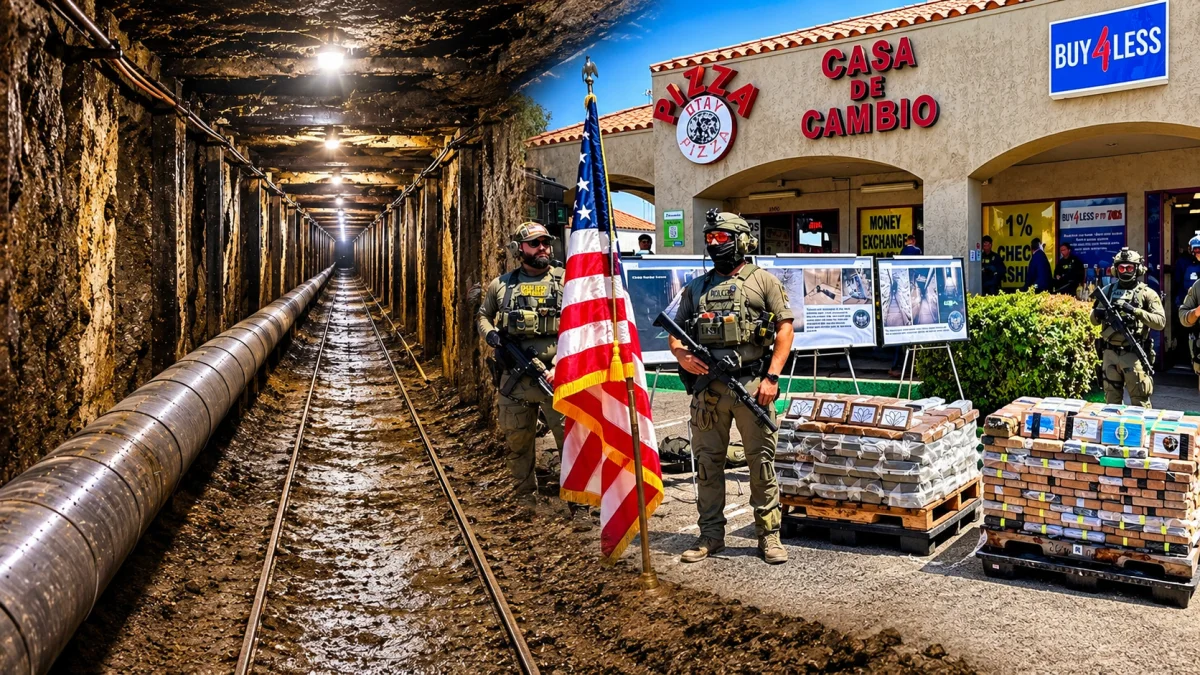
SAN DIEGO, UNITED STATES - October 30, 2026
A 60-year-old Mexican engineer accused of designing and constructing an elaborate underground drug-smuggling tunnel for the Jalisco New Generation Cartel (CJNG) has been indicted by US federal prosecutors, in a case involving more than $45 million worth of seized cocaine.
US federal authorities have charged a Mexican engineer accused of masterminding the construction of a sophisticated underground tunnel allegedly used by one of Mexico's most powerful drug trafficking organizations to transport narcotics across the US-Mexico border.
The defendant, identified as 60-year-old Luis Manuel Hernandez Victoria, also known as El Ingeniero, was indicted by a federal grand jury on October 29, 2026, over allegations that he designed and constructed the underground passageway for the Jalisco New Generation Cartel (CJNG).
The indictment represents a significant development in an ongoing investigation into an elaborate cross-border drug trafficking operation that authorities say involved more than one tonne of cocaine valued at over $45 million.
According to the US Department of Justice, Hernandez Victoria faces four federal charges, including providing material support to a foreign terrorist organization, conspiracy to construct or finance a cross-border tunnel, conspiracy to use the tunnel to import controlled substances, and conspiracy to import controlled substances.
How The Underground Drug Tunnel Operated
The tunnel was discovered on May 29, 2026, beneath a retail establishment known as Buy 4 Less, located at 2498 Roll Drive, Suite E, in the Otay Mesa neighborhood of San Diego, California.
Investigators allege that the underground passage connected the commercial property to Tijuana, Mexico, providing a concealed route for moving illegal narcotics into the United States.
What investigators uncovered was far more sophisticated than an ordinary underground passage.
The tunnel was estimated to measure approximately:
- Length: 1,933 feet (approximately 589 metres).
- Depth: 55 feet underground.
- Height: Approximately 4.5 feet.
- Infrastructure: Reinforced walls, electrical installations, ventilation systems and a rail transportation system.
The passageway reportedly extended beneath the international border, with its American exit concealed underneath the floor of a storage room inside the retail establishment.
Authorities said the tunnel was accessed through a sophisticated hydraulic lift, further demonstrating the level of planning and engineering allegedly involved in its construction.
The discovery exposed an underground transportation network designed to move illegal substances across an international boundary without relying on conventional border crossings.
More Than $45 Million In Cocaine Seized
The discovery of the tunnel was accompanied by a major narcotics seizure.
According to federal prosecutors, law enforcement officers recovered more than one tonne of cocaine, estimated to be worth over $45 million.
The cocaine was seized during an operation involving multiple vehicles connected to the suspected trafficking network.
The investigation had reportedly involved surveillance of the Buy 4 Less establishment and some of its employees.
Investigators observed activities they considered inconsistent with the operation of a normal retail business, including limited customer traffic and the movement of numerous suitcases in and out of the premises.
These observations formed part of the wider investigation that eventually led authorities to the concealed underground passageway.
The tunnel was subsequently dismantled as investigators intensified efforts to identify individuals allegedly responsible for financing, constructing and operating the operation.
Who Is Luis Manuel Hernandez Victoria?
Hernandez Victoria, a 60-year-old Mexican national from Guadalajara, is accused of playing a central engineering role in the construction of the underground passage.
He is also known by the aliases El Ingeniero, El Inge and Nalgon.
According to the US Department of Justice, Mexican authorities arrested him in the state of Jalisco on October 15, 2026.
During the arrest, authorities reportedly seized weapons and narcotics.
US prosecutors subsequently presented the allegations against him to a federal grand jury, resulting in the October 29 indictment.
Hernandez Victoria is the seventh individual charged in connection with the underground tunnel investigation.
The prosecution alleges that his engineering expertise helped facilitate the construction of infrastructure intended to support the CJNG's cross-border narcotics trafficking activities.
However, the allegations remain subject to judicial proceedings, and he is presumed innocent unless proven guilty in court.
Four Federal Charges and Potential Life Imprisonment
The charges against Hernandez Victoria carry substantial potential penalties under US federal law.
The US Department of Justice identified the following charges:
| Federal charge | Maximum potential penalty |
| Conspiracy to construct or finance a cross-border tunnel | 20 years imprisonment and $500,000 fine |
| Conspiracy to use a cross-border tunnel to import controlled substances | Life imprisonment and $10 million fine |
| Conspiracy to import controlled substances | Life imprisonment and $10 million fine |
| Providing material support to a foreign terrorist organization | 20 years imprisonment and $500,000 fine |
These are statutory maximum penalties, not sentences already imposed. Any eventual sentence would depend on the outcome of the proceedings and applicable sentencing rules.
Why The CJNG Connection Matters
The case has attracted additional attention because of the alleged involvement of the Jalisco New Generation Cartel.
The CJNG is a powerful Mexican criminal organization associated with international drug trafficking, violence and organized criminal activities.
The US government designated the organization as a foreign terrorist organization on February 20, 2025.
That designation provides the legal context for the material-support charge brought against Hernandez Victoria.
US authorities have increasingly focused on the financial, logistical and operational networks supporting transnational criminal organizations, rather than limiting investigations to individuals directly transporting narcotics.
The prosecution of an alleged tunnel engineer illustrates how authorities are targeting the technical infrastructure that enables organized drug trafficking.
US Authorities Intensify Cross-Border Investigation
Several American law enforcement agencies participated in the investigation, including:
- Homeland Security Investigations (HSI).
- US Border Patrol.
- US Customs and Border Protection.
- Drug Enforcement Administration (DEA).
- Federal Bureau of Investigation (FBI).
- San Diego County Sheriff's Office.
- California Department of Justice.
US Attorney Adam Gordon commented on the indictment, stating that Hernandez had engineered his own downfall.
Kevin Murphy, Special Agent in Charge of HSI San Diego, said the indictment demonstrated the commitment of federal law enforcement agencies and their partners to dismantling transnational criminal organizations.
The investigation is continuing, with authorities seeking to establish the full extent of the alleged criminal network and identify any additional individuals involved.
What Happens Next?
Hernandez Victoria will face proceedings in the US federal court system in the Southern District of California.
The prosecution will be required to establish the allegations against him beyond a reasonable doubt.
The case also highlights the continuing challenge facing American and Mexican authorities in combating sophisticated criminal networks operating across their shared border.
The discovery of a nearly 600-metre underground passage equipped with electricity, ventilation and rail infrastructure demonstrates the considerable resources allegedly invested in circumventing conventional border security.
For investigators, the priority is now to establish the full chain of responsibility behind the construction, financing and operation of the tunnel.
Note:
The discovery of sophisticated underground drug-smuggling infrastructure beneath an ordinary retail establishment raises serious questions about the scale, resources and technical capabilities available to international criminal organizations.
Beyond the seizure of more than $45 million in cocaine, the case demonstrates that combating organized drug trafficking requires more than intercepting narcotics at border checkpoints. It also requires dismantling the financial, engineering, logistical and commercial networks that make such operations possible.
The prosecution of the alleged engineer could therefore become an important test of how US authorities pursue individuals accused of providing specialized technical support to international criminal organizations.
All allegations against Hernandez Victoria remain unproven unless established through the judicial process.
Sources and verification