

Economy
Tinubu Defends Fresh Borrowing, Says Infrastructure Loans Will Drive Nigeria’s Economic Growth
POLITICS | ECONOMY | NATIONAL DEVELOPMENT
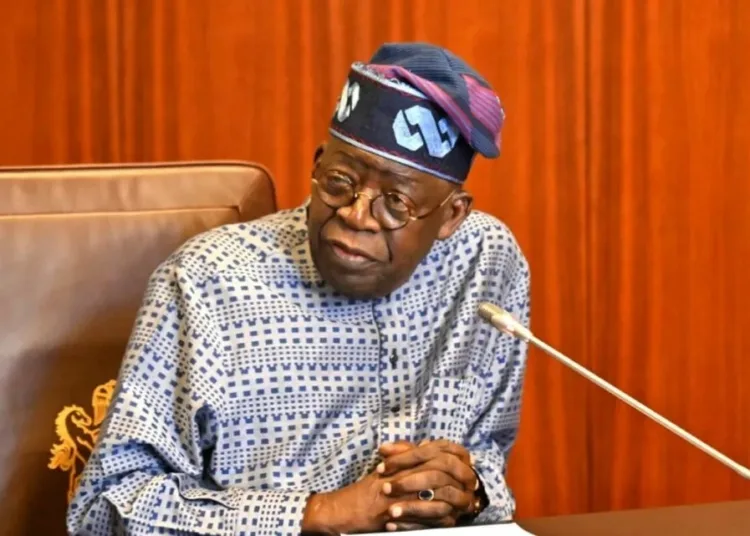
President Bola Ahmed Tinubu has defended his administration’s continued reliance on external borrowing, arguing that loans secured from international financial institutions and commercial banks should be judged by the infrastructure they deliver, the jobs they create and the economic opportunities they generate.
The President maintained that Nigeria cannot achieve its ambition of becoming a $1 trillion economy by 2030 without substantial investment in critical infrastructure, including highways, electricity, commercial ports, healthcare, education and industrial development.
His position comes amid growing public debate over Nigeria’s rising debt obligations and a fresh borrowing proposal estimated at approximately $21.7 billion, which has attracted criticism from opposition figures and organised labour.
In an essay titled “From Reforms to Delivery: Our Infrastructure Investment and Growth Strategy,” released through his Special Adviser on Information and Strategy, Bayo Onanuga, Tinubu argued that the central issue should not simply be how much the country borrows, but what the borrowed funds accomplish.
“The real question is not how much we borrow, but what we build, what value we create and what future we leave behind,” the President stated.
His comments represent the administration's attempt to explain the economic rationale behind its borrowing strategy and reassure Nigerians that the funds are intended to support productive investments rather than merely finance government expenditure.
1. Major Infrastructure Projects Identified by Tinubu
The President identified several major infrastructure projects expected to benefit from the proposed borrowing programme.
An aerial view of the Lagos Calabar Coastal Highway
Lagos–Calabar Coastal Highway
The project is expected to improve transportation along Nigeria's coastal corridor, facilitate trade and tourism, and connect economic centres.
CCTV, security lights up Sokoto–Badagry highway
Sokoto–Badagry Superhighway
Intended to improve connectivity across northern and southwestern Nigeria, facilitating the movement of agricultural products and commercial goods.
Kano Chronicle (@KanoChronicle) on X
Trans-Sahara Superhighway
Expected to strengthen regional transportation links and support cross-border trade.
Electricity Grid Upgrades
Investment in electricity infrastructure is intended to improve power transmission, reliability and industrial productivity.
Modernisation of Commercial Ports
The government intends to modernise key commercial ports in Lagos to improve cargo handling, trade efficiency and international competitiveness.
Tinubu+2
2. Government Projects Billions in Economic Benefits
Tinubu highlighted the Lagos–Calabar Coastal Highway as an example of how infrastructure investment could stimulate economic activity.
According to projections presented by the President:
- Logistics costs along the highway corridor could decline by 15–20 per cent.
- The project could contribute up to 2 per cent to Nigeria's GDP through increased trade, tourism and industrial activities.
- Approximately 100,000 direct jobs could be generated in construction and engineering.
- More than 150,000 indirect jobs could emerge across logistics, materials supply and related industries.
These figures are government projections, not independently established employment or economic outcomes. Their eventual realisation will depend on project completion, private-sector participation and actual economic utilisation.
The President also argued that infrastructure investments in healthcare, education and vocational training would complement road and electricity development by strengthening human capital and improving productivity.
The Guardian Nigeria+1
3. The $21.7 Billion Borrowing Controversy
One of the most significant issues surrounding the President's defence is the proposed additional external borrowing.
On October 27, 2026, Tinubu requested legislative approval for a supplementary external borrowing programme comprising:
| Proposed borrowing | Amount |
| US dollar loan | $20.52 billion |
| Euro loan | €1.05 billion |
| Approximate combined value | $21.7 billion |
The proposed financing covers the 2026–2027 fiscal period and is intended to support infrastructure, agriculture, healthcare, education, water supply, security, employment generation and financial management reforms.
The request was referred to the Senate Committee on Local and Foreign Debts for further consideration, alongside relevant legislative committees.
Importantly, this is a proposed borrowing programme requiring legislative consideration; it should not be presented as money already fully disbursed or spent.
Reuters+2
4. Opposition and Labour Concerns Over Continued Borrowing
The administration's borrowing strategy has attracted questions from organised labour and opposition figures.
The Nigeria Labour Congress (NLC) has questioned the justification for additional foreign borrowing, particularly against the background of increased government revenue and concerns about the country's existing debt obligations.
The concerns centre on several issues:
- Whether Nigeria's growing borrowing commitments are sustainable.
- Whether the government can demonstrate measurable economic returns from previously borrowed funds.
- Whether project costs and implementation arrangements are sufficiently transparent.
- Whether the repayment obligations could place additional pressure on future government budgets.
- Whether the benefits of infrastructure spending will translate into improved living conditions for ordinary Nigerians.
These questions have placed accountability and transparency at the centre of the national borrowing debate.
Tinubu+1
5. Tinubu Cites Improvements in Economic Indicators
In defending his economic policies, the President also presented several economic indicators which he said demonstrated progress since his administration introduced major reforms in May 2023.
According to figures cited in his essay:
| Economic indicator | Government-reported figure |
| Real GDP growth, Q2 2026 | 4.43% |
| Headline inflation, September 2026 | 14.63% |
| Headline inflation, September 2025 | 20.98% |
| Gross external reserves, October 9, 2026 | $55.1 billion |
| Net external reserves | Approximately $46 billion |
| Tax-to-GDP ratio | 12.5% |
| Previous tax-to-GDP ratio | 7% |
Tinubu attributed these developments to the removal of petrol subsidies, foreign exchange reforms, tax reforms and other economic measures introduced by his administration.
However, improvements in macroeconomic indicators do not automatically mean that households have recovered from the effects of higher food prices, transportation costs, electricity expenses and other essential living costs.
The distinction between economic growth and improvements in household welfare remains important when assessing the impact of government policies.
The Guardian Nigeria+2
6. The $1 Trillion Economy Ambition
Tinubu reiterated his administration's ambition to build a $1 trillion Nigerian economy by 2030.
He argued that achieving this target would require sustained investment in transportation, electricity, industrial infrastructure, agriculture and human capital.
The President believes that improved infrastructure will reduce the cost of doing business, attract foreign investment, expand industrial production and create employment opportunities.
He also maintained that Nigeria's improving international financial standing could help the country secure longer-term financing at more competitive borrowing rates.
Nevertheless, achieving a $1 trillion economy will require more than securing loans. It will depend on productivity, investment, manufacturing capacity, exchange-rate stability, employment growth and improvements in citizens' purchasing power.
The Guardian Nigeria+1
7. Five Economic Priorities Outlined by the President
Tinubu identified five areas that his administration intends to prioritise in the next phase of its economic strategy:
1. Food affordability and energy price stability: Addressing the cost of essential commodities and energy.
2. Budget harmonisation and fiscal discipline: Improving government financial management and coordination.
3. Infrastructure development: Completing major projects and investing in critical national infrastructure.
4. Economic policy and regulatory efficiency: Improving the policy environment to encourage investment and economic activities.
5. Household support and human development: Providing targeted assistance to vulnerable households while investing in education, healthcare and skills development.
The President said the success of his administration would ultimately be measured by completed projects, increased investment, employment generation and improvements in the living standards of Nigerians.
The Guardian Nigeria+1
8. The Bigger Question: Will More Borrowing Improve the Lives of Nigerians?
Beyond the government's economic projections, the latest borrowing debate raises a fundamental question about Nigeria's economic future: how will the benefits of these loans reach ordinary citizens?
Nigeria has significant infrastructure requirements. Poor roads, inadequate electricity, expensive transportation, limited industrial capacity and insufficient healthcare infrastructure continue to affect economic development.
Borrowing to address these challenges can potentially generate long-term economic benefits. However, the outcome depends heavily on responsible project selection, transparent procurement, effective implementation and proper management of public funds.
For millions of Nigerians struggling with the cost of food, transportation, housing, healthcare and education, the ultimate measure of economic reform is not simply the country's GDP growth or the number of infrastructure projects announced.
It is whether families can afford basic necessities, businesses can operate profitably, young people can secure employment and citizens can experience tangible improvements in their standard of living.
The government therefore faces an important responsibility: ensuring that the loans it seeks translate into completed projects, measurable economic benefits and opportunities that justify the financial obligations being passed on to future generations.
The debate over Nigeria's borrowing programme is consequently not just about how much the country should borrow. It is also about transparency, accountability, repayment capacity and whether the benefits will justify the cost.
Note:
Nigeria needs infrastructure investment, but infrastructure financing must go hand in hand with accountability.
President Tinubu says the proposed loans will help build roads, improve electricity, modernise ports, generate employment and move Nigeria towards a $1 trillion economy by 2030.
However, Nigerians also deserve clear answers about project costs, loan conditions, repayment schedules, implementation timelines and the measurable benefits of previous borrowing.
The critical test will be whether these investments produce lasting economic improvements without imposing an unsustainable financial burden on future generations.
Securing loans is one thing. Delivering results that Nigerians can see and feel is another.