

United States | News
US Muslims Face Growing Anxiety Amid Hate Attacks Targeting Abdul El-Sayed, But Community Remains Resilient
International | United States | Religion & Human Rights
The report focuses on concerns within Muslim communities across the United States following hate attacks and hostility directed at Abdul El-Sayed. It raises broader questions about anti-Muslim discrimination, religious freedom, political intolerance and the safety of Muslim Americans.
Anti-Muslim Rhetoric Raises Alarm in Michigan
The incident has intensified concerns among Arab and Muslim Americans, particularly in Dearborn, Michigan, which has a significant Arab and Muslim population.
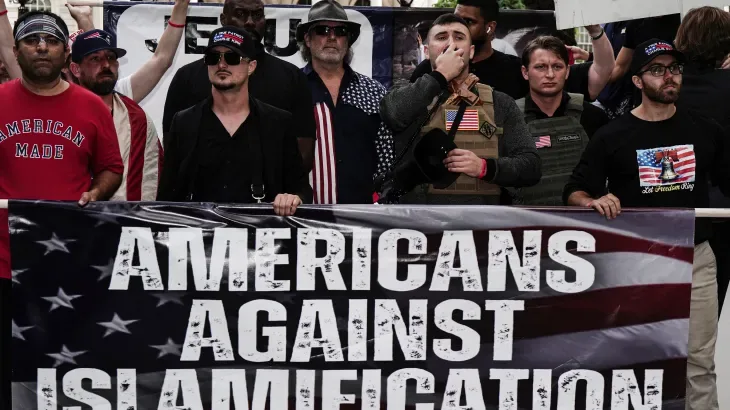
According to Al Jazeera's investigation by Ali Harb, far-right provocateur Jake Lang staged an anti-Muslim demonstration outside a political rally in Detroit attended by supporters of former US President Barack Obama.
Lang and his associates reportedly shouted hostile slogans against Muslims while displaying campaign signs supporting Republican Senate candidate Mike Rogers, who is competing against Democratic candidate Abdul El-Sayed.
The demonstration has become part of a wider controversy surrounding the use of religion and ethnic identity in Michigan's Senate race.
Trump's Remarks Fuel Controversy
US President Donald Trump has repeatedly targeted El-Sayed over his Muslim faith and Egyptian heritage.
Trump has reportedly mocked his name, referred to him as a "jihadist" and suggested that his election to the Senate could create national security concerns.
Republican candidate Mike Rogers has also questioned El-Sayed's background, arguing that his concerns relate to national security rather than religion.
However, El-Sayed and his supporters have rejected the allegations, describing them as politically motivated attacks unsupported by evidence.
Other Republican figures, including Senator Ted Cruz and Health Secretary Robert F. Kennedy Jr., have also made controversial statements concerning El-Sayed and the wider Arab and Muslim community.
Dearborn Residents Report Increasing Threats
Dearborn Mayor Abdullah Hammoud told Al Jazeera that the city has experienced increasing threats through social media, emergency telephone calls and other communication channels.
He expressed concern about the frequency of threats directed at residents and the potential consequences for community safety.
Muslim American activist Suehaila Amen also described the atmosphere as increasingly hostile, arguing that attacks from influential political figures risk encouraging discrimination against ordinary Muslim Americans.
She stressed that Muslims and Arab Americans are an integral part of American society and should not be treated as outsiders.
Muslim Community Refuses to Be Intimidated
Despite the growing concerns, Muslim and Arab American community leaders say they are determined to remain active in public life.
Rather than retreating in fear, some advocates are encouraging greater political participation, community organization and support for candidates they believe will defend their rights.
Congresswoman Rashida Tlaib also expressed concern about the impact of anti-Muslim political advertisements on children, saying the rhetoric has become distressing for Muslim families.
The report further recalls a deadly shooting outside a mosque complex in San Diego earlier in the year, which authorities described as a hate crime.
What the Controversy Means for American Democracy
The controversy surrounding Abdul El-Sayed highlights broader questions about religious freedom, equal citizenship and the treatment of minority communities in American politics.
At the center of the debate is whether a candidate's religious identity and ethnic background should become grounds for questioning their loyalty or suitability for public office.
The controversy also demonstrates how political rhetoric can affect communities beyond the immediate electoral contest, particularly when public figures make statements that critics consider discriminatory.
Importantly, allegations connecting El-Sayed to extremist organizations remain disputed and have not been substantiated in the reporting reviewed here.
Note:
America's democratic principles include freedom of religion, equal protection under the law and the right of citizens to participate in public service regardless of their religious background.
The controversy in Michigan raises an important question: Can a political system guarantee equal citizenship if religious identity becomes a weapon in electoral competition?
The response from Muslim American communities suggests that, despite their concerns, many remain committed to civic participation and defending their place in American society.
Source and further reading: Al Jazeera – US Muslims concerned but resilient as hate attacks target Abdul El-Sayed.
Editorial note: This report is based on Al Jazeera's October 29, 2026 investigation. Allegations and political statements are attributed to the individuals who made them; they should not be presented as independently established facts.