

Security
Tinubu Inducts Five New Helicopters into Nigerian Air Force Fleet to Strengthen Fight Against Terrorism
DEFENSE & SECURITY | 30 October 2026
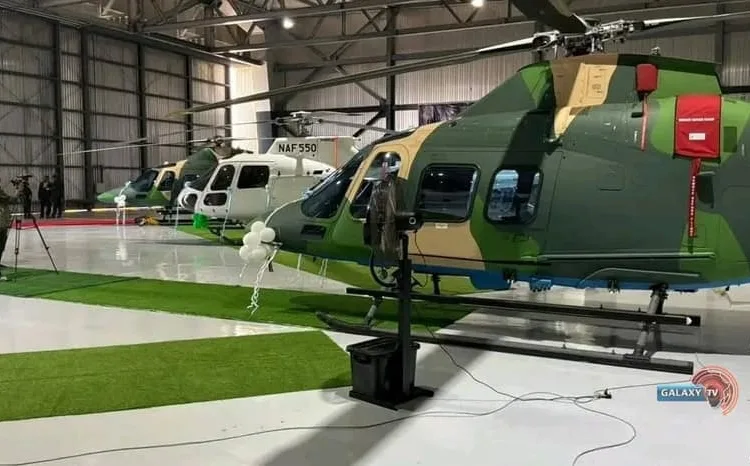
President Bola Ahmed Tinubu has commissioned five newly acquired helicopters into the Nigerian Air Force (NAF) inventory as part of the Federal Government's efforts to strengthen military operations against terrorism, banditry, kidnapping and other security threats across Nigeria.
The commissioning ceremony took place on Thursday, October 29, 2026, at the Presidential Air Fleet hangars in Abuja. Tinubu performed the inauguration alongside the Chief of the Air Staff, Air Marshal Sunday Aneke, and other senior military officials.
Five helicopters added to the Air Force fleet
The newly inducted aircraft comprise:
- Two Airbus H-125 helicopters: Designed to improve light-helicopter operations, surveillance, tactical mobility and operational flexibility.
- Three AW109 Trekker B helicopters: Manufactured by Italian aviation company Leonardo, these aircraft are expected to strengthen intelligence gathering, surveillance, reconnaissance, armed reconnaissance, close air support and combat search-and-rescue operations.
According to the report, all five helicopters were delivered to the Nigerian Air Force in September 2026.
How the helicopters will support military operations
Speaking about the acquisition, Chief of the Air Staff, Air Marshal Sunday Aneke, explained that the AW109 Trekker helicopters would significantly expand the Air Force's capacity to gather intelligence, monitor hostile movements and provide operational support to ground troops.
The Airbus H-125 helicopters, meanwhile, are expected to improve aircraft availability and provide military commanders with greater flexibility across different operational theatres.
The Air Force leadership also emphasized that acquiring modern aircraft is only one aspect of military modernization. Proper maintenance, technical expertise, logistics and personnel training are equally important to ensure that the aircraft remain operationally ready.
Nigeria's persistent security challenges
The acquisition comes amid continuing security challenges across several parts of Nigeria.
Terrorist activities, banditry, kidnapping and attacks on rural communities have remained major national security concerns, placing considerable pressure on the country's armed forces.
The new helicopters are expected to improve aerial surveillance, intelligence gathering and coordination between air and ground forces.
However, their actual impact will depend on effective deployment, operational readiness, intelligence coordination and the military's ability to sustain pressure on criminal and insurgent groups.
The bigger picture: Can new military equipment deliver lasting security?
While the induction of five helicopters represents an addition to Nigeria's military capabilities, the country's security challenges require more than the acquisition of sophisticated equipment.
Sustainable improvements will also depend on effective intelligence networks, adequate funding, troop welfare, accountability, inter-agency cooperation and the prosecution of individuals financing or facilitating terrorism.
Nigerians will ultimately measure the success of these investments by whether communities become safer, kidnapping incidents decline, displaced residents can return home and economic activities recover in affected areas.
The central question is whether these additional military assets will translate into measurable improvements in security across the country.
Factful24 Editorial Takeaway
The commissioning of five new helicopters marks another development in the Federal Government's military modernization programme. However, Nigerians need more than announcements of new military acquisitions; they need tangible improvements in safety and security.
The government and military authorities must demonstrate that investments in defense equipment are translating into fewer attacks, successful rescue operations, reduced criminal activities and lasting peace.
Military modernization should ultimately be measured by results on the ground, not simply by the number of aircraft added to the inventory.