

Middle East | News
IRAN WAR: TEHRAN WARNS OF ‘POWERFUL RESPONSE’ AS TRUMP HOLDS TALKS WITH NETANYAHU AMID FEARS OF FRESH MILITARY ESCALATION
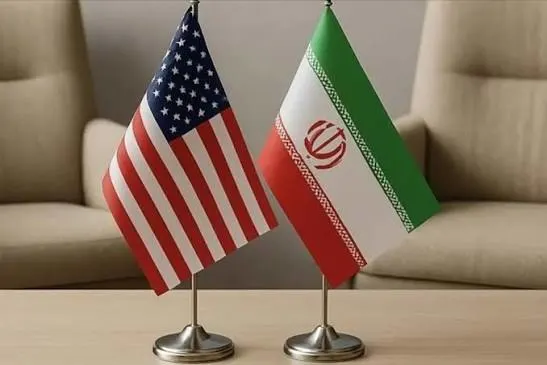
Iran has warned that any renewed US-Israeli military attack will trigger a powerful response, as diplomatic efforts struggle to prevent another major confrontation in the Middle East. President Donald Trump has confirmed holding talks with Israeli Prime Minister Benjamin Netanyahu, raising fresh questions about Washington's next move.
A region on the edge of renewed conflict
The Middle East is facing renewed uncertainty as tensions between Iran, the United States and Israel threaten to escalate following months of military confrontation.
On November 2, 2026, Iranian officials reiterated that Tehran was prepared to respond forcefully to any fresh military action against the country.
The warning comes as diplomatic efforts continue to prevent a return to large-scale hostilities, with Qatar playing an important mediating role between Washington and Tehran.
The situation has become increasingly delicate following reports that American and Israeli military action could resume after the November 3 US midterm elections.
Although negotiations have not completely collapsed, the opposing sides remain divided over the conditions required to end the conflict.
Trump confirms conversation with Netanyahu
US President Donald Trump has confirmed that he held a telephone conversation with Israeli Prime Minister Benjamin Netanyahu on Saturday, October 31.
Speaking to reporters on Sunday, November 1, Trump described the conversation as a "very good talk" and confirmed that the war with Iran was discussed.
However, he declined to disclose the substance of their discussions.
The conversation is attracting considerable international attention because Washington and Tel Aviv face difficult decisions over whether to prioritize diplomatic negotiations or resume military operations against Iran.
Reports citing sources familiar with the discussions suggest that Netanyahu favored renewed military action, while Trump wanted to allow diplomatic efforts more time.
The reported differences have raised questions about how closely Washington and Tel Aviv are aligned on the next phase of the conflict.
Iran warns countries against supporting US-Israeli attacks
Iran has expanded its warning beyond Washington and Tel Aviv, cautioning other countries against providing assistance for any renewed military operation.
Iranian Foreign Ministry spokesperson Esmail Baqaei said on Monday that Tehran was prepared for any eventuality and that countries assisting the United States and Israel in an attack should not assume they would escape the consequences.
He warned that any renewed aggression would provoke a decisive Iranian response.
Baqaei also insisted that Iran's territorial integrity and national sovereignty remained non-negotiable.
His remarks signal that Tehran could regard military assistance to its adversaries as grounds for retaliation, potentially widening the geographical scope of the confrontation.
Qatar-led diplomacy struggles to prevent another war
Diplomatic efforts have continued despite the departure of an Iranian delegation from Qatar following several days of discussions.
According to Iranian officials cited by the Associated Press, communication between Washington and Tehran was continuing through mediators after the delegation left.
Qatar has emerged as a central diplomatic intermediary, facilitating the exchange of messages between the two governments.
Iranian Deputy Foreign Minister Kazem Gharibabadi reportedly visited Qatar over the weekend to help facilitate the negotiations.
However, significant disagreements remain.
Tehran insists that the US naval blockade of Iranian ports must end and that its demands must be respected before a comprehensive agreement can be reached.
Washington, meanwhile, wants negotiations to address Iran's nuclear programme and prevent the country from obtaining nuclear weapons.
Iran wants the nuclear issue addressed at a later stage.
This disagreement represents one of the biggest obstacles to a lasting diplomatic settlement.
Strait of Hormuz: A dangerous flashpoint for global trade
The Strait of Hormuz remains one of the most sensitive strategic points in the unfolding crisis.
The waterway is a critical international shipping corridor through which a substantial proportion of the world's seaborne oil trade passes.
ABC News reported that the United Kingdom Maritime Trade Operations Center received reports of two attacks involving commercial vessels on Sunday.
In the first incident, a merchant vessel reported that another ship in the Strait of Hormuz had been struck by an unidentified projectile.
In a separate incident, a tanker traveling southeast through the Persian Gulf was reportedly hit by two unidentified projectiles approximately 72 nautical miles east of Ras al-Khafji, Saudi Arabia.
The incidents underscore the growing risks facing commercial shipping and energy transportation in the region.
A prolonged disruption could increase shipping insurance premiums, raise energy prices, threaten supply chains and place additional pressure on economies already struggling with inflation.
For countries heavily dependent on imported petroleum products, including Nigeria, volatility in international energy markets could have significant consequences.
Iran expands military warnings as regional tensions deepen
Iran's new Supreme Leader, Ayatollah Mojtaba Khamenei, has reportedly instructed military commanders to prepare for an immediate response to threats from the United States and Israel.
According to the Associated Press, he called for Iran's response to any threat to extend beyond geographical boundaries and encouraged the expansion of potential targets.
Iran's security chief, Mohsen Rezaei, also warned that any renewed attack would attract devastating retaliation involving new weapons.
The statements suggest that Tehran is attempting to strengthen its deterrence posture while keeping diplomatic channels open.
Gulf countries fear a wider regional conflict
The crisis is increasingly worrying neighboring countries, particularly those situated around the Persian Gulf.
At the Manama Dialogue security conference in Bahrain, United Arab Emirates presidential adviser Anwar Gargash warned that the differences between Washington and Tehran could produce serious consequences if diplomatic efforts fail.
Egypt's Foreign Minister, Badr Abdelatty, also warned that another escalation would be more dangerous and destructive.
Meanwhile, China has announced plans to send a special envoy to Iran, Oman and Saudi Arabia in November as Beijing pushes for renewed dialogue.
China's diplomatic intervention reflects growing international concern that another major confrontation could destabilize the wider Middle East.
What the crisis means for the global economy
The consequences of renewed US-Israeli military action against Iran could extend far beyond the Middle East.
Three major areas deserve particular attention:
1. Global oil prices: Any disruption to the Strait of Hormuz could create uncertainty in international energy markets, potentially increasing crude oil prices.
2. International trade: Commercial shipping routes could become more expensive and dangerous, affecting transportation costs, insurance premiums and global supply chains.
3. Financial market instability: Investors could become more cautious as geopolitical uncertainty increases, potentially affecting currencies, commodity markets and international investment flows.
For Nigeria, the implications are particularly important. Higher international crude prices could increase government oil revenue, but they could also raise domestic fuel costs and intensify inflationary pressures, depending on exchange rates, domestic supply and fiscal policy.
The crisis therefore presents both economic opportunities and serious risks for oil-producing countries.
The Bigger Picture: Is another Middle East war approaching?
The latest developments reveal a dangerous contradiction in the international response to the Iran conflict.
While diplomatic negotiations continue, military threats are becoming increasingly explicit. Washington is keeping its options open, Israel is reportedly pressing for renewed military action, and Tehran is warning that any fresh attack could trigger a much wider confrontation.
The most important question is whether diplomatic mediators can bridge the differences before military calculations take precedence.
The departure of Iran's delegation from Qatar does not necessarily mean negotiations have collapsed. Continued communication through mediators suggests that diplomatic opportunities remain.
However, with the Strait of Hormuz facing renewed security threats and regional governments increasingly concerned, the margin for diplomatic failure is narrowing.
The Middle East may be approaching another defining moment, one with consequences that could reach every continent.
Note:
The Iran crisis is no longer simply a confrontation between Tehran, Washington and Tel Aviv. It has become a major international security and economic concern.
Trump's discussions with Netanyahu, Iran's escalating warnings, attacks on commercial shipping and Qatar's continuing mediation efforts illustrate how fragile the situation has become.
The world now faces a critical choice: whether diplomacy can prevent another devastating military confrontation or whether the region is moving towards a new and potentially wider war.
One decision in Washington, one military calculation in Tel Aviv or one miscalculation in the Persian Gulf could have consequences for the entire world.
Sources and further reading
- ABC News – Iran live updates: Tehran warns of powerful response.
- Associated Press via ABC News – Where things stand on Iran.
- CBS News – US-Iran negotiations and threats of renewed fighting.
- The Washington Post – Trump and Netanyahu discuss Iran.
Editorial standard: Factful24 | Verified Facts. Reporting date: November 2, 2026. Statements attributed to officials and military authorities are presented as claims, not independently established battlefield assessments. No prediction of renewed attacks is presented as a confirmed military decision.