

Economy
Three Public Service Unions Reject FG’s ₦70,000 Transport Allowance, Back TUC’s Demand for Salary Increase
Labour & Economy | November 3, 2026
Three public service trade unions in Nigeria have rejected the Federal Government’s proposed ₦70,000 monthly transportation allowance for workers, describing the intervention as inadequate amid rising living costs and mounting economic pressures.
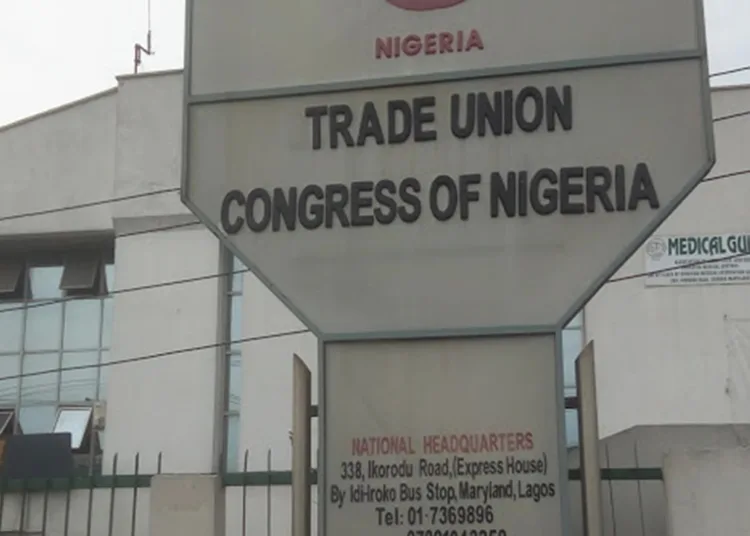
The unions have also thrown their weight behind the Trade Union Congress (TUC), which insists that Nigerian workers need meaningful salary increases rather than temporary financial relief.
The development highlights growing disagreements within organised labour over how best to address workers’ declining purchasing power and the increasing cost of living in Nigeria.
The Three Unions Challenge Labour Negotiating Council
The unions are:
- Senior Staff Association of Statutory Corporations and Government-Owned Companies (SSASCGOC).
- Senior Staff Association of Universities, Teaching Hospitals, Research Institutes and Associated Institutions (SSAUTHRIAI).
- Nigerian Union of Allied Health Professionals (NUAHP).
In a joint statement signed by their presidents, Kayode Alakija, Dr John Alli and Dr Kamal Ibrahim, the organisations said they were neither consulted nor invited to meetings where the disputed position was discussed.
They consequently disowned a statement issued in the name of the Joint National Public Service Negotiating Council (JNPSNC) on October 30, 2026.
The unions argued that the statement was unauthorised because they neither participated in its preparation nor approved anyone to represent their interests.
They also alleged that the JNPSNC's Vice-Chairman, representing the Association of Senior Civil Servants of Nigeria (ASCSN), was excluded from the consultation process.
According to the unions, ASCSN represents more than 300,000 public servants, making its alleged exclusion a serious concern about the credibility of the negotiating process.
Why the Unions Consider ₦70,000 Inadequate
The unions maintained that the financial challenges confronting Nigerian workers extend beyond transportation expenses.
They identified rising costs of:
- Food and household necessities.
- Transportation and commuting.
- Housing and accommodation.
- Healthcare and other essential services.
Their argument is that a temporary transport allowance cannot compensate for the broader erosion of workers' purchasing power.
They insist that improved salaries, fair remuneration and sustainable wage adjustments are necessary to restore workers' living standards.
Dispute Over the Previous Minimum Wage Adjustment
The unions also raised concerns about the implementation of consequential salary adjustments following the previous minimum wage review.
They alleged that instead of applying the proposed 133 per cent adjustment to the lowest-paid worker and cascading the appropriate increases across the salary structure, the negotiating council agreed to a flat ₦40,000 addition across the board.
They argued that this arrangement undermined existing salary differentials and disadvantaged some categories of workers.
They are therefore demanding transparency and a review of the adjustment.
Background: The Growing Disagreement Between NLC and TUC
The dispute comes amid growing differences between Nigeria's two major labour centres, the Nigeria Labour Congress (NLC) and the Trade Union Congress (TUC).
The Federal Government announced a ₦70,000 monthly transportation intervention for public servants for six months, beginning November 2026, following negotiations involving the government and the NLC.
The TUC subsequently rejected the arrangement, arguing that workers need permanent salary increases rather than temporary wage interventions.
The congress has advocated a substantial increase in the minimum salary, suggesting that the Federal Government could raise the lowest workers' pay to ₦300,000.
However, the JNPSNC defended the agreement, maintaining that the negotiations followed extensive discussions involving the government, NLC and other participating labour organisations.
What This Means for Nigerian Workers
The latest development raises important questions about labour representation, collective bargaining and the effectiveness of government interventions designed to cushion economic hardship.
While the ₦70,000 allowance could provide some temporary financial relief to eligible public servants, disagreements over its adequacy and the consultation process could complicate efforts to achieve a unified labour position.
For millions of Nigerian households struggling with the rising cost of food, transportation, electricity, healthcare and accommodation, the central question remains whether government interventions are translating into meaningful improvements in living standards.
The disagreement also highlights the importance of ensuring that every recognised labour organisation has a voice in negotiations affecting its members.
Ultimately, workers need more than announcements and temporary financial assistance. They need predictable earnings, enforceable agreements and economic conditions that allow their salaries to meet basic household needs.
Note
The controversy surrounding the ₦70,000 transport allowance reflects a wider challenge facing Nigeria's workforce: the growing gap between wages and the cost of living.
Whether the government chooses temporary financial support or broader salary restructuring, the success of any intervention should be measured by its actual impact on workers' purchasing power.
Nigerian workers are not simply asking for transport money. They are demanding a standard of living that makes their labour worthwhile.
Sources and verification
Editorial note: The allegations concerning exclusion and salary adjustments are attributed to the unions and have not been presented as independently established findings.