

United States | News
Inside Minneapolis’ Somali Mall: Ilhan Omar’s Appearance Rekindles Debate Over Immigration, Integration and American Identity
FACTFUL24 | INTERNATIONAL NEWS & POLITICS
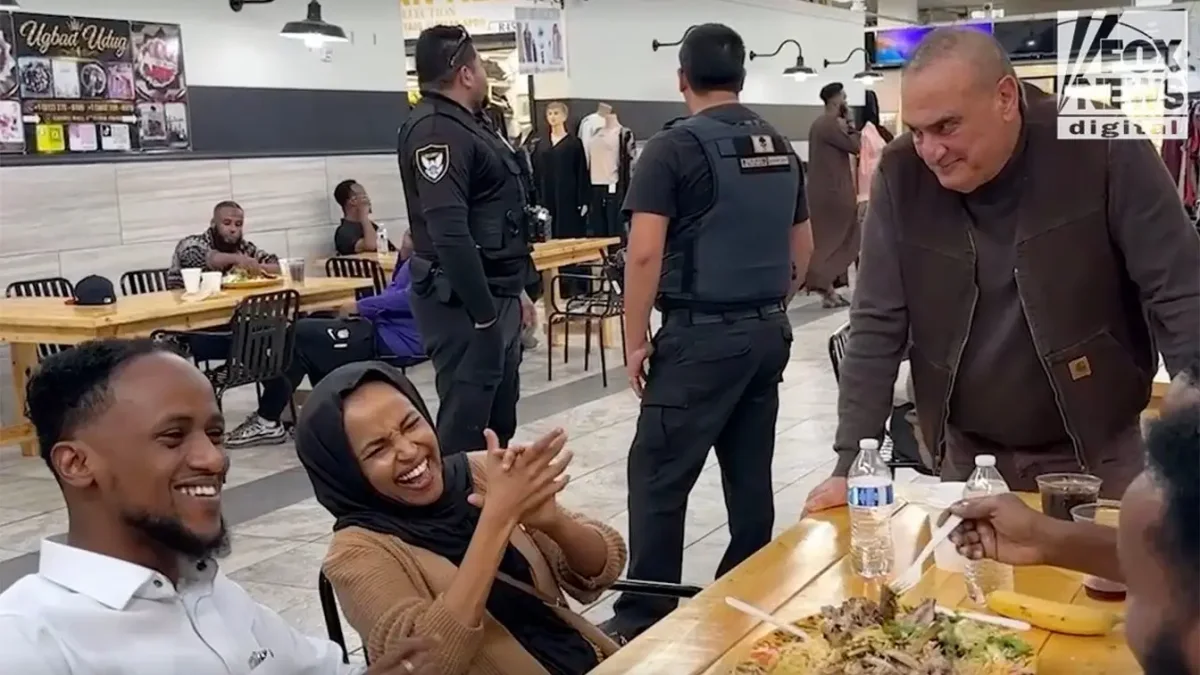
The appearance of US Congresswoman Ilhan Omar at Minneapolis’ Karmel Mall has reignited debate over immigration, cultural integration and the challenges of building a shared national identity in an increasingly diverse America.
A report by Fox News, published on November 1, 2026, examines the Somali-dominated commercial center, its role in the immigrant community and the wider questions surrounding assimilation into American society.
Karmel Mall: A Commercial Center Built Around Somali Culture
Located in Minneapolis, Minnesota, Karmel Mall is a major business and social center serving the Somali-American community.
The four-storey complex features hundreds of businesses, including traditional clothing shops, restaurants, barbershops, currency exchange services, travel agencies, telecommunications outlets and beauty businesses.
Many of its shops cater to Somali customers, while its food court offers traditional East African cuisine.
The mall also houses an Islamic weekend school where children receive Quranic instruction and participate in recreational activities.
Its owner, Basim Sabri, describes the property as a business incubator where entrepreneurs can establish small businesses, develop their customer base and eventually expand into larger commercial spaces.
Sabri maintains that the mall is open to everyone and represents an opportunity for Somali immigrants to participate in America's entrepreneurial economy.
He also argues that the commercial center demonstrates how members of the Somali community are establishing businesses and building livelihoods in their adopted country.
Ilhan Omar's Appearance Draws Political Attention
The mall attracted additional national attention following the appearance of Democratic Congresswoman Ilhan Omar.
According to Fox News, Omar visited the establishment on October 23, 2026, alongside Minnesota Attorney General Keith Ellison and other associates.
The visit marked her first reported public appearance following a federal raid on her Washington, DC, residence on October 12.
Her appearance at the mall brought renewed media attention to her political relationship with Minnesota's Somali community, which represents an important constituency in her congressional district.
However, the circumstances surrounding the reported raid and any associated investigation should be distinguished from established findings. A raid alone does not establish wrongdoing by the person whose property is searched.
Immigration and Assimilation: The Growing American Debate
Beyond Omar's appearance, the Fox News report raises a broader question about how immigrant communities integrate into American society.
Immigration has historically contributed to America's economic development, cultural diversity and population growth. However, debates continue over the extent to which newcomers should adopt the language, institutions and shared civic values of their host country while retaining their cultural identities.
Steven Camarota, research director at the Center for Immigration Studies, argues that modern technology, international travel and continued connections with countries of origin can influence the pace of cultural assimilation.
He also identifies disagreements within American society about national identity and the expectations placed on immigrants.
His argument is that integration is influenced not only by immigrants themselves but also by the social and institutional environment into which they arrive.
Poverty, Education and Public Assistance Statistics
One of the most significant aspects of the report concerns socioeconomic conditions among Somali immigrant households in Minnesota.
Fox News cited a December 2025 report from the Center for Immigration Studies, which presented figures suggesting substantial poverty, educational and public-assistance challenges among sections of the population.
The findings highlighted by Fox News included:
- More than half of children living in households of Somali-born immigrants in Minnesota were reportedly living in poverty.
- Approximately half of Somali-born immigrants who had lived in the United States for more than a decade reportedly did not speak English very well.
- The report estimated that 89% of Somali households received some form of public assistance.
- It also reported that 39% lacked high school diplomas.
These figures require context. Different studies use different definitions of public assistance, populations and measurement periods.
FactCheck.org, examining the broader debate over Somali immigration and public assistance in December 2025, reported that Minnesota's state demographer provided alternative American Community Survey estimates.
For 2019–2023, approximately 8% of people reporting Somali ancestry in Minnesota received public-assistance income, while 60% received SNAP benefits and 78% had Medicaid coverage. The figures measure different programmes and should not be treated as interchangeable.
FactCheck.org also reported that approximately 95% of Somalis in Minnesota were US citizens and 58% were born in the United States.
The distinction is important: receiving public assistance does not automatically indicate unwillingness to integrate, and economic hardship should not be confused with cultural isolation.
The Economic Contribution of Immigrant Communities
Karmel Mall also offers another perspective on the immigration debate: entrepreneurship.
The businesses operating within the complex provide employment, commercial services and economic opportunities.
For many immigrant entrepreneurs, culturally familiar commercial centers can provide an accessible entry point into the wider economy.
They can help business owners overcome language barriers, build networks, attract customers and gradually establish themselves in competitive markets.
Sabri argues that many businesses begin inside the mall before expanding into larger commercial spaces.
This raises an important question about how immigrant business communities can contribute to economic development while simultaneously strengthening connections with the wider society.
What This Means for America's Immigration Debate
The controversy surrounding Karmel Mall reflects a larger challenge facing the United States.
How can a country preserve its national identity while accommodating people from different cultural, religious and linguistic backgrounds?
There are competing perspectives.
Some immigration researchers argue that stronger English-language proficiency, economic participation and shared civic identity are essential components of integration.
Others maintain that cultural preservation and participation in ethnic communities are not necessarily barriers to integration. Immigrants can retain their traditions, religious practices and languages while becoming active participants in their adopted country.
The distinction between cultural preservation and social isolation remains central to this debate.
Ultimately, the existence of a Somali-oriented commercial center cannot, by itself, establish whether assimilation has succeeded or failed. Broader evidence involving education, employment, language proficiency, civic participation and economic mobility is necessary.
FACTFUL24 ANALYSIS: Beyond the Headlines
The Karmel Mall story is bigger than a visit by a US congresswoman or the activities of a particular immigrant community.
It raises questions about the future of multicultural societies, immigration policy, economic inclusion and national identity.
For the United States, the challenge is finding a sustainable balance between welcoming immigrants, enforcing immigration laws, promoting economic independence and encouraging a common civic identity.
For immigrant communities, the challenge is equally significant: preserving cultural heritage while building meaningful relationships with the institutions and people of their adopted country.
The American experience demonstrates that integration is not simply about where immigrants shop, what language they speak at home or which cultural traditions they preserve. It is also about opportunity, participation, shared responsibilities and the ability to contribute to the wider society.
The debate should therefore be informed by reliable data rather than assumptions about entire national or ethnic communities.
Key Information
| Item | Details |
| Location | Minneapolis, Minnesota, USA |
| Commercial centre | Karmel Mall of Somalia |
| Owner | Basim Sabri |
| Political figure | Ilhan Omar |
| Other political figure | Keith Ellison |
| Original report | Fox News, November 1, 2026 |
| Main issues | Immigration, assimilation, entrepreneurship and public assistance |
Original report: Fox News – Inside the Somali Mall and the Assimilation Debate
Additional fact-checking: FactCheck.org – Examining Claims About Somalis and Public Assistance