

United States | News
Inside America’s Somali Community: Ilhan Omar’s Return to Minneapolis Mall Rekindles Debate Over Immigration and Assimilation
INTERNATIONAL NEWS REPORT | NOVEMBER 3, 2026
A visit to Minneapolis’ Karmel Mall has renewed questions about immigrant integration, cultural identity, economic opportunity and the challenges of building a shared national identity in an increasingly diverse United States.
MINNEAPOLIS, UNITED STATES — A Somali-focused commercial center in Minneapolis has become the center of renewed debate about immigration, cultural integration and the meaning of assimilation in the United States following Democratic Congresswoman Ilhan Omar’s return to public view after a federal search of her Washington, D.C., residence.
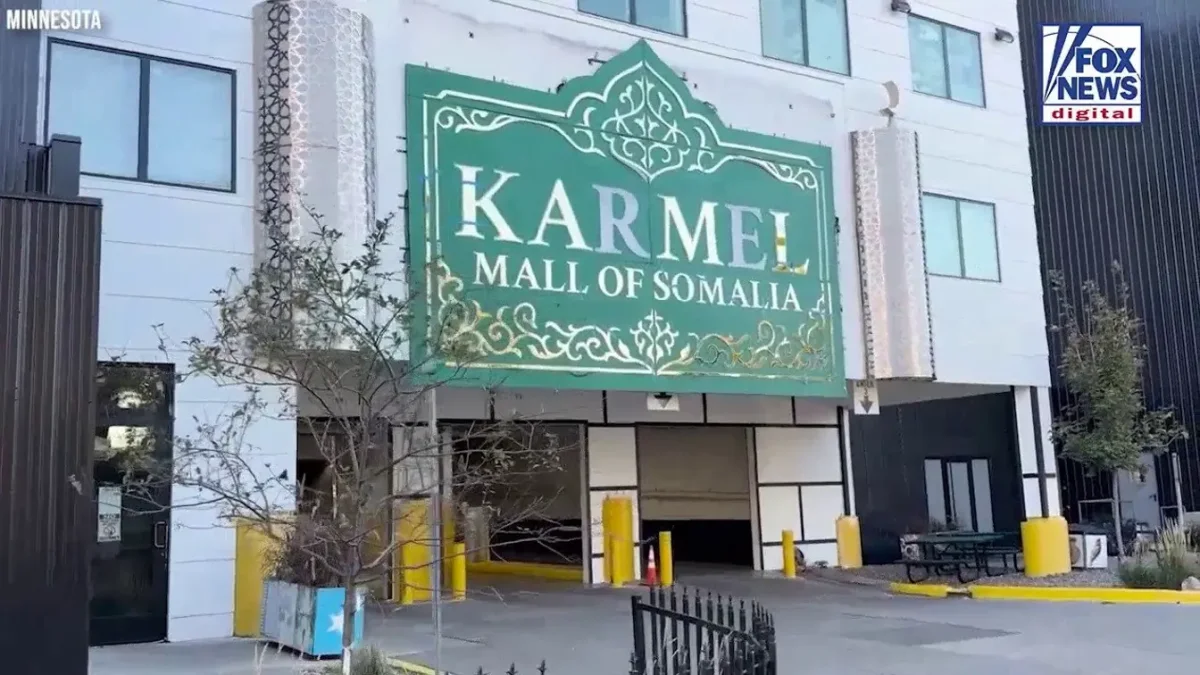
The Karmel Mall of Somalia, a major commercial and cultural gathering place for Minneapolis’ Somali community, attracted national attention after Omar appeared there in October alongside supporters and Minnesota Attorney General Keith Ellison.
A subsequent report by Fox News Digital offered a closer look at the shopping complex, highlighting its predominantly Somali businesses, traditional food outlets, fashion retailers, travel agencies, currency exchange services, barbershops and Islamic educational facilities.
The report has reignited a broader American conversation: Can immigrant communities preserve their cultural identities while becoming fully integrated into the economic, social and civic life of their adopted country?
Karmel Mall: More Than a Shopping Centre
Located in Minneapolis, Karmel Mall operates as more than a conventional retail destination. It serves as a commercial and social meeting point for Somali immigrants and other members of the surrounding community.
The complex accommodates businesses selling traditional Somali clothing, jewellery, fragrances and food. It also provides services such as international money exchange, telecommunications and travel arrangements connecting customers with destinations in East Africa and the Middle East.
A significant number of the businesses are reportedly operated by women, making the complex an important platform for entrepreneurship and economic participation.
The mall also houses an Islamic weekend school where children receive religious instruction and participate in recreational activities.
Its food court features Somali cultural symbols alongside Somali, Palestinian and American flags, reflecting the multiple cultural and national connections represented within the community.
Mall owner Basim Sabri described the complex as an entrepreneurial environment where small businesses can establish themselves, develop customer bases and eventually expand into larger commercial premises.
He argued that the center demonstrates how Somali immigrants are building businesses, creating economic opportunities and participating in the American dream.
However, its strong cultural identity has also become a subject of debate among immigration commentators who question whether the continued growth of ethnic enclaves encourages or limits integration into wider American society.
Ilhan Omar's Appearance Following Federal Raid
The renewed attention surrounding Karmel Mall is closely connected to the political controversy involving Congresswoman Ilhan Omar.
On October 12, 2026, federal immigration investigators conducted a court-authorised search of Omar's Washington, D.C., residence as part of an investigation reportedly concerning allegations of immigration-related fraud involving documentation completed by her late father when she was a child.
Omar, who was born in Somalia and later became a US citizen, has rejected the political characterization of the investigation, describing the operation as an attempt at political intimidation.
The search generated considerable political controversy, particularly because Omar is a prominent critic of President Donald Trump and the operation occurred shortly before the November 3 midterm elections.
Democratic lawmakers criticised the investigation, while administration officials defended the federal authorities' actions.
Importantly, the reported allegations remain subject to investigation and should not be treated as established wrongdoing.
Omar's subsequent appearance at Karmel Mall placed her back among members of the Somali-American community she represents in Congress, attracting further media attention to the complex relationship between immigration, identity and American politics.
The Assimilation Question: What Does the Evidence Say?
One of the most controversial aspects of the Fox News report concerns the socioeconomic circumstances of Somali immigrants in Minnesota.
Steven Camarota, research director at the Center for Immigration Studies, cited research published by the organisation in December 2025, highlighting challenges involving poverty, educational attainment, English proficiency and reliance on public assistance among Somali immigrant households in Minnesota.
According to figures presented in the report:
- More than half of children living in households headed by Somali-born immigrants in Minnesota were reported to be living in poverty.
- Approximately half of Somali immigrants who had lived in the United States for more than a decade reportedly did not speak English very well.
- The report estimated that 89% of Somali households received some form of public assistance.
- Approximately 39% of the Somali immigrant population examined reportedly lacked a high school diploma.
These figures were presented in comparison with figures for native-born Minnesotans.
They raise important questions about educational access, employment opportunities, language acquisition and the effectiveness of integration programmes.
However, the statistics should be interpreted within their specific research methodology and population. They do not establish that every Somali immigrant experiences the same difficulties, nor do they independently prove that cultural identity is responsible for socioeconomic challenges.
Why Cultural Enclaves Are Growing in Modern America
Camarota identified three broad developments that he believes have influenced immigrant assimilation in contemporary America.
1. Technology and international connectivity
Modern communication technology enables immigrants to maintain strong relationships with relatives, friends and institutions in their countries of origin.
International telephone calls, video communication, social media and affordable air travel make it easier to maintain cultural connections across national borders.
2. Changing attitudes towards assimilation
The debate over assimilation has also evolved.
Some commentators argue that immigrants should adopt a common national identity and learn the dominant language while participating fully in their host country's institutions.
Others maintain that integration should not require immigrants to abandon their heritage, religion, language or cultural traditions.
This disagreement reflects a wider American debate about national identity, multiculturalism and the meaning of citizenship.
3. Immigration patterns and population concentration
The concentration of immigrant communities in particular neighborhoods can create supportive economic and social networks.
Such environments can help newcomers access employment, housing, education and business opportunities.
However, critics argue that limited interaction with the wider population can create barriers to language development and social integration.
These explanations represent Camarota's interpretation, rather than a universally established conclusion about the causes of assimilation patterns.
The Other Side: Cultural Preservation Can Also Support Integration
The existence of a culturally distinct commercial center does not automatically demonstrate failed assimilation.
For many immigrant communities, ethnic businesses provide an entry point into the wider economy.
Small businesses create jobs, generate income, pay taxes and provide services to customers from different backgrounds.
Karmel Mall's owner maintains that the center helps entrepreneurs establish themselves before expanding into larger business locations.
The participation of Somali-American residents in local politics, education, business and public institutions also forms part of the wider integration picture.
There is an important distinction between cultural preservation and social isolation.
An immigrant can retain a mother tongue, practise a religion, wear traditional clothing and operate a culturally focused business while simultaneously becoming an active participant in the political and economic life of the United States.
The central policy question is therefore not whether immigrants should abandon their heritage, but whether they have meaningful opportunities to acquire language skills, access education, participate in employment and engage with the wider society.
The Wider Political Implications for the United States
The Karmel Mall controversy comes at a politically sensitive moment for the United States.
Immigration, border enforcement, citizenship, national identity and the integration of immigrant communities have become increasingly prominent subjects in national political discussions.
For Republicans, questions surrounding immigration enforcement and integration provide opportunities to advance arguments about border security, national cohesion and the responsibilities associated with citizenship.
For Democrats, the debate raises concerns about discrimination, religious freedom, minority representation and the treatment of immigrant communities.
Omar's political prominence adds another dimension because she represents a congressional district with a significant Somali-American population and has become one of the most recognizable Somali-born politicians in the country.
Her appearance at the mall has therefore become more than a routine political visit. It has drawn attention to the relationship between immigrant representation, community identity and national political divisions.
Reuters+1
What America Must Ultimately Address
The discussion surrounding Karmel Mall raises questions that extend beyond Minneapolis.
How should a country balance cultural diversity with a shared national identity?
What responsibilities should governments have in supporting language education, employment and economic participation among immigrant communities?
And how can societies distinguish between legitimate cultural preservation and genuine barriers to integration?
These questions are relevant not only to the United States but also to European countries, Canada, Australia and other destinations experiencing sustained immigration.
For policymakers, the challenge is to develop integration systems that encourage economic independence, educational achievement, civic participation and mutual understanding without treating cultural diversity itself as a failure.
The experience of Karmel Mall illustrates both sides of that debate: the economic opportunities created by immigrant entrepreneurship and the questions that arise when cultural communities maintain strong internal networks.
Ultimately, the success of immigration should not be measured simply by how much of their heritage newcomers leave behind. It should also be measured by their ability to participate, contribute, prosper and share responsibility within the societies they have chosen to call home.
Note:
The Karmel Mall debate highlights an important distinction in modern immigration policy: preserving cultural identity and integrating into a host society are not necessarily opposing objectives.
The more important measure is whether immigrant communities have access to education, employment, economic opportunity, language development and meaningful participation in national life.
America's immigration debate will continue, but evidence, fairness and informed public discussion should remain central to it.
Source basis: Fox News Digital reporting published November 1, 2026; Reuters reporting on the October 12 federal search; and research attributed to the Center for Immigration Studies. This is an independently structured editorial rewrite, not an endorsement of the original publication's conclusions.
Editorial recommendation: Use the headline above rather than adopting the original Fox News headline verbatim. It gives Factful24 a broader international angle and avoids presenting the disputed claim of failed assimilation as an established fact.
Original reporting and verification sources