

United States | News
TRUMP FACES NARROW WINDOW FOR POSSIBLE NEW IRAN MILITARY CAMPAIGN AS MIDDLE EAST TENSIONS ESCALATE
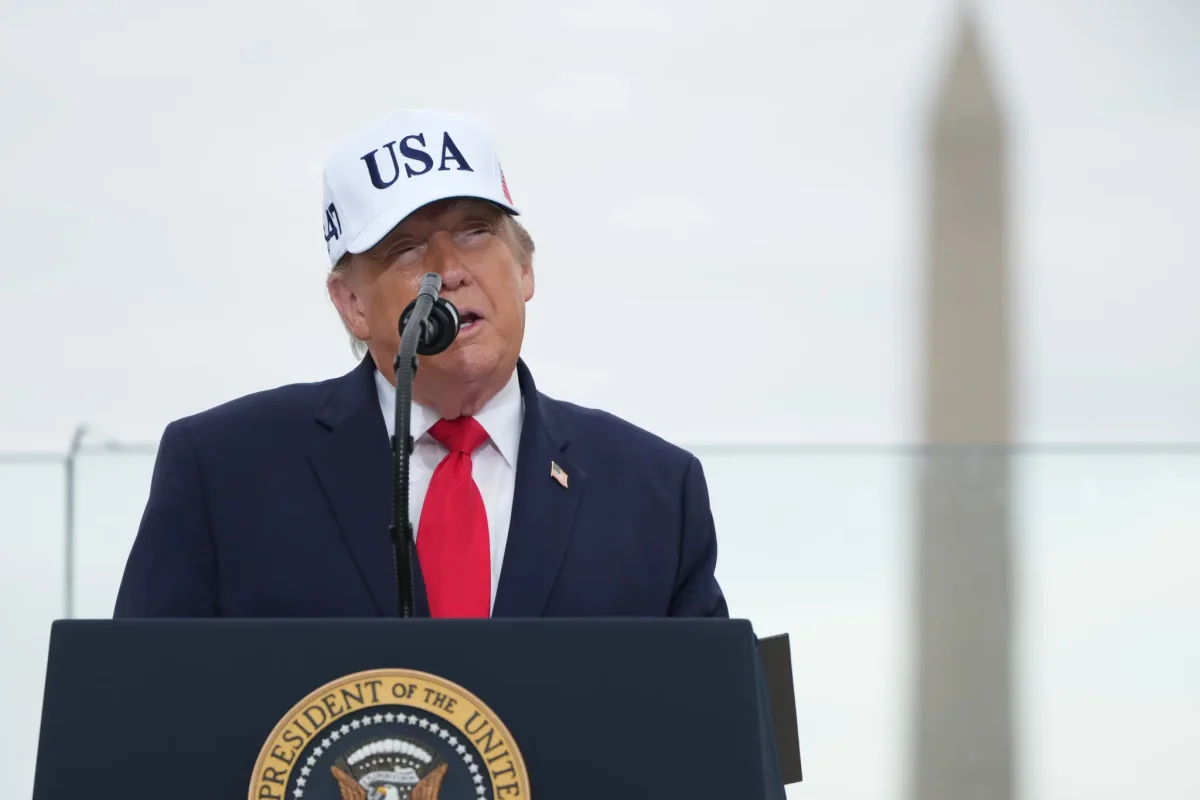
Washington, D.C. | Tehran — US President Donald Trump could face a narrowing political window to launch another major military campaign against Iran, as uncertainty over congressional control, stalled diplomatic negotiations and escalating tensions in the Middle East complicate Washington's next move.
A report published by the New York Post on November 3 suggests that Trump may have approximately six to eight weeks after the US midterm elections to pursue renewed military action before a potentially Democratic-controlled House of Representatives takes office in January.
The report highlights growing questions about whether the administration will pursue a negotiated settlement with Tehran or intensify military pressure before the changing political balance in Congress creates additional obstacles.
However, the reported timeline is an assessment by experts, not an established legal deadline. A change in House control would not automatically prevent the president from ordering military operations.
Washington Weighs Diplomacy Against Military Escalation
The Trump administration has continued to signal that military options remain available despite ongoing diplomatic contacts aimed at ending the conflict.
Trump has repeatedly suggested that Iran must make verifiable commitments concerning its nuclear programme and military activities before Washington considers the confrontation resolved.
On November 2, the president indicated that negotiations could produce an agreement, while Vice President JD Vance also expressed optimism about diplomatic progress.
Iran, meanwhile, has maintained that it is willing to negotiate but has attached conditions, including the lifting of the American naval blockade and arrangements for reopening the strategically important Strait of Hormuz.
According to Reuters reporting, negotiations facilitated through regional mediators have continued, although significant disagreements remain.
The diplomatic uncertainty has been accompanied by military developments.
On November 2, American forces reportedly carried out limited strikes against Iranian targets around Qeshm Island and the Strait of Hormuz. US officials described the operation as defensive, while Iranian officials condemned the action.
The strikes have raised further questions about whether the confrontation could develop into another sustained military campaign.
Potential Targets and the Risk of a Wider Conflict
The New York Post report examines several categories of Iranian infrastructure that could become targets in a renewed American offensive.
These include military installations, coastal facilities, energy infrastructure and nuclear-related sites.
Particular attention has been drawn to the deeply buried Pickaxe Mountain nuclear facility, which Trump has previously referenced when discussing Iran's remaining nuclear capabilities.
The possibility of targeting critical infrastructure raises serious questions about the wider consequences of renewed hostilities, including the potential impact on Iran's civilian population, regional security and international energy markets.
Military analysts cited in the report also question whether another round of airstrikes would necessarily force Tehran to accept Washington's demands.
Congressional Control Could Complicate Trump's Military Calculations
One of the central issues highlighted in the report is the potential change in congressional leadership following the November 3 midterm elections.
If Democrats secure control of the House of Representatives, the administration could face greater scrutiny over military spending, war policy and the legal justification for prolonged military operations.
Congressional oversight, funding decisions and the War Powers Resolution could become increasingly important in determining how Washington manages the conflict.
Nevertheless, a Democratic-controlled House would not automatically terminate existing military operations or remove the president's constitutional authority as commander-in-chief.
The coming weeks could therefore become an important period for determining the direction of American policy towards Iran.
Iran's Retaliation Could Extend Beyond Its Borders
Tehran has warned that any renewed American offensive would provoke a response.
Potential consequences include attacks against American military installations in the Middle East, threats to commercial shipping, missile and drone operations, and increased regional involvement by Iran-aligned armed groups.
The Strait of Hormuz remains particularly important.
The waterway is a critical international energy corridor, and prolonged disruption could affect oil shipments, shipping costs, insurance premiums and global energy prices.
Recent attacks on commercial vessels have already demonstrated how vulnerable regional maritime trade remains.
The Washington Post+1
Israel's Position Adds Another Dimension
Israel's position could also influence Washington's calculations.
Recent reporting indicates that Israeli Prime Minister Benjamin Netanyahu has advocated renewed military action against Iran.
However, Washington and Jerusalem may not necessarily have identical priorities concerning the timing, scale and objectives of another offensive.
The United States must also consider the security of its regional partners, the consequences for international energy markets and the possibility of a prolonged confrontation.
What This Means for the International Community
The possibility of renewed hostilities carries consequences far beyond the Middle East.
For the international community, the major concerns include:
1. Global oil prices: Further disruption around the Strait of Hormuz could create fresh volatility in international petroleum markets.
2. International trade: Shipping disruptions could increase freight costs, insurance premiums and delivery delays.
3. Regional security: Renewed American strikes could trigger retaliation involving neighboring countries and American military installations.
4. Nuclear diplomacy: An escalation could further complicate international efforts to address Iran's nuclear programme.
5. Humanitarian consequences: Expanded military operations could increase civilian casualties, displacement and pressure on humanitarian organizations.
For countries such as Nigeria, which depends significantly on petroleum revenues and imported goods, prolonged instability in global energy and shipping markets could have economic implications.
Note
The unfolding US-Iran confrontation presents Washington with a difficult choice between pursuing diplomacy and escalating military pressure.
Although President Trump may face political and congressional constraints in the coming months, the suggestion that he has only six to eight weeks to act should be understood as an expert assessment rather than a legally binding deadline.
The limited American strikes reported around the Strait of Hormuz on November 2 demonstrate that military activity has not entirely stopped, even as diplomatic contacts continue.
Ultimately, the critical question is whether Washington and Tehran can reach an agreement that addresses nuclear concerns, maritime security and regional stability before another major military confrontation becomes unavoidable.
The consequences of failure would not remain confined to Washington and Tehran. They could affect global energy markets, international commerce and security across several continents.
Sources and further reading
- Original report: New York Post – Why Trump has just a few weeks to restart Iran war.
- The Washington Post – US launches new defensive strikes in Iran.
- Reuters – Iran says contacts over ending war continue.
- Associated Press – US strikes Iranian targets in the Strait of Hormuz.
- Al Jazeera – Trump signals progress on Iran deal.