

Europe | News
DEMOCRATS' MIDTERM LANDSLIDE DEALS MAJOR BLOW TO TRUMP'S ECONOMIC AGENDA AS US FACES TWO YEARS OF POLITICAL GRIDLOCK
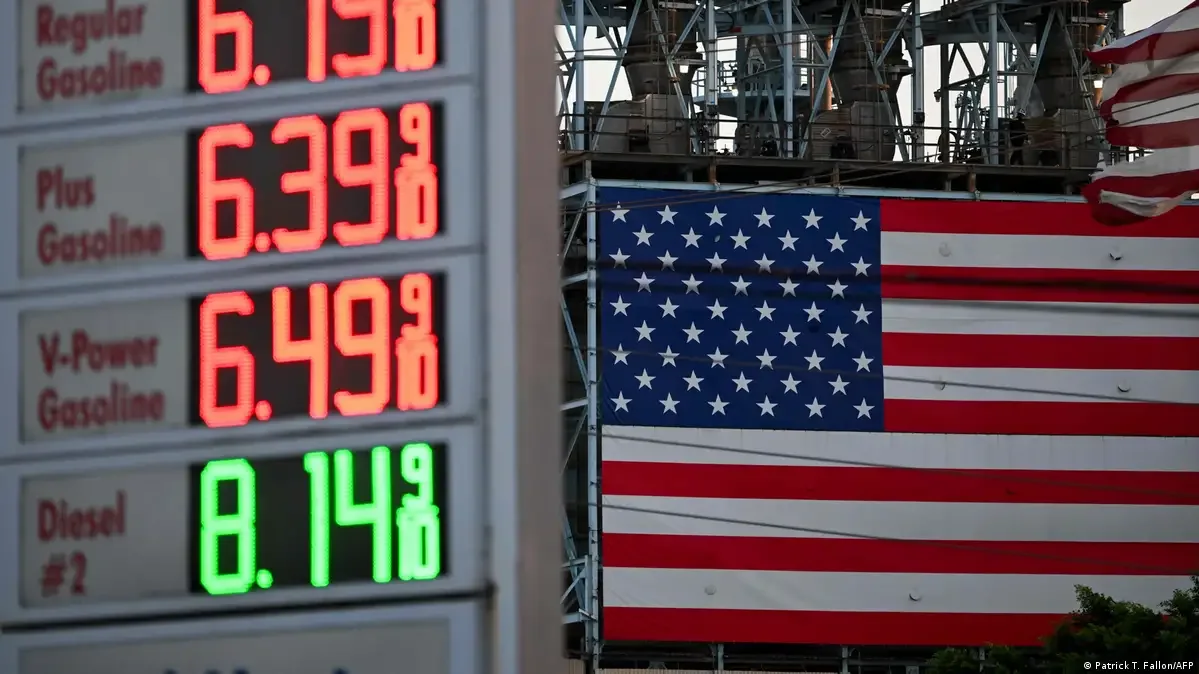
The Democratic Party's historic victories in the US midterm elections have created a new political reality for President Donald Trump, with economic policies, tariffs, energy prices, artificial intelligence regulation and government spending likely to become major battlegrounds in Washington.
The report
The Democratic Party's sweeping victory in the 2026 United States midterm elections could significantly reshape the country's economic and political direction, presenting President Donald Trump with an increasingly difficult legislative environment during the final two years of his presidency.
Democrats have secured control of both chambers of Congress, the House of Representatives and the Senate, following an electoral setback that has exposed growing public dissatisfaction with the Republican administration's economic management.
The outcome represents a major political turning point for Trump, whose administration must now contend with an opposition-controlled Congress capable of scrutinizing government policies, challenging spending proposals and obstructing important legislative priorities.
According to a report by Germany's international broadcaster, Deutsche Welle (DW), economic concerns were central to the Democratic victory, with high energy prices, tariffs, inflation, government debt and the rapid expansion of artificial intelligence infrastructure emerging as important electoral issues.
Economic dissatisfaction drives Democratic gains
The cost of living has become one of the most significant challenges confronting American households.
Rising petrol prices, expensive household essentials and concerns about the broader economic outlook have contributed to growing frustration among voters.
Trump's tariff policies also attracted criticism, particularly from businesses and industries exposed to international trade disruptions.
DW cited an October Pew Research Center survey indicating that 56 per cent of Americans believed Trump's tariff policies would have mostly negative consequences for the country, compared with 20 per cent who anticipated mostly positive effects.
The election results suggest that economic dissatisfaction became a powerful political liability for Republicans.
Democrats successfully positioned themselves around affordability and the financial pressures facing ordinary Americans, making economic relief a central component of their electoral campaign.
However, whether the party can translate its electoral success into meaningful improvements in household finances remains uncertain.
Trump faces legislative resistance over economic policies
Although Democrats now control Congress, Trump remains president and retains substantial executive authority.
This creates the possibility of prolonged political confrontation between the White House and Congress.
One particularly important issue is Trump's tariff policy.
While Congress possesses constitutional authority over international trade and tariffs, successive laws have delegated significant powers to the president.
Consequently, Democrats may face difficulties reversing existing tariff measures without legislative agreements, successful legal challenges or changes in executive policy.
Nevertheless, the new congressional majority could increase oversight of the administration's trade decisions and pursue legislative measures designed to restrict further economic disruptions.
The confrontation could also extend to government spending, taxation, healthcare and environmental regulation.
Artificial intelligence industry faces regulatory uncertainty
Another significant consequence of the election concerns America's rapidly expanding artificial intelligence industry.
The construction of large data centres, which provide the computing infrastructure required for advanced AI systems, has become increasingly controversial in several communities.
Concerns about electricity consumption, water resources, environmental consequences and rising utility bills have generated resistance to some proposed developments.
Democratic victories could strengthen political pressure for greater oversight of the industry, particularly at state and local levels.
According to economic analysts cited by DW, even without immediate federal legislation, local opposition could delay or increase the cost of major data-centre projects.
Such developments could affect technology companies, infrastructure investors and businesses that depend on the continued expansion of artificial intelligence.
The uncertainty is particularly important because AI investment has become a major component of the American technology and financial markets.
Iran conflict and oil prices remain major economic concerns
Energy prices represent another important challenge for the Trump administration.
The conflict involving Iran has contributed to uncertainty in international energy markets, with concerns surrounding oil supplies and the strategic Strait of Hormuz.
Higher crude oil prices can increase transportation, manufacturing and electricity costs, creating additional inflationary pressure on businesses and consumers.
The Democratic victory could increase congressional pressure on the administration to reconsider its approach to the conflict and pursue diplomatic solutions.
However, Congress cannot automatically dictate the outcome of international negotiations or guarantee lower global oil prices.
A reduction in geopolitical tensions could provide relief to energy markets, but renewed military escalation could reverse those gains.
For the American economy, the relationship between energy security, inflation and consumer spending will remain particularly important.
Financial markets watch Washington's next moves
The election has also created uncertainty for financial markets.
Investors are assessing how the new congressional balance could affect corporate taxation, government borrowing, technology regulation and economic growth.
While some investors may welcome stronger institutional checks on presidential power, prolonged political confrontation could create uncertainty over fiscal decisions and government funding.
The prospect of increased investigations, legislative disagreements and potential government shutdowns could further complicate the economic outlook.
Nevertheless, analysts caution against assuming that Democratic control of Congress will immediately reverse Trump's economic policies.
The president retains veto powers, while Democrats do not possess the numbers required to overcome every legislative obstacle.
A difficult two years ahead for Trump
Beyond the immediate economic implications, the Democratic victory could fundamentally change the political atmosphere surrounding Trump's remaining presidency.
An opposition-controlled Congress will have greater opportunities to investigate the administration, summon government officials for hearings and scrutinise executive decisions.
Democrats could also pursue investigations into allegations of corruption and potential conflicts of interest involving the administration.
Although impeachment proceedings remain a political possibility rather than an established outcome, congressional investigations could create significant pressure on the White House.
Trump's ability to negotiate with congressional Democrats may therefore become increasingly important to his administration's remaining policy objectives.
The president has indicated a willingness to work with Democrats, but the scale of the electoral defeat suggests that cooperation may not come easily.
International implications
The consequences of the American midterm elections extend beyond the United States.
As the world's largest economy, changes in American trade, energy, financial and technology policies can influence economic conditions across international markets.
For developing economies, including Nigeria, fluctuations in international oil prices, the strength of the US dollar, global borrowing costs and changes in American trade policy are particularly important.
An increase in international oil prices could provide additional revenue opportunities for oil-exporting countries, but it could also raise domestic fuel and transportation costs.
Similarly, changes in US interest rates and global financial conditions could influence the cost of borrowing and capital flows into emerging markets.
The political uncertainty surrounding Washington will therefore be closely watched by governments, investors and businesses around the world.
Background and political significance
The 2026 midterm elections have delivered an extraordinary reversal in congressional power.
According to election reporting, Democrats secured significant victories in states previously considered difficult electoral territory, including Texas, Kansas, Iowa and South Carolina.
The results have weakened Republican control of Washington and placed Democrats in a stronger position to challenge Trump's domestic agenda.
The most significant development is not simply the number of seats Democrats have won, but the increased institutional power they will exercise when the new Congress takes office.
The next two years could therefore be characterized by intense negotiations, investigations and disagreements over the direction of the American economy.
FACTFUL24 ANALYSIS: What happens next?
Three developments deserve particular attention:
1. Economic policy confrontation: Democrats are likely to challenge Trump's economic approach, particularly tariffs, government spending and policies affecting American households.
2. Pressure on energy and foreign policy: High fuel prices and the Iran conflict could increase political pressure on the White House to pursue diplomatic solutions.
3. Technology regulation: AI companies and data-centre investors may face greater scrutiny as opposition to energy-intensive infrastructure grows.
Ultimately, the Democratic victory gives the opposition considerable political leverage, but it does not automatically give the party control over presidential decisions.
The effectiveness of the new Congress will depend on its ability to turn electoral support into practical legislation and measurable economic improvements.
Note
The 2026 American midterm elections have demonstrated how economic dissatisfaction can transform a country's political landscape.
For Donald Trump, the Democratic victory represents more than a congressional setback. It is a warning that economic performance, affordability and public confidence can determine the political fortunes of even a powerful administration.
The next two years will test whether Trump can govern effectively under divided political leadership and whether Democrats can demonstrate that winning elections is easier than delivering economic improvements.
The central question is no longer whether Democrats can challenge Trump's agenda. It is whether they can use their new congressional power to change the economic realities that helped bring them victory.
Sources and verification
The report is independently structured and rewritten, using the supplied DW article and additional reporting for context.
- Deutsche Welle – What the Democrats' midterms win means for the US economy and Trump.
- Reuters – Democrats secure resounding US midterms victory.
- The Guardian – After the US midterms, what will a lame duck Trump mean for the global economy?.
- Allianz – Democratic sweep: What changes for the US economy and financial markets?.