Factful24 Loading

Latest News

Stories shaping today's conversations.

Explore breaking news, insightful reporting and stories across every category.

🇬🇧 Bank of England Faces Pressure as Energy Prices Revive Inflation Fears
Europe | News

🇬🇧 Bank of England Faces Pressure as Energy Prices Revive Inflation Fears

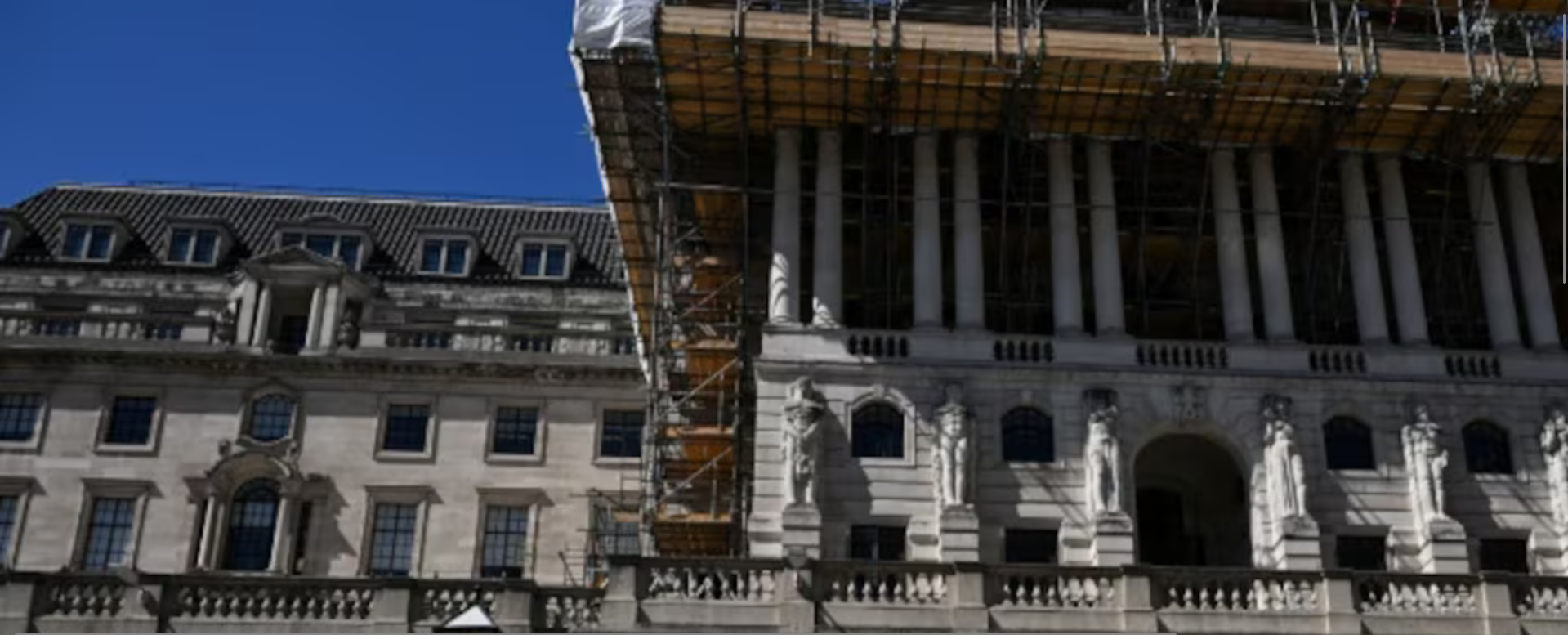
The Bank of England (BoE) is expected to leave its benchmark interest rate unchanged at 3.75% at its upcoming policy meeting, despite renewed inflation concerns caused by surging energy prices and escalating conflict in the Middle East. Oil prices have risen sharply, with Brent crude recently moving above $100 a barrel, increasing concerns that higher fuel and energy costs could feed into UK consumer prices and prolong inflationary pressures. The latest market shift has increased expectations of a possible BoE rate increase later in 2026. Reuters reports that traders now see roughly a 30% probability of a 25-basis-point hike at the September meeting, while expectations for a November increase have strengthened. Goldman Sachs has also revised its forecast and now expects a 25-basis-point hike in November. At the same time, the central bank is expected to slow the pace of quantitative tightening (QT). The BoE has reduced its bond holdings substantially since beginning QT in 2022 and is expected to reduce annual gilt sales from £70 billion to around £50 billion for the coming year. The policy dilemma is becoming increasingly difficult: raising rates could help prevent an energy-driven inflation shock from becoming entrenched, but maintaining restrictive monetary policy for longer could weaken economic growth and increase borrowing costs for households and businesses. The BoE's own analysis has previously warned that higher global energy prices can feed directly into UK inflation and indirectly raise costs throughout supply chains. Source: https://www.reuters.com/business/bank-england-set-hold-rates-steady-slow-qt-2026-09-14/?utm_source=chatgpt.com
2 min read
Read Story
🇪🇺 European Shares Slip as AI Slowdown Fears Hit Tech, Oil Surge Weighs
Europe | News

🇪🇺 European Shares Slip as AI Slowdown Fears Hit Tech, Oil Surge Weighs

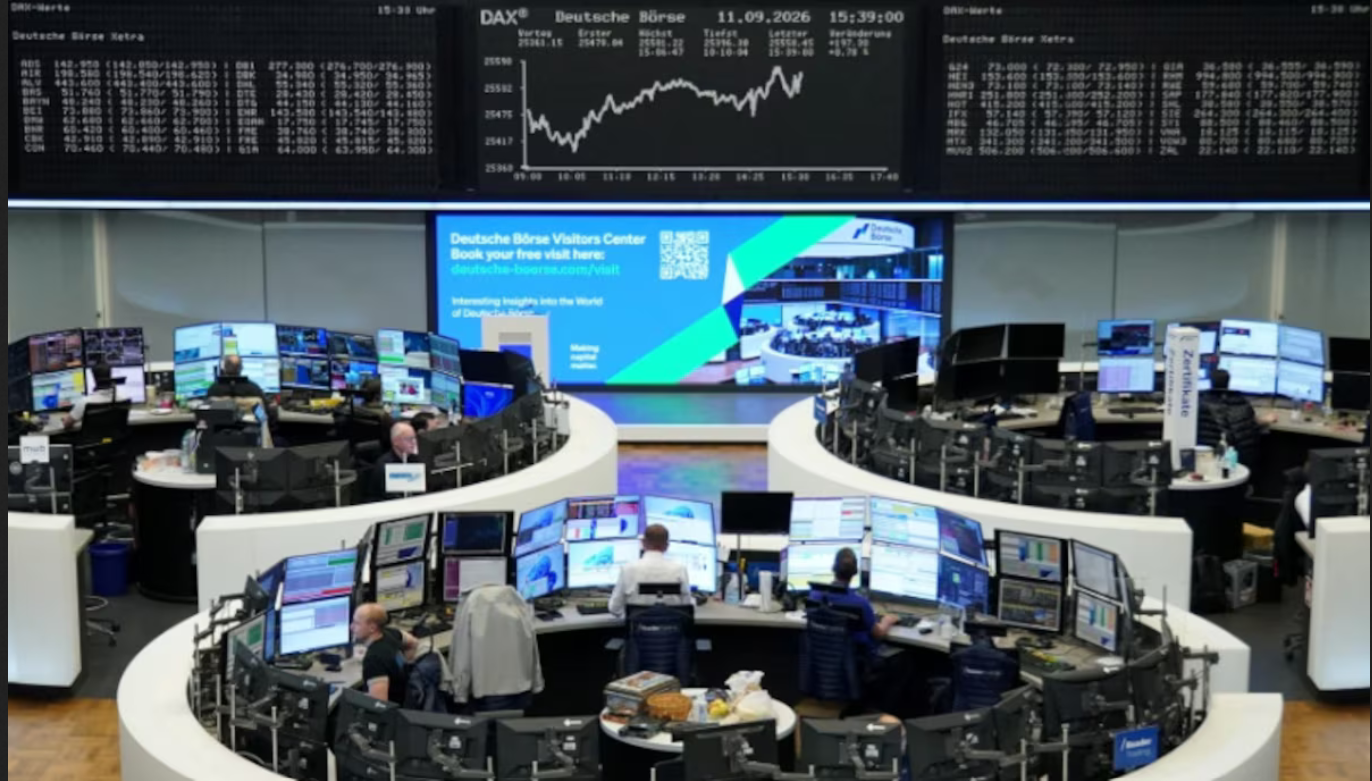
European stocks came under pressure on Monday, September 14, as a sharp decline in technology shares and surging oil prices weighed on investor sentiment. The STOXX 600 fell about 0.3%, while the European technology sector dropped roughly 2%. Semiconductor companies were among the biggest losers, with Soitec, Infineon, ASML and ASMI falling between about 5% and 13%. The technology sell-off followed calls from senior AI industry figures, including Anthropic CEO Dario Amodei, for greater caution and a slower pace of AI development amid concerns about the potential misuse and risks of increasingly powerful systems. The warnings have raised questions about the sustainability of the massive investment currently flowing into AI infrastructure, chips and data centres. At the same time, oil prices climbed sharply as renewed Middle East tensions threatened energy supplies. Brent crude moved above $107 a barrel, adding to fears that higher energy costs could prolong inflation and increase pressure on central banks to maintain or raise interest rates. Healthcare stocks provided some support, with the sector gaining around 2.2%, helped by positive clinical-trial news from GSK. Why it matters The combination of AI investment uncertainty, higher oil prices and renewed inflation fears is creating a difficult environment for European markets. Investors are now closely watching central-bank decisions, particularly the expected U.S. Federal Reserve rate decision this week. Source: https://www.reuters.com/markets/europe/european-shares-muted-tech-slides-oil-surge-weighs-2026-09-14

2 min read
Read Story
ECB Raises Rates to 2.5% as Iran Conflict Sends Energy Inflation Higher
Europe | News

ECB Raises Rates to 2.5% as Iran Conflict Sends Energy Inflation Higher

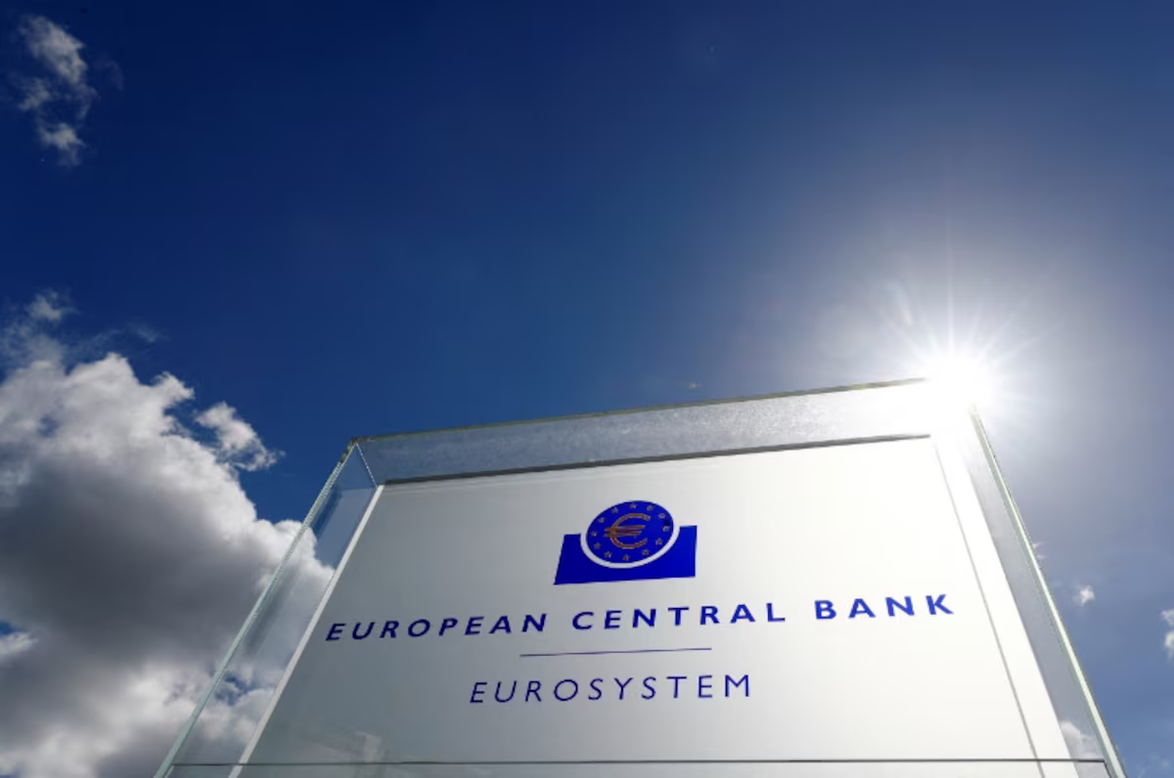
The European Central Bank (ECB) has raised its key interest rates by 25 basis points, taking its deposit rate to 2.50%, as the continuing Middle East conflict and soaring energy prices push inflation further above the bank's 2% target. The decision, announced on September 10, marks the ECB's second rate increase this year and comes as the economic consequences of the Iran conflict spread across European energy markets. Inflation rises to 3.3% Eurozone inflation accelerated to 3.3% in August, up from 2.9% in July. Energy prices were a major driver: energy inflation jumped to 14.3%, compared with 10.3% the previous month. The ECB expects headline inflation to average: 3.0% in 2026 2.5% in 2027 2.1% in 2028 This means inflation is expected to remain above the ECB's 2% target for an extended period. Middle East conflict puts pressure on Europe The continuing conflict in the Middle East has pushed oil prices above $100 a barrel, while concerns about disruptions to energy supplies and shipping through the region have added to Europe's inflation problem. Europe's dependence on imported energy makes it particularly vulnerable to a prolonged oil and gas shock. ECB President Christine Lagarde warned that the economic outlook remains highly uncertain, with the risks tilted toward higher inflation and weaker economic growth if the energy shock intensifies. What does the rate hike mean for Europeans? Higher interest rates are designed to slow demand and prevent temporary energy-price increases from becoming entrenched throughout the wider economy. But the policy also makes borrowing more expensive. Consumers could face higher costs for mortgages, loans and other credit, while businesses may become more cautious about investment. The ECB nevertheless sees some resilience in the eurozone economy. It now projects economic growth of 0.9% in 2026, 1.4% in 2027 and 1.5% in 2028. Could the ECB raise rates again? The ECB has not committed to a particular future rate path. Instead, policymakers say decisions will be made meeting by meeting, based on incoming inflation, economic and financial data. The key question will be whether high energy prices remain elevated long enough to push inflation into wages, services and other parts of the economy. Why this matters beyond Europe The ECB's decision is important for the global economy because the energy shock is occurring alongside rising oil prices, financial-market volatility and concerns about inflation in the United States and Asia. For Nigeria and other oil-producing countries, higher crude prices can increase export revenues, but prolonged energy-price volatility can also raise transportation, food and imported-goods costs. Sources: European Central Bank, Reuters, AP and Euronews.

3 min read
Read Story
NATO Allies Foil Alleged Russian Plot to Target Arctic Undersea Cables
Europe | News

NATO Allies Foil Alleged Russian Plot to Target Arctic Undersea Cables

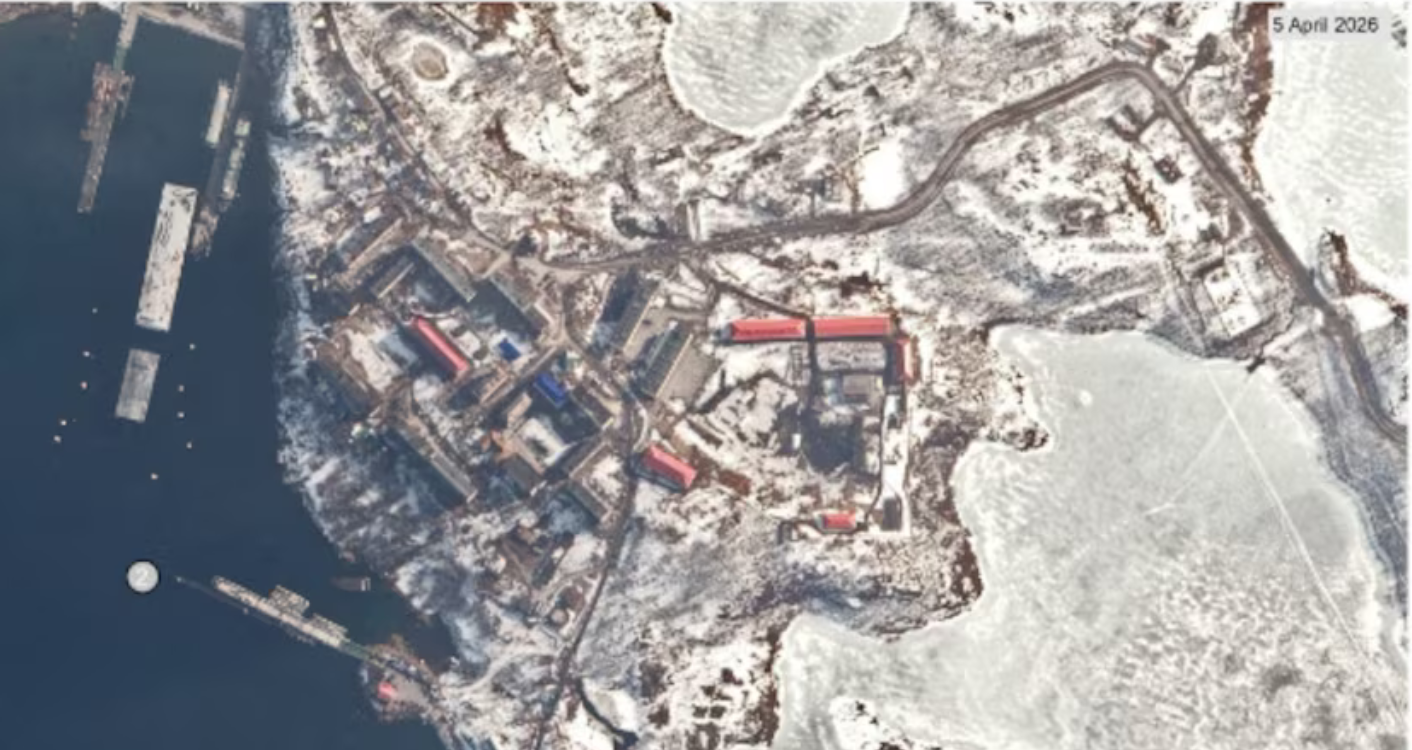
NATO allies Britain, Norway and the United States disrupted a covert Russian operation near the Arctic Svalbard archipelago, where Russian undersea forces were reportedly conducting a training exercise involving technology designed to disable critical submarine cables. According to an exclusive Reuters report, the operation took place during spring 2026 and involved Russia's secretive Main Directorate of Deep-Sea Research (GUGI) using deep-sea submersibles to simulate deployment of a sophisticated system capable of damaging subsea infrastructure without leaving obvious traces. No cables were actually damaged The operation did not result in damage to the cables. British, Norwegian and U.S. forces tracked and confronted the Russian vessels, preventing them from completing the exercise. The Russian vessels subsequently left the area. Norway's Defence Minister Tore Sandvik said the operation sent Moscow a clear warning that attempts to secretly target critical infrastructure would be detected and would have consequences. Why the Svalbard cables matter Two major fibre-optic cables connect Svalbard with mainland Norway. Each is approximately 1,400 kilometres long and reaches depths of up to 2,700 metres. The cables are particularly important because they carry large quantities of satellite data from SvalSat, the world's largest satellite ground station. The station is also connected to NASA's Near Space Network. A successful attack could therefore affect not only communications but also satellite operations, financial transactions, internet connectivity and wider critical infrastructure. 🇷🇺 Why NATO is concerned Western intelligence officials are increasingly worried that Russia is developing capabilities that could be used against NATO infrastructure in the event of a wider confrontation. Some U.S. intelligence officials reportedly fear Moscow could eventually test NATO's Article 5 mutual-defence commitment. Under such a scenario, attacks on critical infrastructure could become part of a broader effort to pressure or destabilise NATO countries. Russia's Defence Ministry did not respond to Reuters' request for comment, while the Kremlin has consistently denied conducting sabotage operations against NATO countries. Subsea cables are becoming a major security issue Undersea fibre-optic cables carry enormous amounts of global internet and financial data. Their strategic importance has increased alongside the world's growing dependence on digital communications and data-intensive technologies, including artificial intelligence. NATO has consequently increased surveillance of underwater infrastructure through initiatives including Baltic Sentry and the UK-led Nordic Warden. Norway is also planning a new fibre-optic connection linking Svalbard and Jan Mayen to mainland Norway by 2028. What happens next? The incident is likely to intensify NATO's efforts to protect subsea infrastructure across the Arctic, North Atlantic and Baltic Sea. It also highlights a new dimension of modern warfare: critical battles may not always involve missiles or conventional forces. Internet cables, electricity links and other infrastructure on the seabed could become strategic targets during a major geopolitical confrontation. Primary source: Reuters, with corroborating reporting from The Guardian and Defence News.

3 min read
Read Story
🇺🇦 Russia’s Latest Deadly Drone Strikes Hit Ukraine
Europe | News

🇺🇦 Russia’s Latest Deadly Drone Strikes Hit Ukraine

Russia has intensified its aerial campaign against Ukraine, with drone attacks killing civilians and damaging residential, commercial and critical infrastructure across several regions. Latest casualties Sumy: A Russian drone struck a shopping centre, killing 2 people and injuring 20. Four of the wounded were reportedly in serious condition, while four teenagers were among those injured. Kyiv: A wave of Russian drones and missiles killed 5 people and injured 35 in the capital on September 8. At least 14 buildings—including a dormitory, school and clinic—were damaged. Odesa region: A Russian drone attack on the Starokozache border crossing with Moldova killed 2 civilians and wounded 3, temporarily disrupting traffic along an important trade route. Other areas: Russian drone attacks were also reported in Kherson, Zaporizhzhia, Kryvyi Rih and Khmelnytskyi, with additional deaths, injuries and infrastructure damage. A major escalation in drone warfare The attacks appear to be increasingly focused not only on military targets but also on logistics, border crossings, warehouses, energy infrastructure and urban areas. Ukrainian officials say Russia is seeking to disrupt trade and transport routes, particularly as Ukraine relies heavily on land routes for exports. The Ukrainian Air Force reported that Russia launched 196 Shahed-type and other drones during one overnight barrage on September 8–9, with Ukrainian forces reporting 165 drones shot down. Ukraine strikes back Ukraine has simultaneously intensified its long-range drone campaign against Russian territory. Ukrainian forces have reportedly struck oil, naval and gas infrastructure, including facilities in Russia's Yamal-Nenets region—about 3,000 km from Ukraine. The escalation comes as U.S.-backed diplomatic efforts to revive peace negotiations have struggled to produce a breakthrough. Ukrainian President Volodymyr Zelenskyy has called for stronger international pressure on Moscow and additional air-defence systems. Bottom line: The latest attacks demonstrate that the Russia-Ukraine war is continuing to expand into an increasingly intense long-range drone and missile war, with civilian areas and critical economic infrastructure repeatedly caught in the fighting. Sources: Reuters, Associated Press, Al Jazeera, Critical Threats Project and other reports published September 8–10, 2026.

2 min read
Read Story
🇪🇺 European Markets Face Oil Shock as ECB Weighs Rate Hike
Europe | News

🇪🇺 European Markets Face Oil Shock as ECB Weighs Rate Hike

European markets are moving cautiously as Brent crude remains above $100 a barrel, intensifying concerns that higher energy costs could keep inflation elevated and force the European Central Bank (ECB) to maintain a tighter monetary stance. Markets under pressure The pan-European STOXX 600 was broadly flat on Thursday, following a 1.4% decline on Wednesday after Brent crude moved above $100 for the first time since July. Energy stocks were among the few areas receiving support from higher oil prices. Germany's DAX and France's CAC were also subdued, reflecting investor caution over the combination of higher energy costs, inflation and interest rates. ECB decision in focus Markets were expecting the ECB to raise its key interest rate by 25 basis points to 2.5% on Thursday. Investors are particularly focused on ECB President Christine Lagarde's comments about whether the central bank could continue raising rates if the oil-driven inflation shock persists. The dilemma is straightforward: Higher oil → higher inflation → tighter monetary policy → potentially weaker economic growth. The ECB therefore faces the challenge of controlling inflation without unnecessarily damaging Europe's already fragile growth outlook. Why $100+ oil matters The oil surge is being driven by escalating geopolitical tensions and disruptions to energy shipments. Brent was trading above $100, with some market measures showing even higher prices in physical crude markets. For Europe, expensive oil can raise transportation, manufacturing and household energy costs. That can push inflation higher while simultaneously reducing consumers' purchasing power. What investors are watching The key signals are: ECB guidance — whether further rate hikes are likely. Brent crude — whether oil remains above $100 or moves substantially higher. European bond yields — a measure of changing rate and inflation expectations. Euro markets are watching whether tighter ECB policy strengthens the currency. Energy stocks potentially benefiting from elevated oil prices. Consumer and industrial stocks potentially pressured by higher energy costs. The euro was relatively stable ahead of the decision, while sterling also remained within a narrow range against the single currency. Bottom line: Europe is facing a difficult combination of $100+ oil and renewed inflation pressure just as the ECB tightens policy. The central bank's guidance on future rate increases could determine whether the current market weakness develops into a broader European sell-off, or proves temporary.

3 min read
Read Story
Moldova Warns of Growing Russian Threat After Deadly Strike Near Border
Europe | News

Moldova Warns of Growing Russian Threat After Deadly Strike Near Border

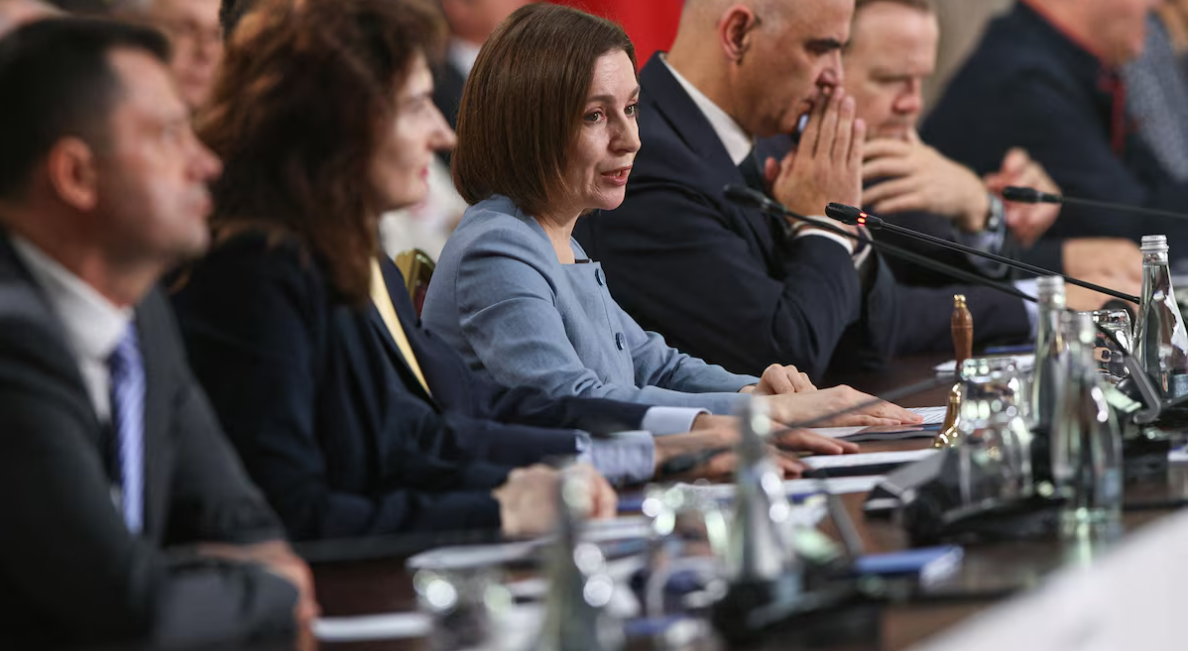
CHISINAU, Moldova — Moldova’s President Maia Sandu has warned that Russia’s war in Ukraine is increasingly threatening Moldova after a Russian drone strike killed two people at a border crossing between Ukraine and Moldova. The attack targeted the Starokozache border crossing in Ukraine’s Odesa region on September 9, damaging infrastructure and vehicles and forcing the checkpoint to close temporarily. The crossing is located close to Moldova’s border. Sandu condemned the attack, warning that the war is moving closer to Moldova. She said Russia had once again brought terror to Ukraine and that the conflict was reaching Moldova’s border. She also called for stronger air surveillance and defence capabilities in cooperation with European partners. The latest strike came a day after Moldovan authorities reported another security incident involving a drone that entered Moldovan airspace, crossed into Romania and later returned to Moldova before crashing in the country’s Rîșcani district. The incidents have heightened concerns in Chisinau about the potential spillover of Russia’s war in Ukraine. Moldova has repeatedly reported drone incursions and attacks affecting infrastructure close to its territory as the conflict continues. The situation is particularly sensitive because Moldova borders Ukraine and is home to the breakaway region of Transnistria, where Russian troops have been stationed for decades. For Moldova, the latest attacks have reinforced concerns that the war could increasingly affect its security, trade routes and airspace, even though there is currently no indication that Russia has launched a direct military attack on Moldovan territory. Source: Reuters, Moldpres, RFE/RL and The Guardian — September 9, 2026. Editorial Note: The attribution of the attacks to Russia is based on statements from Ukrainian and Moldovan authorities and reporting by international news agencies. The incidents should not be interpreted as evidence of an imminent Russian military invasion of Moldova.

2 min read
Read Story
Germany’s Merz Postpones Trump Call Amid AfD Controversy
Europe | News

Germany’s Merz Postpones Trump Call Amid AfD Controversy

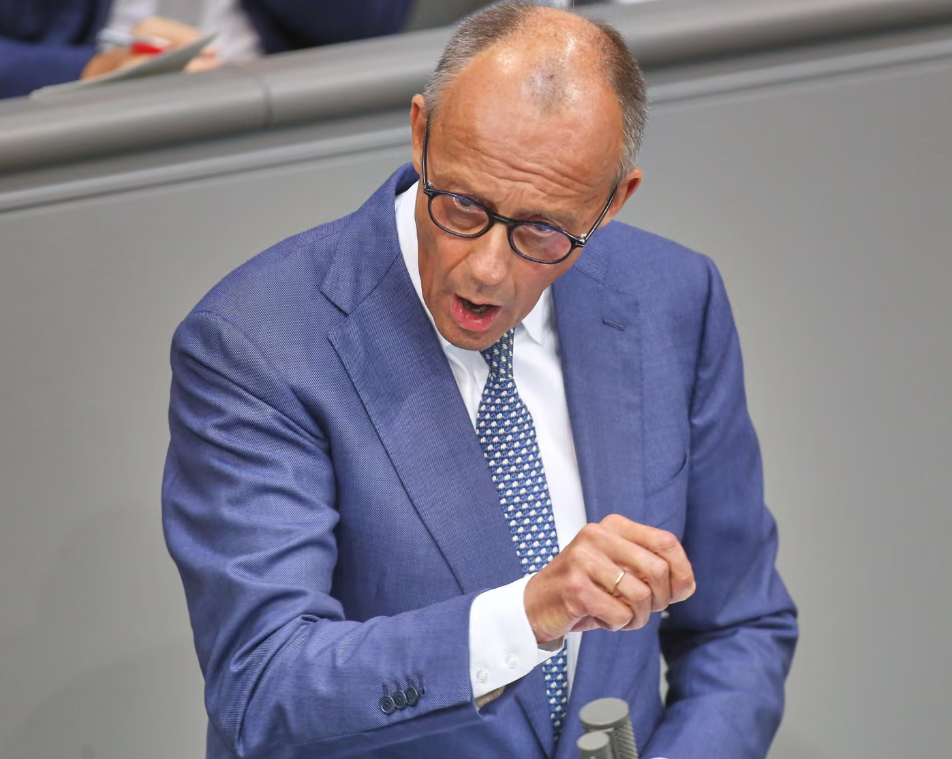
BERLIN, Germany — Tensions between Germany and the United States have intensified after German Chancellor Friedrich Merz postponed a planned telephone conversation with U.S. President Donald Trump, shortly after Trump publicly praised the electoral success of Germany’s far-right Alternative for Germany (AfD) party. The planned call, scheduled for Wednesday, was expected to focus partly on the 25th anniversary of the September 11, 2001 attacks in the United States. German government spokesman Stefan Kornelius confirmed that Berlin had postponed the conversation but did not provide a reason. He indicated, however, that the decision was not the result of a scheduling conflict. The postponement came after Trump celebrated the AfD’s strong performance in Sunday’s regional election in Saxony-Anhalt. The party won about 44% of the vote, emerging as the strongest political force in the state and delivering a major setback to Merz’s Christian Democratic Union (CDU). Trump attributed the AfD’s success to dissatisfaction with Germany’s immigration policies, describing the party as being “on the rise” in a post on his Truth Social platform. The comments have sparked criticism in Berlin, where government officials have warned against foreign interference in Germany’s domestic political affairs. German officials have stressed that Germans should determine their own political choices and policies without intervention from foreign leaders. Merz Escalates Criticism of AfD The controversy intensified on Wednesday when Merz sharply criticised the AfD during a heated parliamentary debate. The German chancellor accused the party of promoting policies that he said could amount to “ethnic cleansing” through its advocacy of “remigration,” a term used by the AfD in its immigration debate. The party rejected Merz’s characterisation, arguing that its policies concern immigration enforcement and are within German law. Merz has also rejected cooperation with the AfD, despite the party’s historic electoral breakthrough in Saxony-Anhalt. The result has renewed debate over Germany’s long-standing political “firewall” against cooperation with the far right. Strain in Berlin-Washington Relations The latest dispute adds to existing tensions between Berlin and Washington over immigration, Russia, Ukraine, trade and European security. While German officials have not officially linked the postponed phone call to Trump’s remarks about the AfD, the timing has raised questions about the state of relations between the two governments. For now, both sides have avoided confirming that the AfD controversy directly caused the postponement. Source: Reuters, Associated Press, German government statements and Tagesschau — September 9, 2026. Editorial Note: German authorities have confirmed the postponement of the Merz-Trump call but have not officially stated that Trump’s comments about the AfD were the reason. Any direct causal link remains unconfirmed.

3 min read
Read Story